
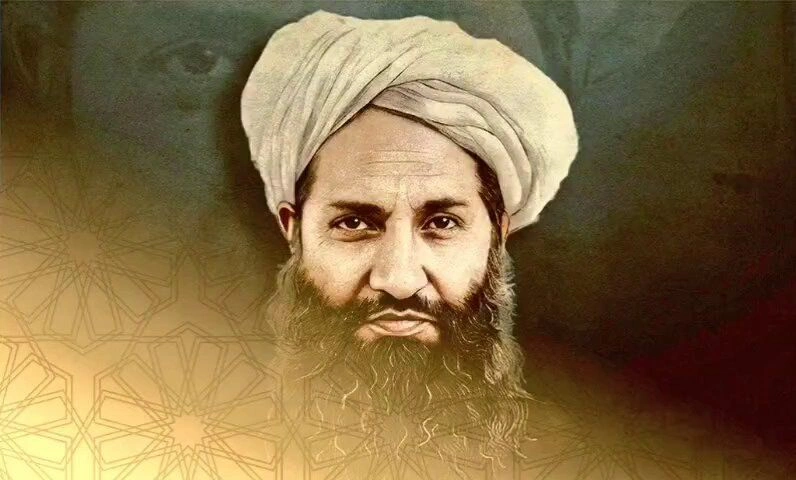
In the latest round of administrative reshuffles, Taliban supreme leader Hibatullah Akhundzada dismissed Hamdullah Nomani from the Ministry of Communications and Information Technology and appointed Abdul Ahad Fazli, the governor of Faryab, as his replacement.
The decree was part of a broader wave of appointments and transfers affecting governors and deputy officials in several provinces, including Faryab, Badghis, Baghlan, and Khost.
The reshuffle is widely seen as another example of the Taliban’s internal circulation of loyal figures within its ruling structure.
Rather than prioritizing expertise and professional qualifications, Hibatullah appears to emphasize the rotation of trusted and obedient figures. Under this approach, a provincial governor with no known technical background can suddenly be placed in charge of one of Afghanistan’s most important ministries.
Loyalty Over Expertise
The main criteria for appointments within the Taliban system remain loyalty to Kandahar, jihadist credentials, unquestioning obedience, and internal network ties. Transfers and appointments are often carried out to consolidate control and prevent the emergence of rival power centers inside the movement.
A Closed Circle of Power
Most changes occur within a limited inner circle. For example, Mullah Mohammad Hanif Hamza moved from a deputy role in the communications sector to the governorship of Badghis, while Abdul Rahman Haqqani was transferred from Baghlan to Khost.
Ethnic diversity and technical expertise do not appear to be priorities in this pattern of governance.
Minimal Representation of Non-Pashtun Ethnic Groups
Although figures such as Tajik-origin Chief of Army Staff Qari Fasihuddin Fitrat and Din Mohammad Hanif are part of the Taliban administration, the key decision-making positions remain firmly controlled by the Kandahari and Pashtun leadership circle. The presence of non-Pashtun figures is often viewed as symbolic and largely intended for political messaging.
According to data published by the Middle East Institute, out of 1,213 Taliban senior and mid-level officials documented, around 90 percent are Pashtun, 5.3 percent Tajik, and nearly 3 percent Uzbek.
In the current Taliban cabinet, the most powerful positions — including the prime ministership, economic deputy office, central bank leadership, Supreme Court, and major security ministries — remain overwhelmingly dominated by Kandahari figures.
Expanding Reshuffles Inside the Taliban Administration
Since some acting ministers formally lost their “caretaker” titles in August 2025, movements within the Taliban administration have accelerated.
In May 2026, Abdul Ahad Fazli was appointed Minister of Communications and Information Technology. Earlier, in February 2026, Mullah Fazil Mazloom was transferred to the Ministry of Transport, while in January 2026 the ministries of Energy and Water and Rural Rehabilitation and Development also underwent leadership exchanges.
To date, Hibatullah has reportedly issued more than 80 decrees resulting in the reassignment of over 400 officials.
United Nations reports have also repeatedly stated that there are no meaningful signs of genuine inclusion of ethnic minorities, professional technocrats, or women in Taliban decision-making structures.
Critics argue that the Taliban still view governance as the spoils of military victory rather than an inclusive national administration.
Experts Say Taliban View Other Ethnic Groups as a Threat
Dawood Irfan, a former professor at Afghanistan’s Faculty of Law and Political Science, says the Taliban appoint Tajik clerics only symbolically and mostly to lower-level positions under strict monitoring in order to project an image of inclusivity.
According to Irfan, the Taliban leadership effectively treats land, power, and resources as its exclusive domain while placing other ethnic communities lower in the social and religious hierarchy. He argues that a system openly hostile toward the Persian language is unlikely to offer meaningful power-sharing to Persian-speaking communities.
A university lecturer currently living in Kabul says this strategy may help the Taliban maintain short-term internal stability because Hibatullah reduces the risk of disobedience, factional rivalry, and independent power centers by assigning sensitive ministries to trusted loyalists.
According to the lecturer, such a structure is easier for the Taliban leadership to control because officials function primarily as obedient executors rather than representatives of ethnic groups, social constituencies, or independent political currents.
Read more :Rising Concerns Over Treatment of Ethnic Communities in Afghanistan











