
A year ago, Pakistan and India fought a short but intense conflict that became one of the most serious military confrontations between the two nuclear-armed neighbours in decades. During the period called Marka-i-Haq, or the battle for truth, Indian fighter jets were shot down and Pakistan launched Operation Bunyanum Marsoos in response to missile strikes from New Delhi. The fighting lasted four days before ending with a ceasefire brokered by the United States.
During the conflict, Pakistan displayed a wide range of modern weapons and military technology. These included advanced missiles, drones, fighter jets and digital warfare systems that allowed different parts of the military to work together in real time.
One of the most important tools used by Pakistan was network-centric warfare. This system allows fighter jets, radar stations, command centres and surveillance aircraft to instantly share information with each other. As a result, pilots and commanders can track enemy aircraft and react quickly without relying only on visual contact.
Pakistan combined Chinese and Western military equipment with locally developed software to build this system. According to defence experts, the technology helped Pakistan detect incoming Indian aircraft during the first night of fighting and establish a successful strike chain.
This also made beyond visual range combat possible. Pakistani fighter pilots were able to target enemy aircraft from more than 100 kilometres away. Brigadier retired Masood Ahmed said the system allowed Pakistan Air Force pilots to “see” Indian aircraft from long distances and set up an ambush for Indian fighter jets.
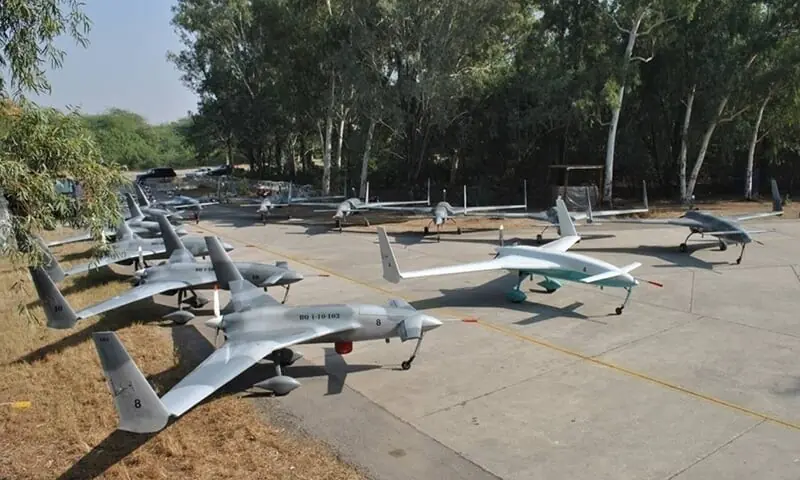
At the same time, drones played a major role in the conflict. Around the world, drones are increasingly being used for surveillance and attacks because they are cheaper and more flexible than traditional military systems. Both Pakistan and India used them heavily during the fighting.
According to a report by the Institute of Strategic Studies Islamabad, Pakistan used drones for surveillance, strikes and loitering attacks during Operation Bunyanum Marsoos. After Indian missile and drone attacks on May 9, Pakistan responded by targeting 36 military sites inside India on May 10.
The drones used included the YIHA III loitering munition, the Asisguard Songar quadcopter and Chinese-made CH-4 and Wing Loong II systems. Experts say Pakistan’s drone strategy is based on local development, partnerships with Turkey and China and the use of commercial technology in creative ways.
These drones were used to test enemy radar systems, locate weak points in air defences and target military infrastructure. Unlike earlier conflicts, drones were not only used for surveillance. They became an important part of military signalling and battlefield operations.
Fighter Jets and Missiles That Shaped the Conflict
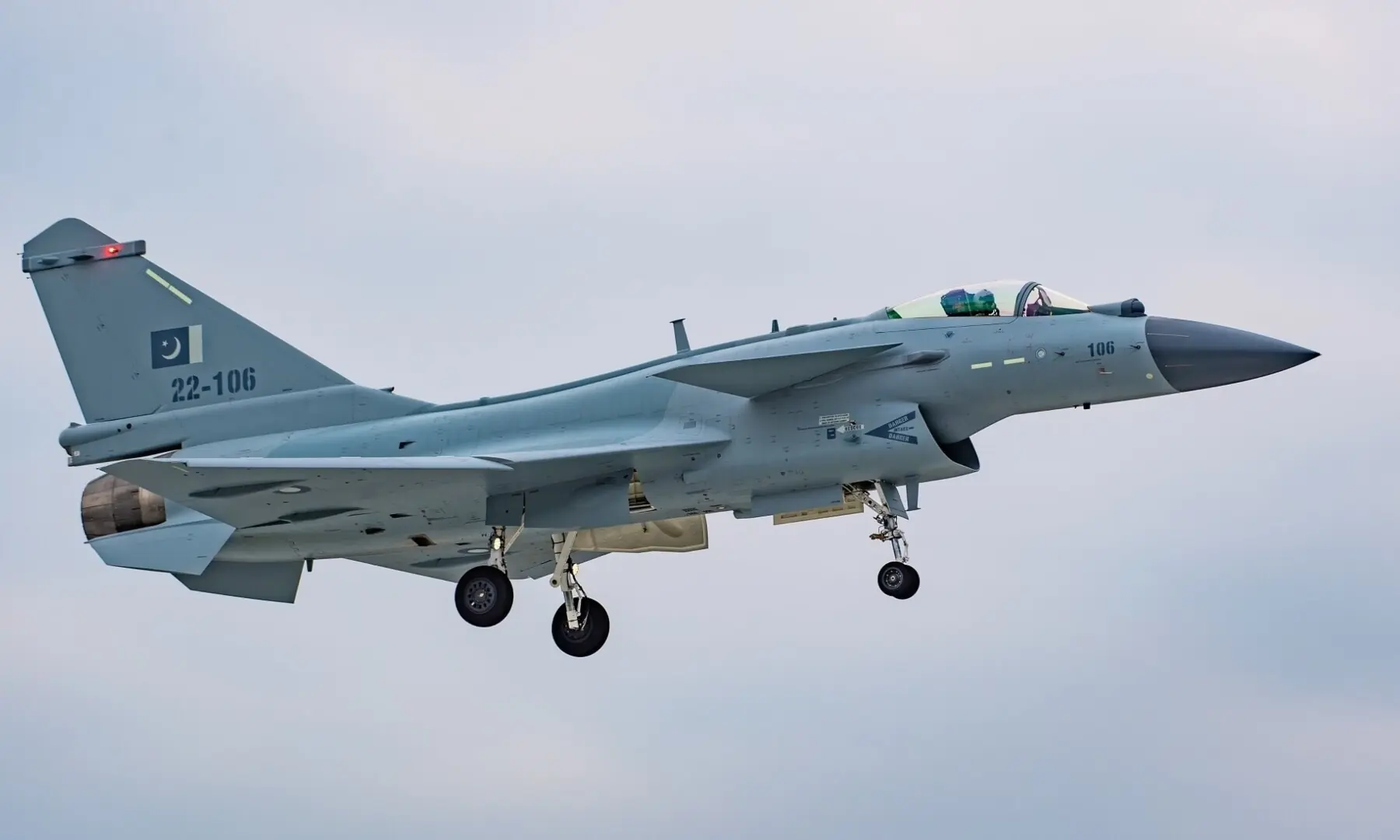
Pakistan also used several advanced weapons systems during the war. One of the most talked about was the Chinese-made J-10C fighter jet. The aircraft is a fourth-generation multirole combat jet capable of carrying different types of weapons for air and ground combat.
The J-10C reportedly played a major role on the first night of the conflict by shooting down six Indian Air Force jets, including Rafale aircraft. Pakistan Air Force Chief Zaheer Ahmed Babar had earlier described the aircraft as a powerful combat system designed for modern warfare.
Another key weapon was the PL-15 air-to-air missile. This Chinese missile is designed for beyond visual range combat and can travel at speeds close to Mach 5. It has a reported range of 200 to 300 kilometres.
The missile was launched from J-10C fighter jets during the conflict. Defence experts believe this was the first time the PL-15 was used in actual combat. Brigadier retired Masood Ahmed said the missile’s success depended heavily on real-time information sharing between aircraft and ground systems.
Pakistan also used its indigenous Fatah missile system during Operation Bunyanum Marsoos. The Fatah is a guided rocket launcher system capable of firing missiles and rockets with high accuracy. The Fatah-II missile reportedly has a range of around 400 kilometres.
According to military analysts, the system was effective because it could be moved and deployed quickly while still delivering precise strikes against military targets. It was also connected to Pakistan’s larger battlefield communication network.
In addition, Pakistan used the Chinese-made CM-400AKG missile. This is a supersonic missile designed mainly to attack ships, although it can also strike ground targets. During the conflict, it was reportedly used against Indian S-400 air defence systems.
The missile can travel at speeds between Mach 4.5 and Mach 5 and has a range of around 400 kilometres. Reports described this as the first combat use of the CM-400AKG system.
Overall, the conflict showed how modern warfare is changing rapidly. Advanced communication systems, drones and long-range missiles are now becoming just as important as traditional military power. The four-day conflict demonstrated how technology can shape the battlefield and influence the outcome of modern wars.











