
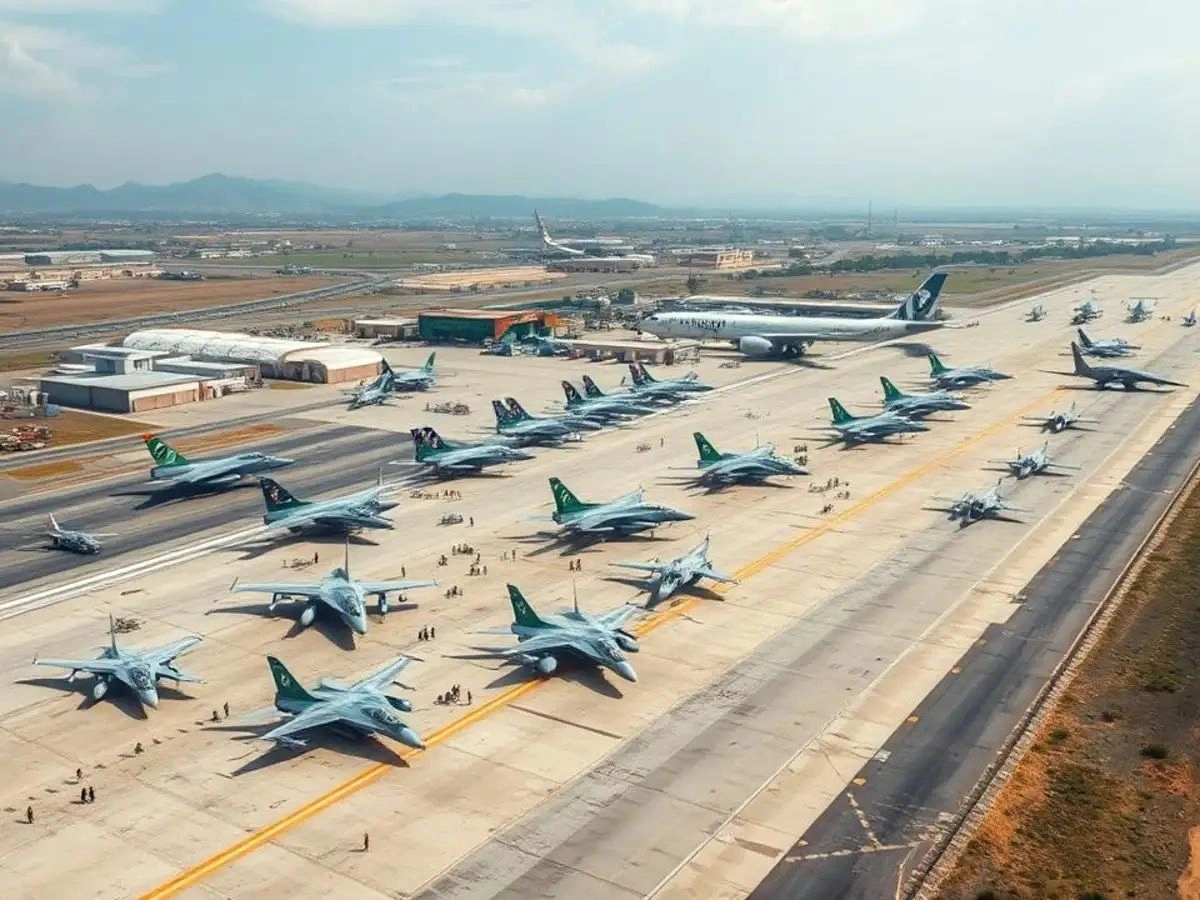
Pakistan has strongly rejected a recent report by US media outlet CBS News, calling the claims regarding Iranian aircraft at Nur Khan Airbase misleading, baseless, and an attempt to undermine regional peace efforts. According to official statements from the Ministry of Foreign Affairs and senior government sources, the report misrepresents facts and appears to be a deliberate effort to distort Pakistan’s neutral diplomatic role.
CBS News Narrative and Corporate Concerns
CBS News recently claimed that Pakistan provided shelter to Iranian military aircraft at its airbases during US–Iran diplomatic engagement, allegedly protecting them from potential American strikes. However, Pakistani officials say the report lacks factual grounding and ignores the broader diplomatic context.
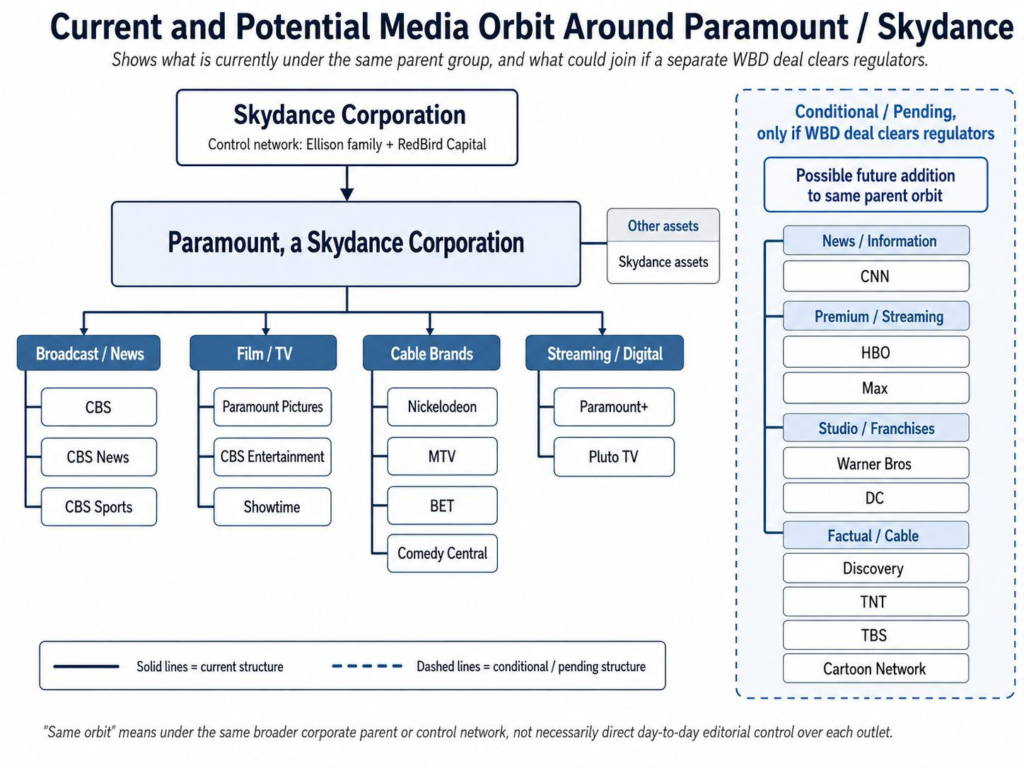
Questions have also been raised about the media group’s evolving corporate structure following its integration under Paramount and Skydance Corporation. Critics argue that ownership changes involving major financial stakeholders have raised concerns about editorial independence.
Some commentators further allege that influential editorial figures within Western media institutions have shaped narratives that portray Pakistan’s mediation efforts in a negative light. However, these claims remain part of a broader political and media debate.
Clarification on Nur Khan Airbase Operations
According to official Pakistani sources, the presence of aircraft at Nur Khan Airbase was purely logistical and administrative in nature, linked to ongoing US–Iran diplomatic engagement hosted in Islamabad.
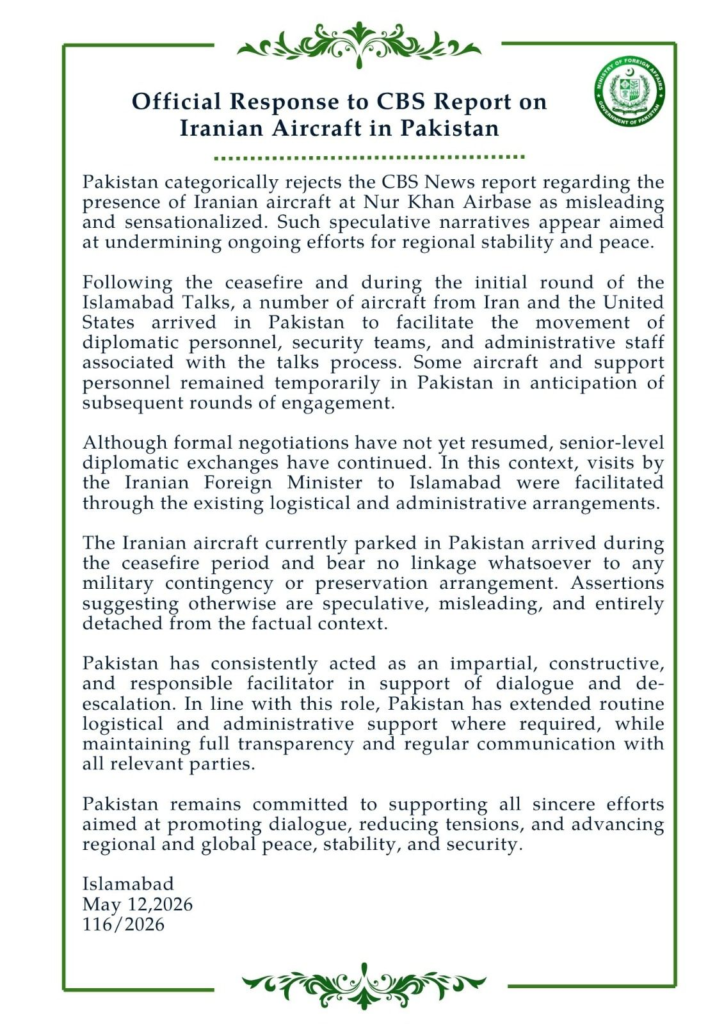
During the first round of negotiations, aircraft from both Iran and the United States transported diplomatic personnel, security teams, and technical staff to Pakistan. As subsequent phases of talks were expected, some Iranian aircraft and personnel remained temporarily in the country under standard arrangements.
Officials emphasized that American aircraft and security teams were also present during the same period and later returned to their respective regional bases. Pakistan maintains that it provided equal facilitation to both sides in its capacity as a neutral host and mediator, ensuring full transparency throughout the process.
Pakistan’s Position on Mediation
Pakistani officials have rejected claims that the presence of Iranian aircraft was linked to any form of military protection or concealment. They stress that Pakistan’s role has been strictly that of a facilitator of dialogue between the United States and Iran.
According to Islamabad, a genuine mediator does not take sides but ensures communication between conflicting parties. Officials reiterated that Pakistan’s objective is not image-building or “headline diplomacy,” but the peaceful resolution of complex regional disputes through negotiation.
Media Commentary and Domestic Debate
The report also notes ongoing debate within Pakistan’s media landscape. An editorial in Dawn has sparked discussion over constitutional equality and socio-economic divisions. Critics argue that such commentary selectively frames inequality while ignoring broader structural realities within the media and elite sectors.
Analysts say the debate highlights tensions between different interpretations of equality, governance, and institutional accountability in Pakistan.
Commitment to Regional Peace
Pakistan has categorically rejected suggestions that the aircraft presence at its airbase provided any military advantage or protection. Officials point out that similar aircraft movements in the region had not been targeted elsewhere, making such claims speculative and misleading.
Reaffirming its position, Pakistan stated that it will continue its active diplomatic role in promoting regional peace and stability. The government emphasized that it remains committed to facilitating dialogue between conflicting parties despite external pressure or propaganda narratives, ensuring that diplomacy remains the primary tool for conflict resolution.











