
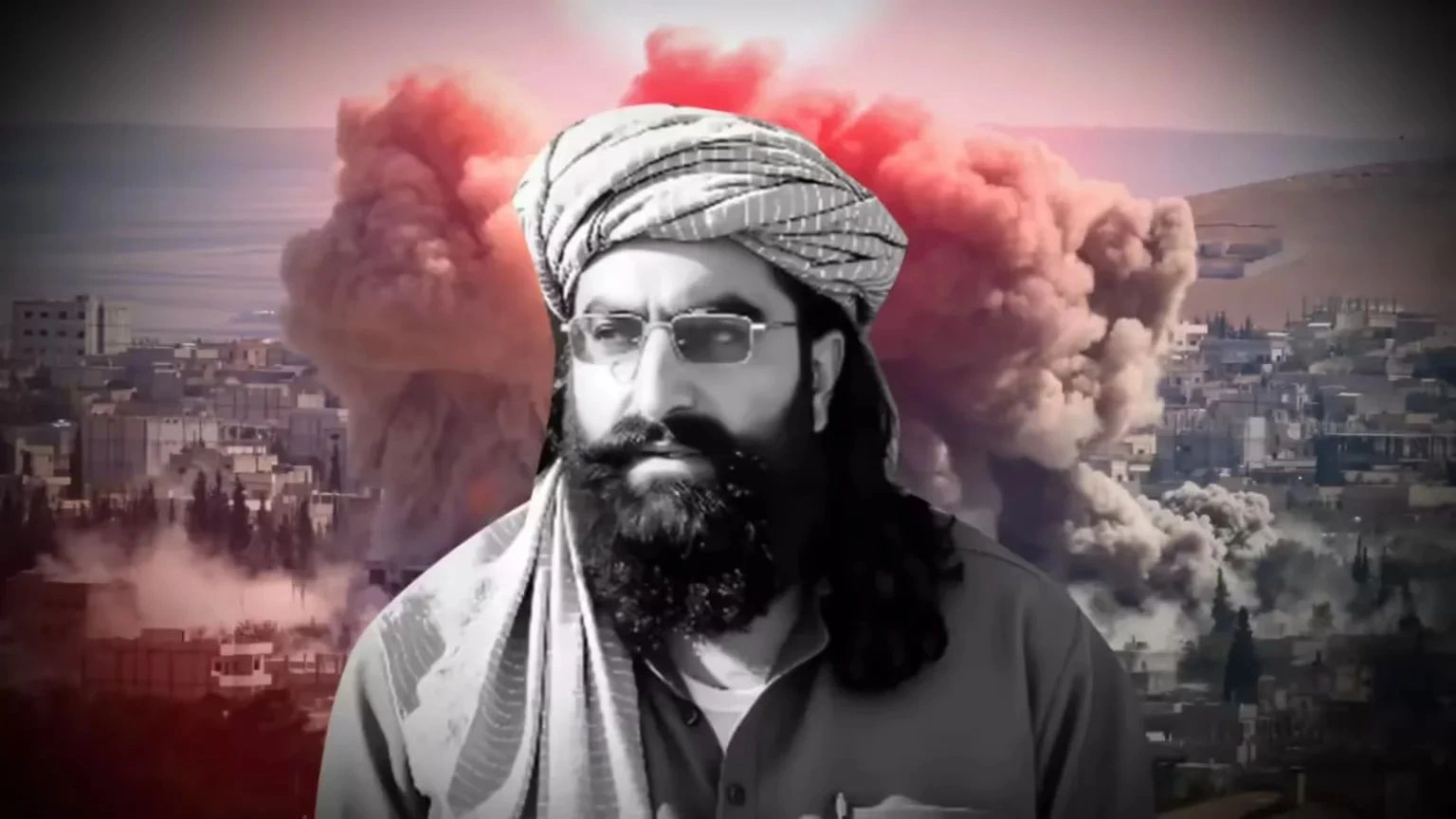
Renowned analyst and security expert Abdullah Khan has issued an open academic challenge to Tehrik-e-Taliban Pakistan (TTP) chief Mufti Noor Wali Mehsud, rejecting his justification of armed struggle and calling his narrative contrary to established facts.
In a detailed statement shared on social media, Abdullah Khan strongly criticized Mufti Noor Wali Mehsud for what he described as a misinterpretation of a fatwa issued by 500 religious scholars, arguing that it is being wrongly used as a justification for terrorism.
Allegations of Misrepresentation
Abdullah Khan stated in his challenge that the fatwa cited by Mufti Noor Wali as a basis for armed rebellion against the state contains no reference to armed struggle or insurgency. He clarified that questions related to the 2004 Wana operation were limited to obedience to the government and the religious status of military operations, with no mention of taking up arms against the state.
He further alleged that Mufti Noor Wali is falsely attributing positions to 500 scholars and misleading emotionally driven youth into becoming suicide attackers.
مفتی نور ولی محسود کو کھلا علمی چیلنج
— Abdullah Khan (@AbdullahKhan333) May 9, 2026
جناب مفتی نور ولی محسود امیر تحریک طالبان پاکستان
آپ نے ایک بار پھر اپنے بیان میں پانچ سو علماء کرام کے فتوے کو پاکستانی ریاست کے خلاف اپنی مسلح جدوجہد کی بنیاد قرار دیا ہے۔ میرا آپ کو چیلنج ہے کہ جس فتوے پر پانچ سو علماء کرام نے دستخط کیے… pic.twitter.com/uRjY6xmAeF
Intellectual Contradictions and Paigham-e-Pakistan
Highlighting what he termed intellectual dishonesty, Abdullah Khan said the TTP chief has added terms such as “combatants” into the pamphlet version of the fatwa. He also pointed out that several scholars cited by TTP, including Maulana Abdul Razzaq Sikandar and others, were also part of the consensus religious decree “Paigham-e-Pakistan,” which declares all forms of armed rebellion in Pakistan as forbidden.
He questioned the TTP’s continued use of the term “jihad,” asking what struggle it refers to at a time when the United States has withdrawn from the region and the Islamic Emirate of Afghanistan maintains relations with Pakistan and other countries.
Advice to the Islamic Emirate
Abdullah Khan advised Mufti Noor Wali to abandon what he described as a futile conflict that is weakening both Islam and Muslims. He warned that TTP activities have become a burden for the Islamic Emirate of Afghanistan itself and may pose risks to its governance and stability.
Call for Amnesty
He also urged the Government of Pakistan to announce a general amnesty for young individuals who wish to renounce TTP and reintegrate into mainstream society. According to him, force alone is not a solution, and those willing to return should be provided with financial and social rehabilitation, as past state policies also contributed to their radicalization.
The academic challenge comes at a time when the TTP narrative is facing increasing criticism in religious and scholarly circles, and Abdullah Khan’s remarks have sparked a new debate among analysts and experts.











