
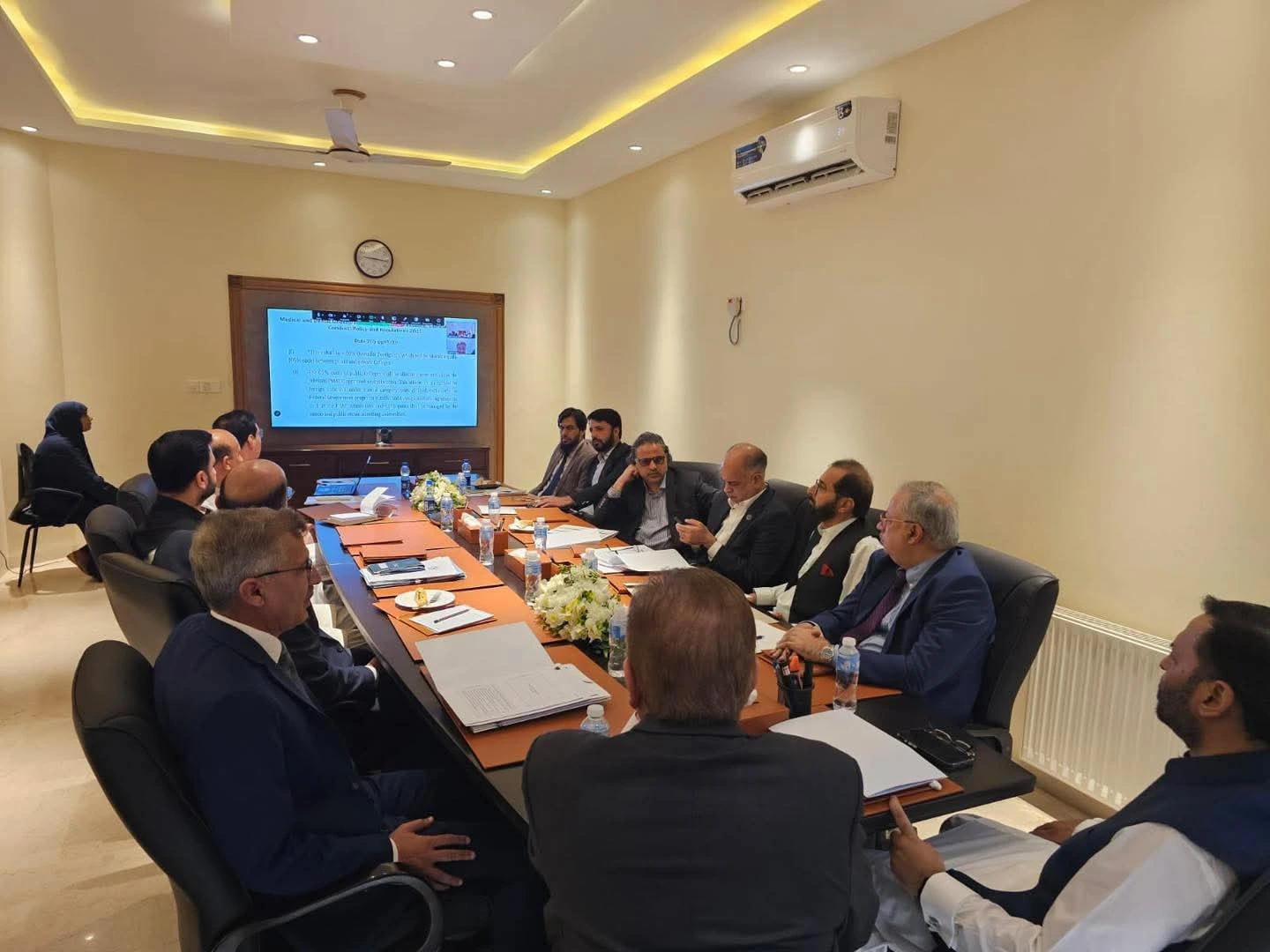
A high-level meeting of the Afghanistan-Central Asia Intergovernmental Coordination Cell (ACICC) was convened in Islamabad to address challenges faced by Afghan students currently enrolled under the Allama Iqbal Scholarship Program and medical specialists undergoing specialist training in Pakistan.
The meeting was co-chaired by Pakistan’s Special Envoy for Afghanistan Ambassador M. Sadiq and Federal Minister for Health, Hon. Mustafa Kamal, reflecting the significance Pakistan attaches to resolving practical barriers faced by Afghan scholars on the ground. Senior heads and representatives from the Pakistan Medical and Dental Council (PMDC), the College of Physicians and Surgeons Pakistan (CPSP), the Higher Education Commission (HEC), and other relevant government departments attended the session.
The Allama Iqbal Scholarship Program remains the largest and most popular foreign scholarship initiative for Afghan students, offering 4,500 fully funded scholarships covering tuition, accommodation, and monthly stipends across fields including medicine, engineering, agriculture, and management sciences. In its most recent cycle, over 25,000 Afghan students registered for the available scholarships, underscoring the scale of demand and the weight of responsibility Pakistan carries in administering the program effectively.
Wednesday’s meeting moved beyond admissions to focus on the welfare and academic progress of students already in Pakistan, with particular attention to those pursuing medical education and specialist clinical training under PMDC and CPSP frameworks. The convening of PMDC and CPSP alongside HEC signals a coordinated institutional effort to align regulatory standards with the practical needs of Afghan scholars navigating Pakistan’s medical education system.
The ACICC serves as Pakistan’s primary inter-governmental mechanism for coordinating policy and people-to-people engagement across Afghanistan and Central Asia, and its continued activation on education and health matters reflects Pakistan’s broader commitment to regional stability through human development.
Read More: Fake Screenshot Circulating Against Allama Tahir Ashrafi Declared False by ARY News











