
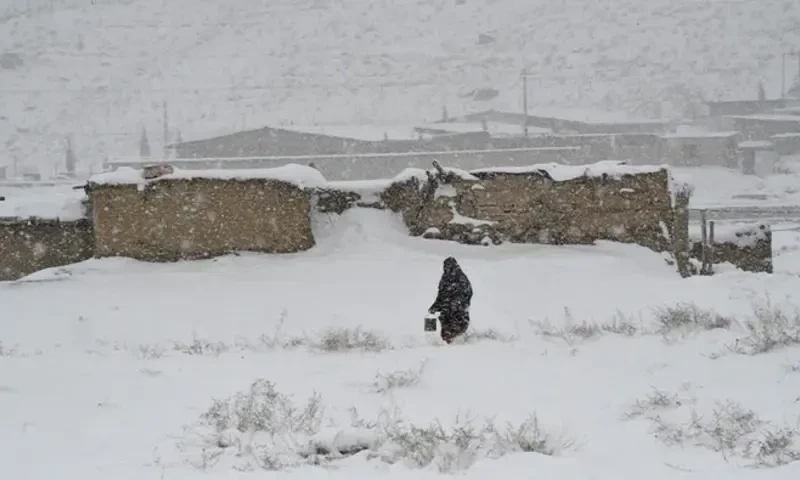
Authorities have confirmed that a man who died during heavy snowfall near the border between Pakistan and Afghanistan was an Afghan national linked to militant activity. The incident took place in the mountainous border area connecting Pakistan’s Bajaur region with Afghanistan’s Kunar province.
According to official sources, the deceased has been identified as Rasul Muhammad, also known as Hamas. He was the son of Yar Muhammad and belonged to Khwaja Rakhaila village in Ahmad Abad district of Afghanistan’s Paktia province. Reports also indicate that a condolence gathering was recently held in his native village, which helped confirm his identity.
Initially, the death was reported as an outcome of extreme weather conditions in the border mountains. However, as more details surfaced, security officials stated that the individual was a known militant who had been active in the border belt. At present, authorities say further operational details are still being verified.
Update: An another militant who died during snowfall along the Bajaur–Kunar Border has been identified as an Afghan national, Rasool Muhammad alias Hamas. He was the son of Yar Muhammad and a resident of Khwajarakhailo village in Ahmadabad district, Paktia province, Afghanistan.… https://t.co/GMf2lvAfrh pic.twitter.com/OLy0o8eCVP
— Mahaz (@MahazOfficial1) April 20, 2026
Rising Security Concerns Along the Border
Meanwhile, the incident has once again drawn attention to the fragile security situation along the Pakistan–Afghanistan border. The area is known for difficult terrain and harsh weather, especially during winter, which often complicates surveillance and border control efforts.
Security officials say the presence of militants crossing the border under the cover of weather conditions remains a serious concern. As a result, this case has raised fresh questions about border monitoring and the movement of armed individuals between the two countries.
In addition, analysts believe that such incidents highlight gaps in coordination and information sharing. They argue that better cooperation between Pakistan and Afghanistan is essential to prevent militants from exploiting border regions. Without improved coordination, they warn, similar cases may continue to surface.
At the same time, officials stress that the border has long remained sensitive due to past incidents involving armed groups and illegal crossings. Because of this history, any new development quickly attracts attention from security agencies on both sides.
In conclusion, while the death itself was caused by severe weather, the identity of the individual has added a security dimension to the incident. Authorities say they are closely monitoring the situation and reviewing existing measures. As winter conditions continue, officials remain on alert to prevent further security risks along the border.











