
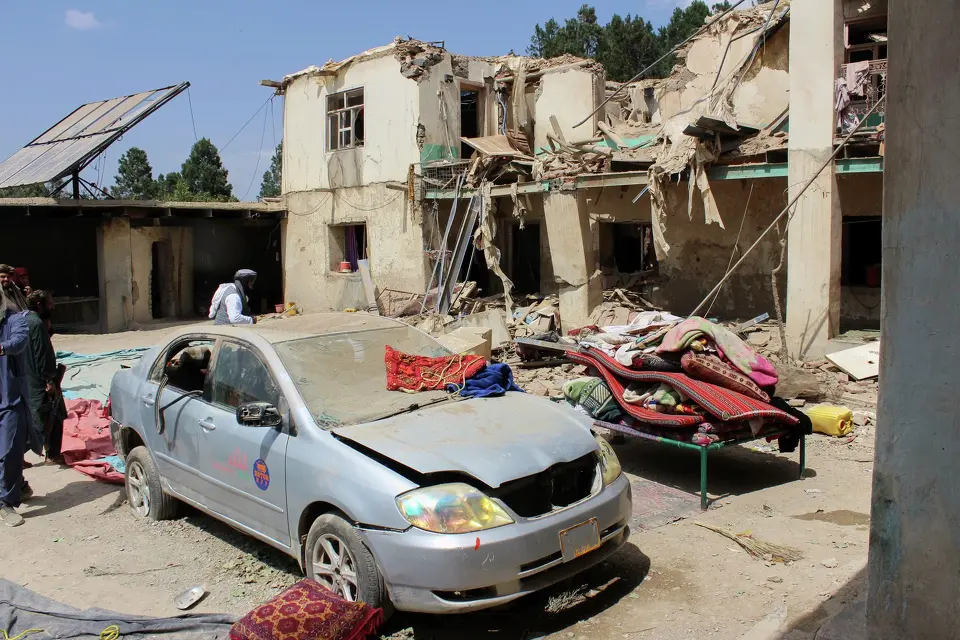
Khost– Reports emerged of airstrikes and drone patrols in Afghanistan’s Khost and Nangarhar provinces. In Spalgin village of Khost, the house of a local elder, Malik Naeem, was hit. Two children were killed, while a man and woman sustained injuries. In Shinwar district of Nangarhar, two separate strikes were reported. A missile also struck the home of Shahswar, son of Abdul Latif, injuring a woman and a child. Afghan officials quickly blamed Pakistan for the Khost and Nangarhar attacks, though no evidence was presented.
Propaganda and Safe Havens
Observers argue that the Afghan interim government and its affiliated media are once again running a propaganda campaign against Pakistan. Analysts highlight that terrorist sanctuaries inside Afghanistan, including groups like the Tehrik-e-Taliban Pakistan (TTP) and the Hafiz Gul Bahadur faction, pose a threat to Afghanistan itself. Instead of dismantling these networks, the Afghan side has resorted to accusations.
Credible sources reveal that on the night of the Khost strike, a jirga was underway. Local officials hosted the meeting, which included TTP chief Noor Wali Mehsud and militant commander Hafiz Gul Bahadur. This disclosure strengthens claims that Afghan territory continues to serve as a safe haven for terrorists plotting against Pakistan. Yet, rather than acknowledging this, Afghan officials shift the blame across the border.
Pakistan’s Position Backed by Evidence
Pakistani security institutions have repeatedly shared proof of Afghan involvement in terrorism. In a recent operation on August 8 in Zhob’s Sambaza area, the Pakistan Army killed 61 militants. Out of these, 53 were Afghan nationals. Such data highlights that many recent terror incidents inside Pakistan are linked directly to Afghanistan.
Pakistani authorities stress that Kabul must take responsibility and act against these groups. Islamabad has consistently shown patience and promoted cooperation. However, officials warn that continued cross-border terrorism will have severe consequences for regional stability.
Call to the International Community
The international community, particularly the United Nations and human rights organizations, must urge the Afghan leadership to act responsibly. Instead of fueling tensions with unverified claims, Kabul should dismantle terrorist sanctuaries. Blaming Pakistan for the Khost and Nangarhar attacks only distracts from the real challenge—terror networks thriving inside Afghanistan.











