
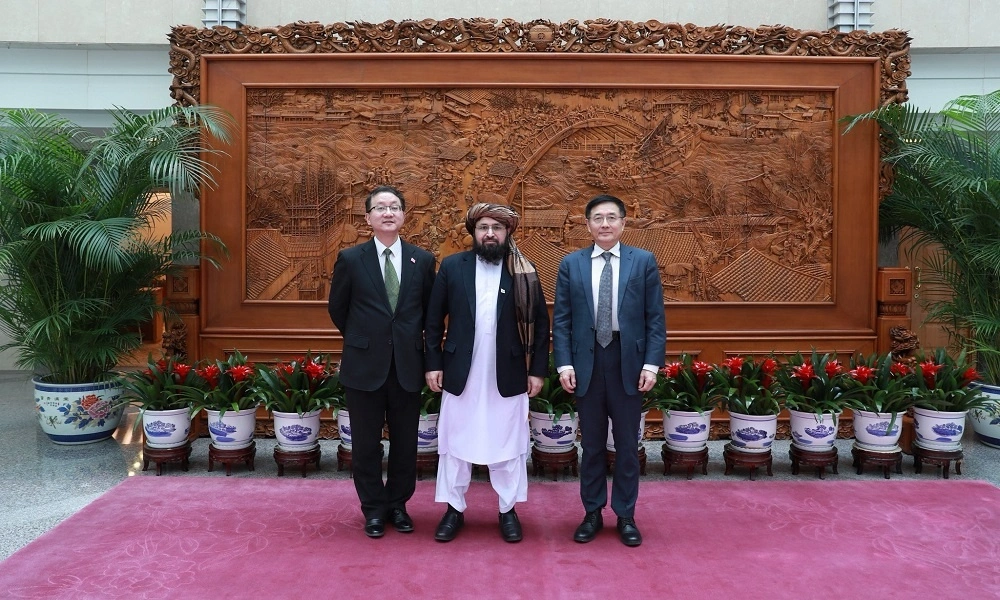
Beijing — Afghanistan’s Ambassador to China, Bilal Karimi, held meetings with Liu Jinsong, Director-General of the Asian Affairs Department at China’s Ministry of Foreign Affairs, and Yue Xiaoyong, China’s Special Envoy for Afghanistan, according to a statement issued by the Afghan Embassy in Beijing.
The embassy said discussions focused on political, economic, and trade relations between the two countries, as well as the activation of the Wakhan Corridor, consular matters, and other issues of mutual interest.
During the meeting, the Chinese side reiterated its respect for Afghanistan’s independence, territorial integrity, and sovereignty, and emphasized the importance of continued cooperation between Beijing and Kabul.
The talks reflect ongoing diplomatic engagement between Afghanistan and China amid broader regional and economic discussions.
However, analysts note that the expansion of diplomatic engagement with the Taliban contrasts sharply with the group’s record on human rights, the exclusion of women from public life, severe restrictions on education and media, and the lack of an inclusive government. Critics emphasize that as long as the Taliban do not adhere to international commitments and respect the fundamental rights of Afghan citizens, such meetings and dialogues cannot be seen as full legitimization of the group.
Read more :Russia Highlights Growing Cooperation with Afghanistan Amid Diplomatic Developments











