
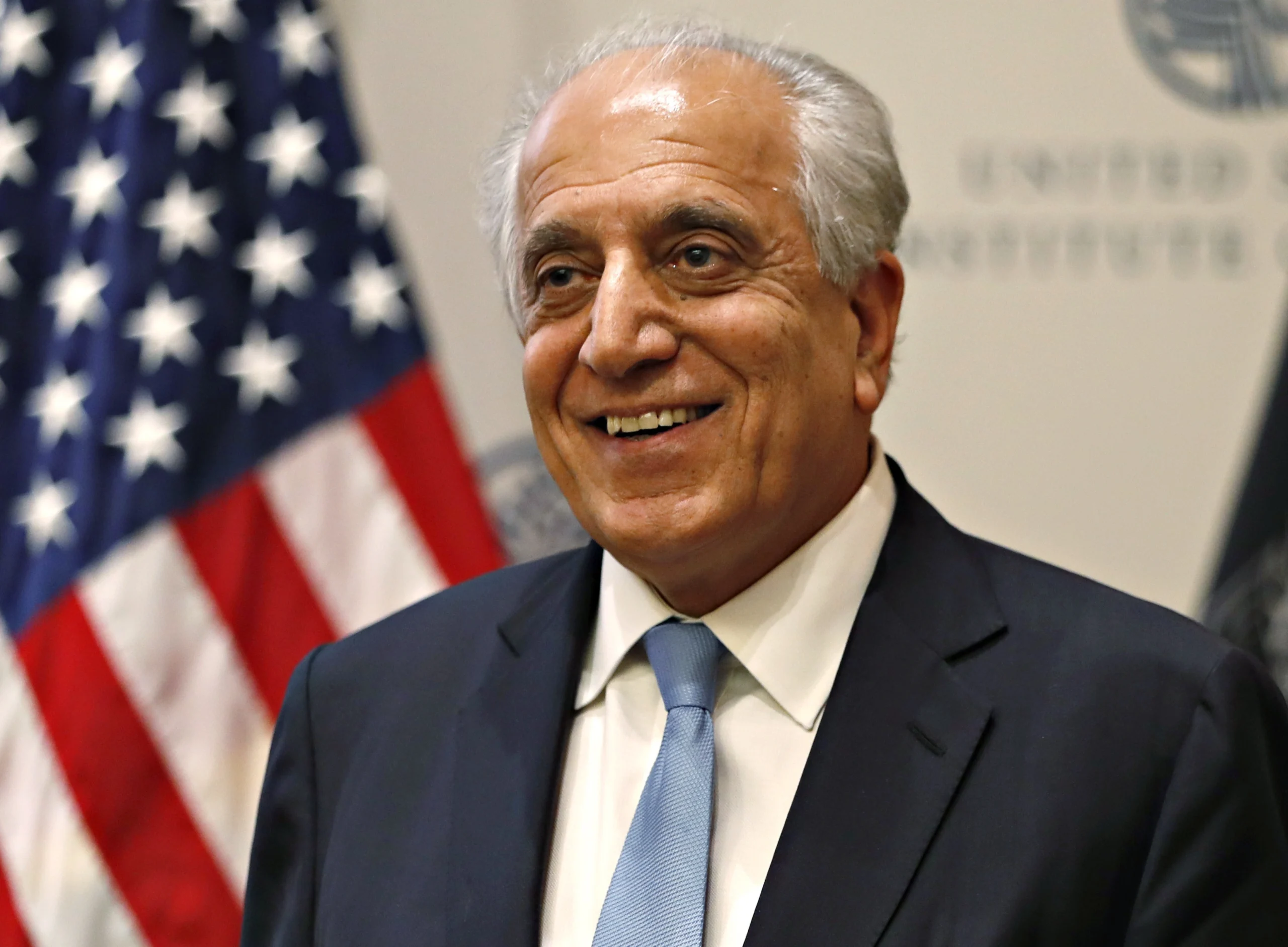
Former US envoy Zalmay Khalilzad stated that Pakistan Army spokesperson Lieutenant General Ahmed Sharif Chaudhry misunderstood the scope of the Doha Agreement, but highlighted the possibility of a similar security accord between Afghanistan and Pakistan.
Khalilzad emphasized that such an agreement would commit both sides to prevent any group, including ISIS and TTP, from using their territory to threaten the other, with third-party monitoring. He also noted that the Afghan Taliban appeared open to talks, and the initiative for the dialogue currently lies with Pakistan.
Potential Afghanistan-Pakistan Security Cooperation
Khalilzad suggested that a formal agreement between Afghanistan and Pakistan could strengthen regional security and counterterrorism measures. Both sides would have to ensure that militant groups are not allowed to operate across their borders.
The Former envoy emphasized third-party monitoring
Monitoring mechanisms could provide accountability and verification to ensure compliance by both governments. This approach mirrors previous commitments in international security agreements and could build trust between the two nations.
Despite repeated violations of Doha agreement by Taliban authorities, Khalilzad try to portray statements of DG ISPR as misleading, showing his anti-Pakistan stance. Moreover, Khalilzad also noted that the current situation demonstrates that dialogue and negotiation channels remain open.
He encouraged Pakistan to take proactive steps in initiating discussions to prevent cross-border militant threats. Whereas, Pakistan has decided to eliminate any terror threat which emanates within or outside of Pakistan.
Former US special envoy Zalmay Khalilzad’s recent remarks on the Doha Agreement have drawn criticism after United Nations reports contradicted key assurances linked to the deal. In an interview with Tolo TV, Khalilzad said the agreement contained no hidden clauses on regional security. However, he has previously acknowledged that the Islamic Emirate of Afghanistan assured the US and its partners that Afghan soil would not be used by international militant groups.
UN reports now say nearly 20 foreign militant groups, including Al-Qaeda, ETIM, TTP and Ansarullah, are operating in Afghanistan with training facilities. The UN also reports 2,500 fighters relocated from Syria. Pakistan, Iran and Central Asian states have raised serious security concerns over the situation.
Doha Agreement and Regional Implications
The Doha Agreement, signed in 2020 between the US and the Afghan Taliban, aimed to reduce violence and create a framework for peace in Afghanistan. At the time, Pakistan played a supporting role in facilitating talks, but its full responsibilities were not clearly outlined.
Khalilzad’s recent statements indicate that lessons from the Doha Agreement could guide a bilateral Afghanistan-Pakistan accord. Both countries face security challenges posed by ISIS, TTP, and other militant groups operating in border regions.
Historically, cross-border militancy has strained relations, making such an agreement critical for regional stability. Khalilzad comments signal renewed attention to cooperative mechanisms that could prevent escalation and encourage dialogue.
Read more https://htnworld.com/afghani-currency-exchange-rate-stable/











