
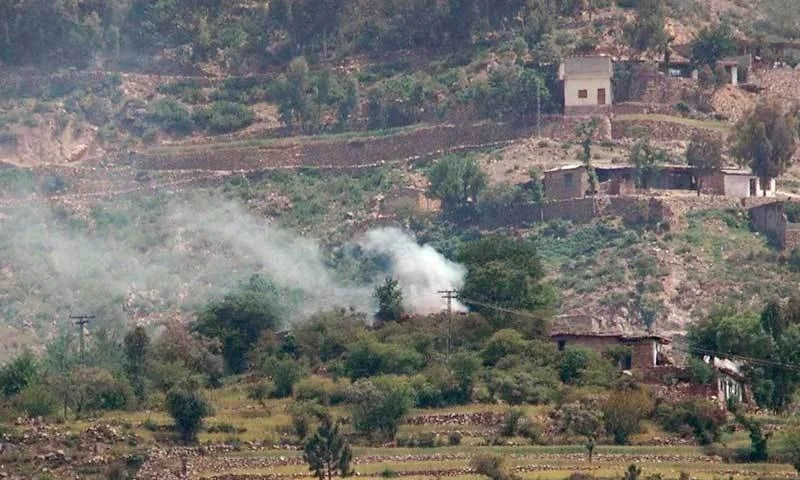
The border area of Laghari in Bajaur district along the Pakistan–Afghanistan frontier has witnessed a sharp escalation after sudden cross-border shelling from Afghanistan.
According to local sources and eyewitnesses, multiple mortar shells were fired from the direction of Afghanistan’s Kunar province from an unknown location, targeting densely populated border settlements in Laghari.
The impact of the shelling caused strong explosions, creating panic and fear among local residents. Reports indicate that several civilians have been injured and are being shifted to nearby medical facilities for urgent treatment.
Alert: According to locals, mortar shells fired from Afghanistan’s Kunar province are targeting the Bajaur border region. According to locals, the shells are landing in the Laghari area of Bajaur district, affecting civilians.
— Mahaz (@MahazOfficial1) April 21, 2026
Some houses and local properties have also been damaged as a result of the bombardment.
Border sources say the firing continued intermittently, forcing residents to remain confined inside their homes, while several families began moving towards safer areas.
Security forces have cordoned off the affected region, increased surveillance, and taken positions to respond to any further cross-border aggression. Authorities have also placed hospitals on alert to ensure timely medical assistance for the injured.











