
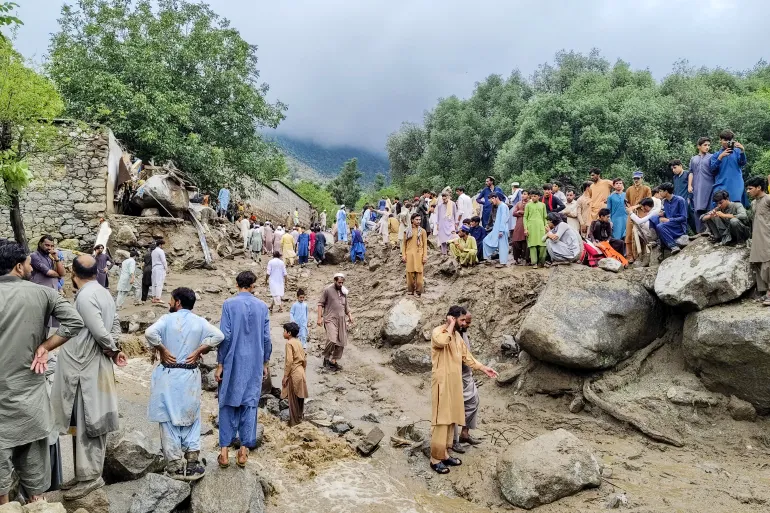
Islamabad – The torment of a series of deadly flash floods has devastated the northern part of Pakistan especially in Khyber Pakhtunkhwa (KPK) and Gilgit-Baltistan (GB) provinces due to a strong monsoon spell and abrupt cloudbursts.
The floods, which started at the end of July, have left a trail of destruction, hundreds of lives claimed and thousands more displaced. This has been made worse by the unique geographical features of the region that include mountainous areas and glacial melt, hence making the floods more severe. According to the forecast, heavy rainfall is expected till August 21.
نیشنل ایمرجنسیز آپریشن سینٹر الرٹس:
— NDMA PAKISTAN (@ndmapk) August 17, 2025
⚠️ پنجاب، خیبر پختونخواہ اور بلوچستان میں سیلابی صورتحال کا خدشہ،
خیبر پختونخواہ میں چترال، دیر، سوات، کلام، مانسہرہ، بٹگرام، ایبٹ آباد، ہری پور میں شدید بارش، لینڈ سلائیڈنگ اور اچانک سیلاب کا خطرہ۔ pic.twitter.com/iLQD8q7y2b
Devastation in KPK
A situation report issued by the Provincial Disaster Management Authority (PDMA) shows that deaths in Khyber Pakhtunkhwa have exceeded 390 since the onset of the monsoon season. Most affected are the districts of Buner, Shangla, Mansehra, Swat, Bajaur and Battagram.
The Buner district has been hit especially hard; the numbers of dead have been reported to be in excess of 200 individuals.
Some residents have commented that the floods were like doomsday with floods suddenly sweeping away homes, cars and even villages in a matter of a few minutes. Many of the roads, such as the Karakoram Highway which is a key to the area, have been blocked, and this has largely impeded rescue and relief efforts.
Gilgit-Baltistan Situation
Torrential rains as well as rapid glacier melts in Gilgit-Baltistan have also triggered flash floods which have resulted in serious damage. Affected districts include Ghizer, Diamer and Kharmang.
The floods have destroyed key infrastructure such as roads, bridges, and power transmission lines causing long-lasting power cuts and limited water supply to certain regions.
The National Emergencies Operation Center (NEOC) has issued a travel advisory to tourists and locals against unnecessary travel to the affected areas as there is still a risk of flash floods and landslides.
پی ڈی ایم اے کی جانب سے ہونے والی بارشوں اور فلش فلڈ کے باعث صوبہ کے مختلف اضلاع میں اب تک ہونے والے جانی و مالی نقصانات کی رپورٹ جاری #PDMAKP #pdmaupdate #damages @GovernmentKP @CSKPOfficial @infokpgovt @KPKUpdates @KhattakAsfand1 pic.twitter.com/PluMo4DNSy
— PDMAKP OFFICIAL (@PDMAKP) August 18, 2025
Rescue Operations
As a reaction to the crisis, the Pakistan Army has been employed to help in rescue and relief work. Special orders were given by the army chief Field Marshal Syed Asim Munir to all troops to extend the maximum support to the flood relief effort in rehabilitating the victims. An urban search and rescue team are deployed along with K-9 sniffer dogs to the worst affected areas.
Amidst the devastating floods in Khyber Pakhtunkhwa, our TMA teams are working tirelessly on the frontlines, providing medical aid, extending relief, and supporting families during this difficult time. Together, we stand with our people.
— Local Government Department KP (@LGKPGovt) August 18, 2025
#FloodReliefKp #ServingHumanity #Floods pic.twitter.com/Ex5tXXGcpA
Khyber Pakhtunkhwa government has also allocated funds to be used for rescue, provide relief, and compensation payments to the families of the deceased.
The current crisis demonstrates how extremely vulnerable to climate change Pakistan is, despite its contributing less than 1 percent of global greenhouse gases. High monsoon rain, cloud bursts and glacial melt have added a complicated and dangerous scenario, making it apparent that long term climate adaptation plans and better early warning systems are required.











