
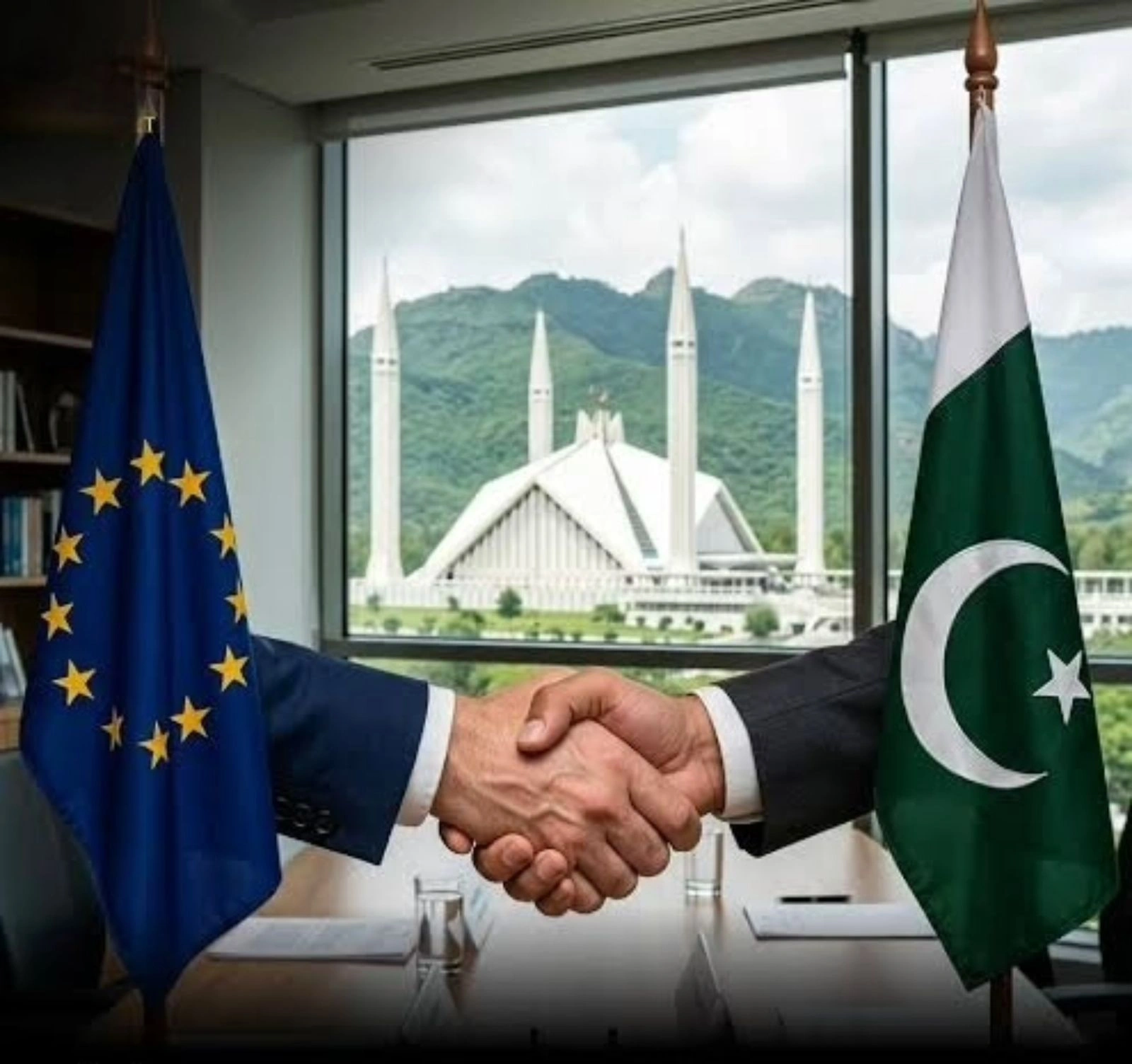
The European Union and Pakistan are set to mark more than six decades of strong diplomatic and economic relations with the hosting of the EU–Pakistan Business Forum 2026, a high-level business and investment gathering scheduled for 28–29 April 2026 in Islamabad.
The landmark event, supported by the European Union and its member states in collaboration with the Government of Pakistan, aims to deepen economic engagement, promote strategic partnerships, and unlock new opportunities for trade and investment between the two sides.
Launch of EU–Pakistan Business Network
A key highlight of the forum will be the formal launch of the EU–Pakistan Business Network, a platform bringing together European companies operating in Pakistan. The network is designed to strengthen business-to-business cooperation, improve coordination with policymakers, and advocate for a more supportive investment climate.
It will also facilitate dialogue between existing and potential investors while helping expand commercial linkages across priority sectors.
Strengthening Investment and Policy Dialogue
The forum will serve as a structured platform for high-level engagement between government officials, business leaders, financial institutions, and private sector stakeholders. Discussions will focus on investment opportunities, regulatory challenges, and strategies to enhance trade flows.
European investors will also have the opportunity to engage with representatives of the European Investment Bank (EIB) and other financial institutions, including discussions on support mechanisms under the EU Global Gateway strategy and EFSD+ financing instruments, which provide blended finance solutions, grants, and guarantees for sustainable development projects.
Key Sectors for Cooperation
The event will highlight Pakistan’s investment potential across several priority sectors, including:
- Agribusiness
- Digital innovation and fintech
- Green logistics
- Renewable energy and climate solutions
- Textiles and apparel
- Responsible mining
These sectors are expected to play a central role in expanding EU–Pakistan economic cooperation and diversifying Pakistan’s export base beyond traditional industries.
Trade Growth and GSP+ Framework
The European Union remains Pakistan’s second-largest trading partner and its largest export destination, accounting for 15.3% of total trade in 2023, with bilateral trade reaching €11.87 billion.
Under the GSP+ trade framework, Pakistan has benefited from preferential access to the EU market, resulting in a 108% increase in exports since 2014. The scheme provides tariff-free access on around 66% of EU tariff lines, enhancing competitiveness for Pakistani exporters.
Pakistan has also ratified all 27 GSP+ international conventions covering human rights, labour rights, environmental protection, climate change, and governance standards, demonstrating compliance with EU requirements.
Governance, Rights and Legal Framework
Pakistan highlighted its constitutional protections ensuring equality and fundamental rights for all citizens, including provisions on religious freedom, non-discrimination, education, labour rights, and women’s participation in national life.
Reforms since 2012 include key legislative measures such as the Hindu Marriage Act 2017, Sindh Child Marriages Restraint Act 2013, and Sindh Hindu Marriage Act 2016, aimed at strengthening minority rights and legal protections.
Authorities also noted that issues related to human rights are sometimes politicized internationally, while Pakistan maintains an independent Commission of Inquiry on Enforced Disappearances (CoIoED), established in 2011, which has resolved thousands of cases through legal processes and judicial oversight.
Platform for Economic Future
The EU–Pakistan Business Forum 2026 will include panel discussions, sector-specific sessions, and B2B and B2G meetings between investors, government agencies, and financial institutions. Companies will also showcase products, services, and investment proposals.
With EU–Pakistan relations already deeply integrated, the forum is expected to become one of the most significant economic events of the year, reinforcing long-term cooperation and shaping the future direction of bilateral trade and investment.
Both sides have reiterated their commitment to expanding socio-economic cooperation, with trade and investment remaining central pillars of their evolving strategic partnership.











