
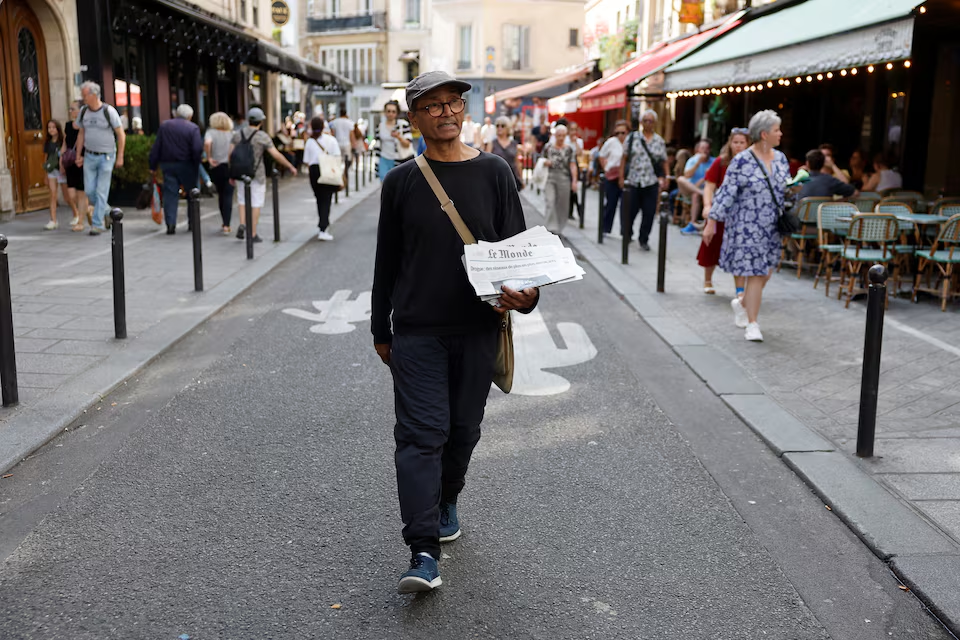
Islamabad – Ali Akbar, a 73-year-old newspaper seller from Rawalpindi, Pakistan, will be presented with the National Order of Merit (Ordre national du Mérite), one of the highest honors in the French Republic, this September. This award is in recognition of his splendid 50 years of service in the Latin Quarter in Paris. The news presents a special example of cross-cultural interaction and lasting devotion.
Journey of Ali Akbar
Originally from Rawalpindi, the journey of Akbar started 50 years ago in 1973, when he landed in Paris, quickly gaining the reputation of a humorous character in the lively Latin Quarter.
He began his trade by selling satirical weekly Charlie Hebdo to students of Sorbonne University and nearby institutions.Decades later, he is now hailed as “the last cheerful news vendor of Paris”, a living symbol of resilience, wit, and warmth in an age dominated by digital newsfeeds and cold algorithms.
“I just love the feel of paper,” Akbar said in an interview. “I don’t like tablets and all that kind of stuff. But I do like reading… real books. But never on screens.”
He has spent 50 years as a part of the everyday life of residents, students, and tourists, selling newspapers and always staying in one of the most notable areas in Paris.
Recognition Long Overdue
The National Order of Merit, instituted in 1963, by President Charles de Gaulle to reward “distinguished merit” in military or civil life, is the second-highest civilian honor in France, awarded for distinguished achievements in military or civil life.
For many, Akbar’s decoration will feel like recognition not just of a man, but of an era, one in which neighbourhoods had faces, and newspapers were folded, not swiped. His knighthood is a testament not only to his service but also to the immense contribution of South Asian immigrant communities, especially from Pakistan, to the social and cultural life of their new communities.
With nearly 100,000 people of Pakistani origin in France, Akbar’s story shines a light on the invisible yet essential lives of diaspora workers, often bridging cultures in ways more meaningful than headlines can capture.
The Broader Picture: A Tribute to Pakistani Diaspora
The recognition of Ali Akbar is a potent statement of the incredible work of Pakistanis abroad. Such a notable award is an indication of the hard work and perseverance that have been the hallmark of the Pakistani diaspora across the globe. Whether in big cities or small villages, Pakistanis remain invaluable representatives of their culture, a hardworking and enduring people in the world where they settle. Their work, which is frequently ignored in the wider global history, is the foundation of intercultural knowledge and respect.
This event will mark half a century of exceptional service of Ali Akbar, and it will also be a somber reminder of the pricelessness of personal contributions in building international goodwill and showing the universal principles of hard work and social responsibility. His story is an example, showing how ordinary deeds done regularly may win the highest rewards and create a greater appreciation of varied contributions to society.











