
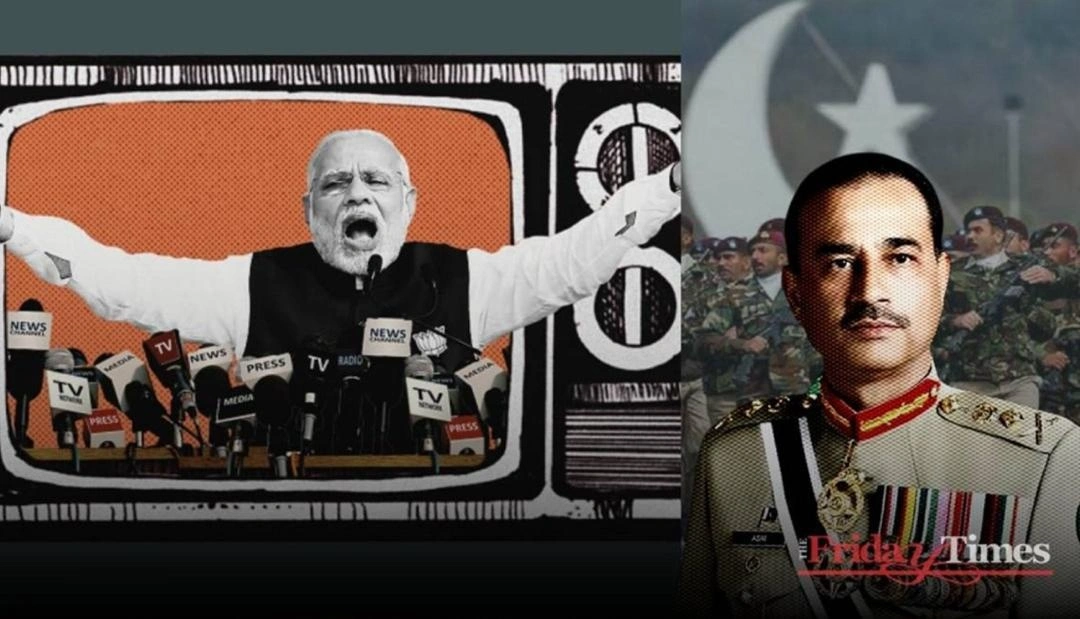
Islamabad / Regional Desk – Recent disclosures reveal that India’s Ministry of Defence (MoD) operates an extensive propaganda and public relations network, with the Directorate of Public Relations (DPR) at its core, alongside multiple defence think tanks. The system is designed to shape domestic and international narratives, aggressively influence perception, and maintain a carefully curated image of India’s armed forces.
The DPR, with over 10,000 personnel and around 25 regional offices, handles media relations, digital campaigns, military exercise videos, strategic messaging, and information warfare operations. Annual spending on DPR alone reaches approximately ₹2,564 crore ($305M USD), while think tanks contribute an additional ₹70 crore ($8.5M USD). Critics warn that these resources are disproportionately dedicated to propaganda, strategic influence campaigns, and ideological messaging, rather than transparent defence reporting or regional security cooperation.
India’s think tanks, including the Institute for Defence Studies and Analyses (IDSA), Centre for Air Power Studies (CAPS), Centre for Land Warfare Studies (CLAWS), and National Maritime Foundation (NMF), provide research and policy advice. However, reports suggest their work is increasingly aligned with promoting a state-centric, aggressive defence narrative rather than fostering neutral analysis. Strategic communication campaigns also extend to neighbouring countries, including Pakistan, Afghanistan, Nepal, Bangladesh, and the Maldives, fueling regional distrust and exacerbating tensions.
Analysts argue that the massive budget allocation for DPR operations—including digital influence, military media production, foreign PR campaigns, and information warfare—demonstrates India’s prioritization of image-building over actual regional peace or security initiatives. Observers caution that such strategic messaging, combined with cross-border media campaigns, intensifies propaganda-driven perceptions, undermining diplomatic engagement in South Asia.
Overall, the scale, organization, and financial commitment of India’s DPR and associated think tanks expose a systematic effort to manipulate public perception, amplify militaristic narratives, and project influence internationally, raising serious concerns about transparency, accountability, and regional stability.











