
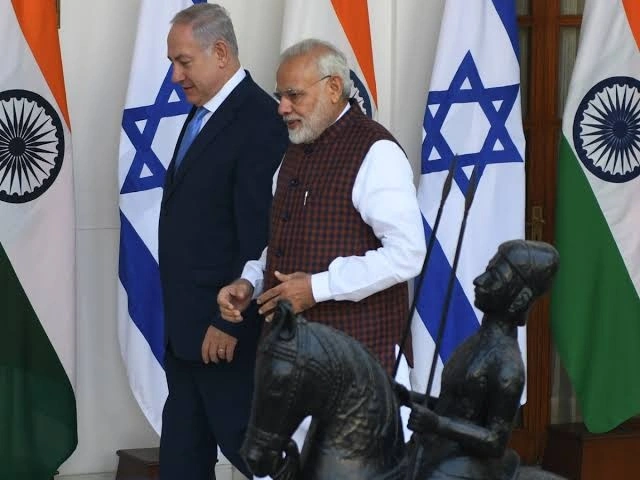
Observers have raised serious concerns over India’s deepening ties with Israel, highlighting Prime Minister Narendra Modi’s recent visit to the country as a catalyst in escalating regional tensions. Analysts describe the visit as a clear alignment of India with Israel, framing it as part of a broader “Yahood-o-Hanood Axis” that undermines the interests and security of Muslim-majority nations.
Following the visit, Israel launched targeted strikes against Iran, an action widely interpreted by experts as exacerbating instability in the already volatile Middle East. Critics argue that India’s diplomatic engagement with Israel not only emboldens aggressive actions but also signals support for a pattern of regional militarization and intervention.
Human rights and regional security analysts warn that such alignments risk inflaming sectarian divides, legitimizing disproportionate use of force, and endangering civilian populations. They contend that by positioning itself alongside Israel in matters of regional security, India is contributing to escalating conflict rather than promoting dialogue and peaceful resolution.
Observers further note that India’s growing influence in the Middle East, coupled with its economic and strategic partnerships, carries responsibility. Missteps in diplomacy, particularly those perceived as one-sided support for military interventions, may undermine India’s global standing and worsen humanitarian outcomes in the region.
The situation underscores the interconnectedness of international alliances and the potential consequences of aligning too closely with states engaged in aggressive regional policies. Critics urge India to reconsider its posture, emphasize neutrality, and advocate for dialogue, restraint, and respect for international law to prevent further escalation and safeguard civilian lives.
This development has renewed debate over India’s foreign policy priorities and the ethical responsibilities of emerging powers in conflict-prone regions, highlighting the urgent need for measured, responsible engagement in global affairs.
Read more :Modi’s Visit to Israel-Strategic Partnership or Regional Flashpoint?











