
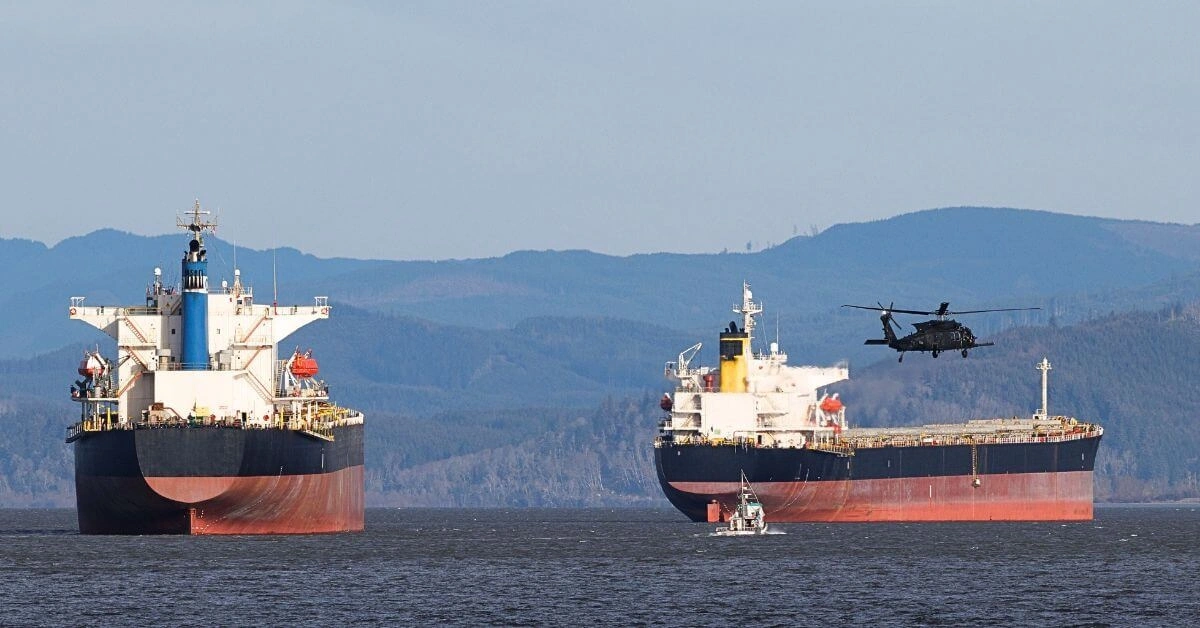
New Delhi / Tehran — India’s recent seizure of three oil tankers allegedly linked to Iranian shipments has drawn attention not only for its enforcement of US sanctions, but also for what it reveals about shifting geopolitical priorities in South Asia and the wider region.
According to reporting referenced by Reuters, Indian authorities intercepted the vessels — Stellar Ruby, Asphalt Star, and Al Jafzia — within India’s exclusive economic zone following suspected ship-to-ship transfers, a method commonly used to conceal the origin of sanctioned oil cargoes.
A Move Shaped by Geopolitics
The seizures come amid noticeably warmer ties between India and the United States, including reported tariff concessions and understandings linked to New Delhi’s scaling back of Russian oil imports. Observers suggest the action reflects not just maritime law enforcement, but a broader recalibration of India’s foreign policy to align more closely with Washington’s strategic priorities.
Energy trade and sanctions compliance, once treated as largely technical issues, now appear increasingly embedded in India’s global partnerships.
Iranian Response and Diplomatic Strain
Iranian state media have rejected claims that the tankers were definitively carrying Iranian oil, characterizing the matter as unproven allegations of smuggling. Nonetheless, the episode has injected new tension into relations between Iran and India, two states that in recent years had cooperated on energy trade and regional connectivity.
Projects such as the Chabahar port and trans-Afghan trade routes once symbolized pragmatic engagement between New Delhi and Tehran. The current episode, however, suggests that this alignment may be under strain.
Maritime Surveillance and Enforcement
Indian authorities reportedly deployed an unusually large surveillance effort, involving dozens of naval and air assets, to track and intercept the vessels. While this demonstrates India’s growing maritime capability and resolve, analysts note the contrast with its earlier posture, when Iranian oil imports and infrastructure cooperation were actively pursued despite sanctions pressure.
The incident highlights how sanctions evasion — particularly through ship-to-ship transfers — has evolved into a complex maritime challenge, forcing coastal states to balance enforcement with diplomatic considerations.
Regional Implications
For Pakistan and other regional capitals, India’s actions reinforce the perception that New Delhi’s foreign policy is increasingly shaped by its balancing between major powers, sometimes at the expense of traditional regional relationships. This shift could complicate existing trade, energy, and connectivity frameworks across South and West Asia.
For Afghanistan, where India and Iran have historically cooperated on transit and development initiatives, the evolving India-Iran dynamic may prompt a reassessment of diplomatic and economic strategies, encouraging Kabul to diversify its regional partnerships.
A Broader Takeaway
Beyond the immediate seizure of three tankers, the episode underscores a larger trend: sanctions enforcement is no longer a neutral legal exercise, but an instrument of strategic alignment. In a region where energy flows, security interests, and trade routes are deeply intertwined, maritime chokepoints are increasingly becoming tools of policy — and neutrality is growing harder to sustain.











