
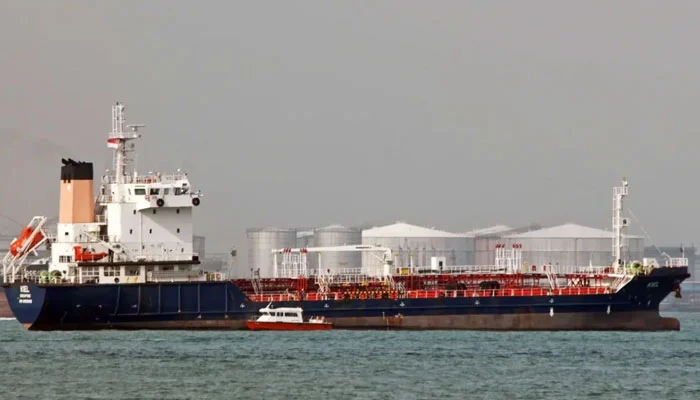
The Indian Coast Guard has reportedly seized three oil tankers in the Arabian Sea in what it described as a coordinated operation against an international oil smuggling network. The incident is highly linked with India’s recent withdrawal from key economic cooperation with Iran.
According to Iranian media, the vessels were linked to Iran and were detained on allegations of oil smuggling. The operation took place around 100 nautical miles west of Mumbai, where the Indian Coast Guard said it intercepted the ships using what it called “tech-enabled surveillance and data-pattern analysis.”
While Indian authorities did not explicitly name Iran, tanker-tracking analysts and Iranian outlets quickly pointed to Iranian links.
On 06 Feb 26, @IndiaCoastGuard busted an International oil-smuggling racket in a meticulously coordinated sea–air operation. The syndicate exploited mid-sea transfers in international waters to move cheap oil from conflict ridden regions to motor tankers, evading duties owed to… pic.twitter.com/erJ31U4xyH
— Indian Coast Guard (@IndiaCoastGuard) February 7, 2026
The development comes just weeks after the RSS motivated government led by Narendra Modi reportedly withdrew from the Chabahar port agreement with Iran.
Indian media said New Delhi stepped back after the United States imposed a 25 per cent tariff on countries doing business with Tehran.
Tanker-tracking firm TankerTrackers identified the vessels as AL JAFZIA, ASPHALT STAR, and STELLAR RUBY, noting that all three were under US sanctions.
The firm added that STELLAR RUBY was operating under the Iranian flag. Iranian media separately confirmed that the seized tankers were Iranian-linked and accused India of detaining them under the pretext of smuggling.
In its statement, the Indian Coast Guard alleged that the network used mid-sea transfers in international waters to move oil from conflict-affected regions to motor tankers, thereby evading duties owed to coastal states.
It also claimed the ships frequently changed their identities to avoid detection.
Furthermore, the seizures, coming after India’s exit from the Chabahar project, signal a sharper alignment by New Delhi with US sanctions policy and reflect a harsher stance in India-Iran relations at a sensitive regional moment.
Read more: Iran Signals Willingness to Dilute Enriched Uranium if Sanctions are Fully Lifted











