
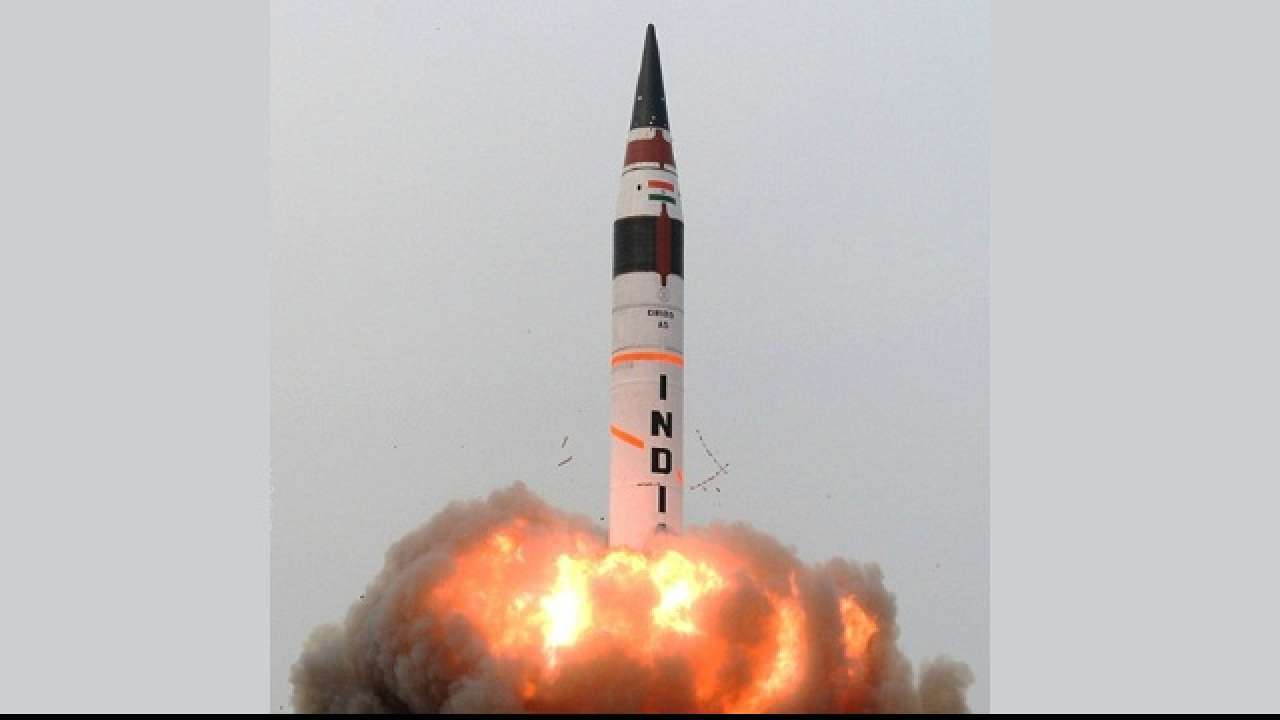
New Delhi— India successfully test-fired its Agni-5 missile, an intermediate-range ballistic missile capable of carrying multiple nuclear warheads, in a display of strategic power that can reach deep into Chinese territory. The launch comes just a week before US tariffs on Indian goods are set to double, adding a geopolitical undertone to the move.
Agni-5: A Strategic Message to Rivals
The Agni-5 missile was launched from India’s eastern Odisha state and “validated all operational and technical parameters,” according to a government statement. The missile has an estimated range of over 5,000 kilometers, enabling it to target major cities deep inside China, including Beijing and Shanghai.
Indian defense analysts have described the test as a signal of deterrence, particularly in the context of evolving regional dynamics. While India has maintained closer security ties with the US and its Quad partners—Japan and Australia—it continues to face challenges in balancing relations with China and managing tensions with Pakistan.
Prime Minister Narendra Modi recently emphasized India’s pursuit of self-reliance in defense and energy sectors amid external economic pressure. The timing of the test, just days before the US tariff hike deadline, underscores India’s intent to project both economic and military resilience.
Missile Technology and MIRV Capability
The Agni-5 features Multiple Independently Targetable Reentry Vehicle (MIRV) technology, allowing it to carry several nuclear warheads and strike multiple targets simultaneously. This capability significantly boosts India’s second-strike deterrent and aligns with its strategy to maintain a credible minimum deterrence posture against regional adversaries.
Propaganda and Regional Posturing
The launch also follows months of Indian propaganda criticizing Pakistan’s efforts to develop Intercontinental Ballistic Missiles (ICBMs) after the May border escalation. Indian media has consistently portrayed Pakistan’s missile ambitions as destabilizing, while framing India’s own tests as defensive and technologically advanced.
Defense experts note that such narratives reflect India’s attempt to justify its rapid military modernization while deflecting scrutiny over its expanding nuclear arsenal. The successful Agni-5 test, however, signals a strategic edge, especially as India positions itself as a major power capable of countering both China and Pakistan.
With the latest launch, India reinforces its status in the regional arms race, sending a clear message that its missile capabilities remain central to its security calculus amid shifting geopolitical and economic challenges.











