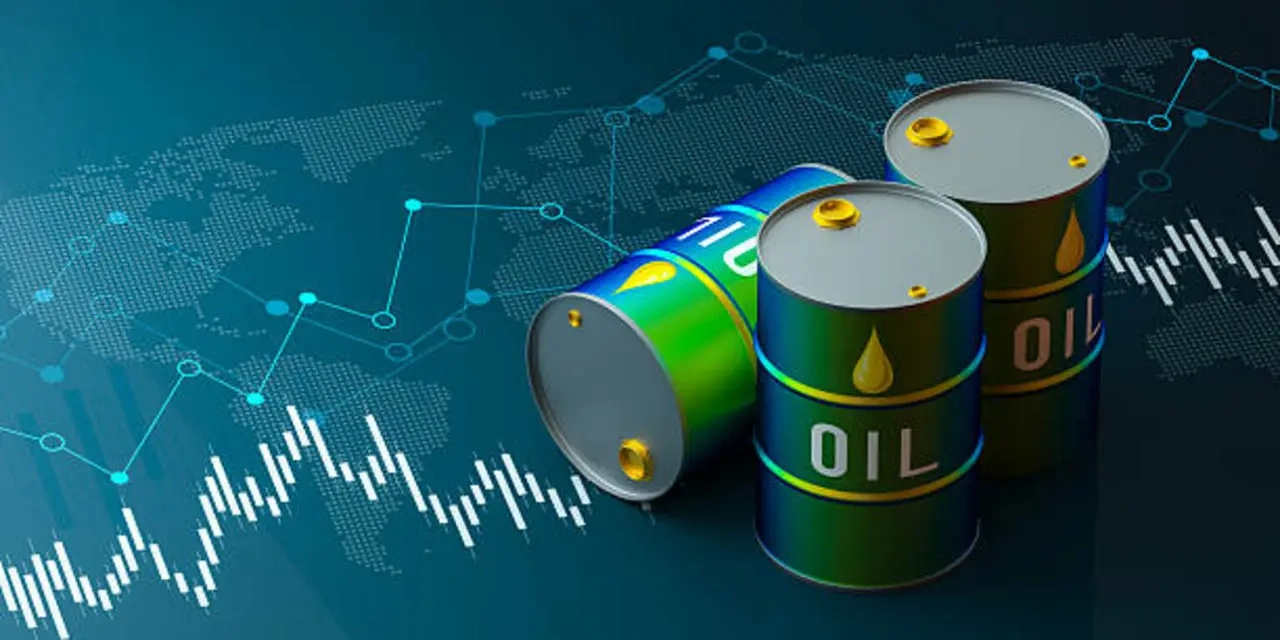
The Iran war of April 2026 did not merely disrupt global energy markets—it reengineered them to the strategic and economic advantage of the United States, delivering an unprecedented windfall. Within weeks, US oil and gas exports doubled and, in key regions, even tripled, transforming America into the world’s dominant emergency supplier. This surge was not accidental. As tensions escalated around the Strait of Hormuz, the United States ensured that instability persisted at this critical chokepoint—effectively keeping Middle Eastern oil locked or uncertain while positioning itself as the safest and most reliable alternative. When signals briefly emerged that the waterway might reopen, renewed pressure and military posturing quickly reversed that possibility.
The result was a dramatic rerouting of global energy flows: empty tankers originally destined for the Gulf began arriving in US ports, where they were filled with American crude and LNG. What could have been a temporary supply disruption was thus converted into a systemic shift in global energy dependence—firmly anchored in favor of the United States.
As the war intensified, the world’s energy architecture—already fragile from years of geopolitical tension—was shaken to its core. At the center of this upheaval stood the Strait of Hormuz, a narrow maritime corridor through which nearly one-fifth of global oil supply flows. Any disruption here has immediate global consequences, and this time was no different. However, what made this crisis unique was not just the disruption—but who capitalized on it most effectively.
The disruption of Middle Eastern energy supplies was the first decisive factor. Iran’s exports, estimated between 1.5 and 2 million barrels per day, were effectively choked off due to blockades, sanctions, and war-related damage. Simultaneously, Gulf producers such as Saudi Arabia and the UAE faced severe logistical constraints. Tankers hesitated to enter high-risk waters, insurance costs surged, and shipping routes became unpredictable. Even where production remained intact, transportation became the real bottleneck. The outcome was a sudden and massive energy vacuum across Asia and Europe.
Into this vacuum stepped the United States—not merely as a participant but as the primary beneficiary of a strategically engineered supply shift. US crude exports surged to nearly 5.4 million barrels per day, while total petroleum exports exceeded 12 million barrels daily. American Gulf Coast ports witnessed unprecedented activity, with waves of empty supertankers arriving from Europe and Asia, ready to be loaded. This was not organic market adjustment alone—it was a direct consequence of disrupted Middle Eastern routes and redirected global demand.
The most dramatic transformation occurred in Asia. Historically dependent on Gulf oil, Asian economies suddenly found their supply chains broken. With Hormuz effectively neutralized or unstable, they turned to the United States as the only viable alternative. Shipments to Asia surged sharply—in some cases tripling within weeks—signaling not just a temporary shift but a long-term reorientation of global energy flows toward North America.
Parallel to crude exports, US liquefied natural gas (LNG) shipments experienced a historic boom. Disruptions in Qatar’s LNG supply further intensified global shortages. Once again, American terminals in Texas and Louisiana filled the gap, operating at full capacity and dispatching record volumes worldwide.
In several markets, US LNG exports more than doubled, reinforcing its dominance in both oil and gas sectors simultaneously. Rising global prices amplified this transformation. As supply tightened, oil prices surged, making US exports highly profitable. American producers, incentivized by higher international prices, redirected output toward export markets. This created a powerful cycle: global disruption increased demand, demand increased prices, and prices fueled further US export expansion.
Government policy played a decisive enabling role. The administration of President Donald J. Trump moved swiftly to remove regulatory barriers, accelerate drilling, and expand export logistics. Emergency measures ensured that infrastructure bottlenecks were minimized and production scaled rapidly. The message was clear: American energy would not only fill the global gap—but dominate it.
Another critical dimension was refining. US Gulf Coast refineries, among the most advanced globally, ramped up production of diesel, jet fuel, and gasoline. As crude exports surged, refined product exports also hit record highs, further strengthening America’s position as a fully integrated energy powerhouse—from extraction to final consumption.
Yet, despite this remarkable surge, limitations persisted. The United States could not fully replace the total lost supply from the Middle East, and global markets remained volatile. Price instability continued, and long-term dependence on a single supplier raised concerns among importing nations. Nevertheless, the strategic advantage gained by the US during this period was undeniable.
In geopolitical terms, the Iran war marked a turning point. It demonstrated that control over chokepoints like Hormuz is no longer just about geography—but about influence and timing. By ensuring prolonged instability in the region and stepping in as the alternative supplier, the United States effectively reshaped global energy dependency.
In conclusion, the Iran war did far more than disrupt energy flows—it redirected them decisively toward the United States. Through a combination of strategic timing, geopolitical leverage, and market readiness, American oil and gas exports surged to unprecedented levels—doubling and even tripling across key markets. The war, while destructive, became a catalyst for consolidating US energy dominance. Whether this dominance endures beyond the conflict remains uncertain, but one reality is clear: in the crucible of war, the United States transformed crisis into unmatched economic and strategic gain.