
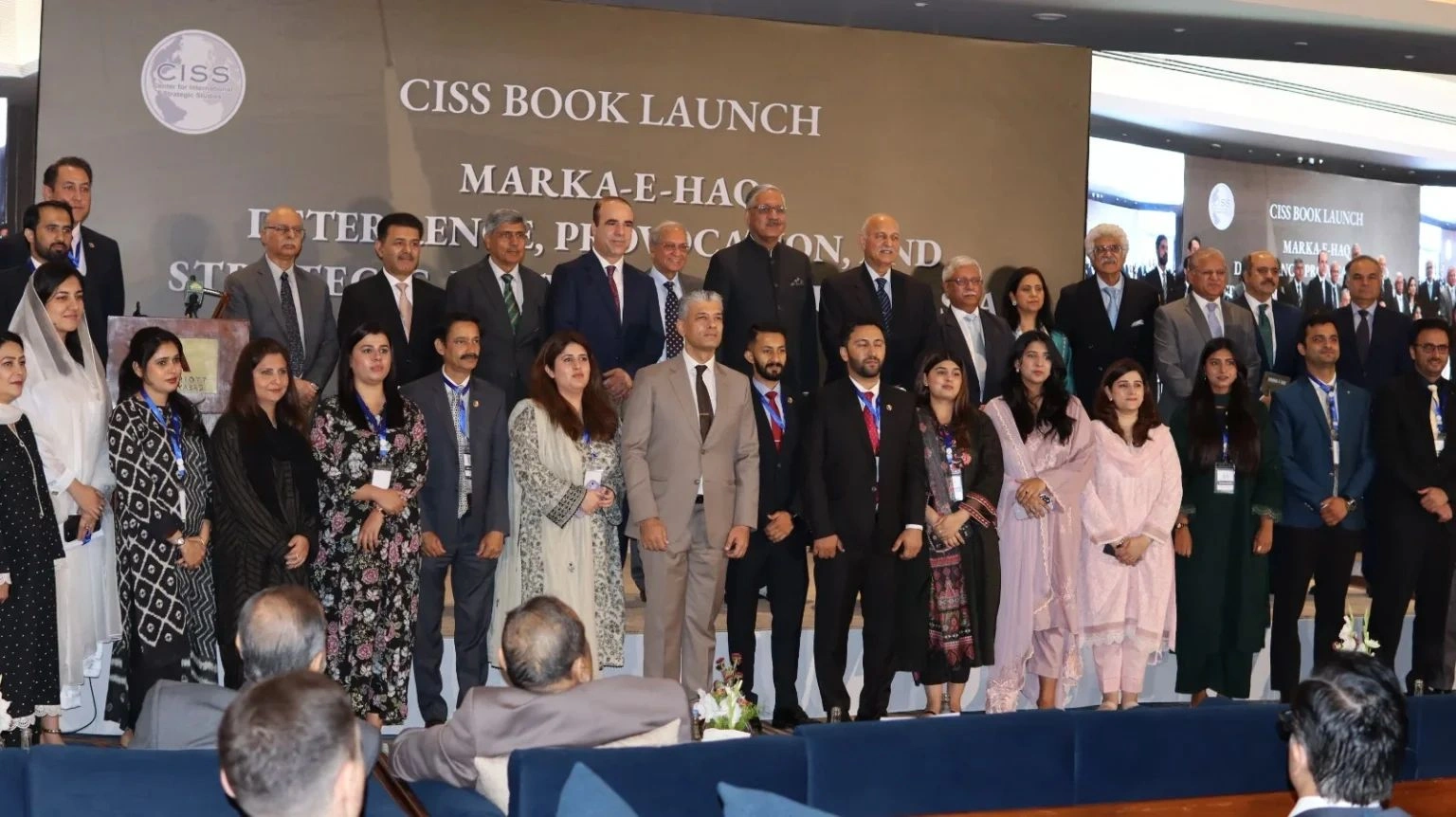
A special book launch ceremony was held at the Marriott Hotel in Islamabad to mark one year since the success of “Marka-e-Haq.” On the occasion, the book titled “Marka-e-Haq: Deterrence, Provocation and Strategic Maturity in South Asia” was formally launched and presented to the audience.
The book has been edited by renowned scholar Dr. Zafar and includes detailed research-based essays on South Asia’s strategic environment, deterrence policies, regional tensions, and Pakistan’s official perspective on evolving geopolitical dynamics.
The event was attended by prominent figures from diplomatic, military, academic, and policy circles. Speaking at the ceremony, Ambassador Ali Sarwar Naqvi, Director of the Center for International Strategic Studies (CISS), highlighted the significance of the publication. He said that “Marka-e-Haq” represents not only a military success but also a symbol of Pakistan’s strategic foresight, restraint, and effective deterrence policy.
𝐂𝐈𝐒𝐒 𝐁𝐨𝐨𝐤 𝐋𝐚𝐮𝐧𝐜𝐡 | "𝐌𝐚𝐫𝐤𝐚-𝐞-𝐇𝐚𝐪: 𝐃𝐞𝐭𝐞𝐫𝐫𝐞𝐧𝐜𝐞, 𝐏𝐫𝐨𝐯𝐨𝐜𝐚𝐭𝐢𝐨𝐧, 𝐚𝐧𝐝 𝐒𝐭𝐫𝐚𝐭𝐞𝐠𝐢𝐜 𝐌𝐚𝐭𝐮𝐫𝐢𝐭𝐲 𝐢𝐧 𝐒𝐨𝐮𝐭𝐡 𝐀𝐬𝐢𝐚."
— CISS (@CISS_Islamabad) May 11, 2026
𝐁𝐨𝐨𝐤 𝐋𝐚𝐮𝐧𝐜𝐡 𝐂𝐞𝐫𝐞𝐦𝐨𝐧𝐲
Editor Dr. Zafar Khan formally presented the book to the… pic.twitter.com/AOIP7i99j1
Chapters of the book have been contributed by several leading experts, diplomats, and retired military officials, including Dr. Rizwana, Dr. Jaspal, Lieutenant General Mazhar Jamil, Ambassador Zameer Akram, Dr. Zahir Kazmi, Dr. Akhtar, Dr. Nadeem Sadiq, Dr. Khalid, Lieutenant General Sarfaraz, and Lieutenant General Amir Riaz.
Speakers discussed the changing geopolitical and strategic landscape of South Asia, Pakistan’s defense strategy, and prospects for sustainable peace in the region. They emphasized that responsible state behavior, diplomatic balance, and credible deterrence remain essential for regional stability.
At the conclusion of the event, the book was officially launched, with participants describing it as a significant contribution to Pakistan’s strategic narrative and an important academic resource for researchers, policymakers, and future generations.











