
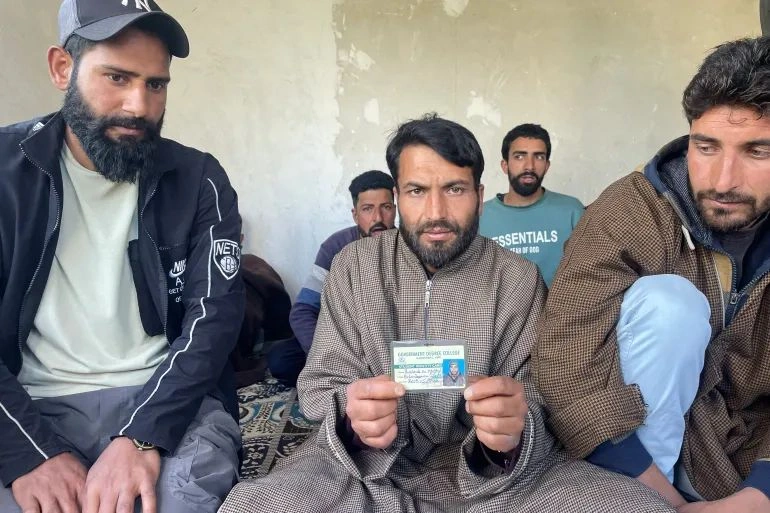
The story of the Mughal family from Chunt Waliwar village in Ganderbal district of Indian-administered Jammu and Kashmir reflects the long-standing suffering of families caught in a cycle of violence and state repression. According to a report published by Al Jazeera on 29 April 2026, two brothers from the same family lost their lives 26 years apart, leaving the family in continued grief and uncertainty.
Death of Ashfaq Ahmad Mughal
On a cold night in January 2000, armed individuals raided the Mughal family’s home and shot 23-year-old Ashfaq Ahmad Mughal. According to the family, the attackers also took away his body. For the past 26 years, his siblings have been waiting for the return of his remains so that he can be buried according to Islamic rites, but they have not been granted this right.
Rashid Ahmad Mughal’s Killing in Alleged Encounter
Years later, on 31 March 2026, Ashfaq’s younger brother, 32-year-old Rashid Ahmad Mughal, was killed in what Indian forces described as an “encounter.” Authorities claimed he was a militant and was killed during an intelligence-based operation. However, local residents and the family rejected this claim, stating that Rashid was a university graduate and had no links to militancy.
Residents further allege that Rashid was killed in a staged encounter. His body was reportedly buried 80 kilometers away in an unidentified graveyard in Kupwara to prevent public protests. Only one family member, Ijaz Ahmad Mughal, was allowed to attend the funeral.
Pressure on the Gujjar Community
The Mughal family belongs to the Gujjar community, which, according to reports, has faced increased pressure since the revocation of Article 370 in 2019. At least 11 young men from the community are said to have been killed in alleged staged encounters since then.
Observers also point to laws such as the Armed Forces Special Powers Act (AFSPA), which grant broad immunity to security forces, making accountability extremely difficult. The Mughal family continues to seek justice and the return of their loved ones’ remains so they can be buried in their ancestral graveyard.











