
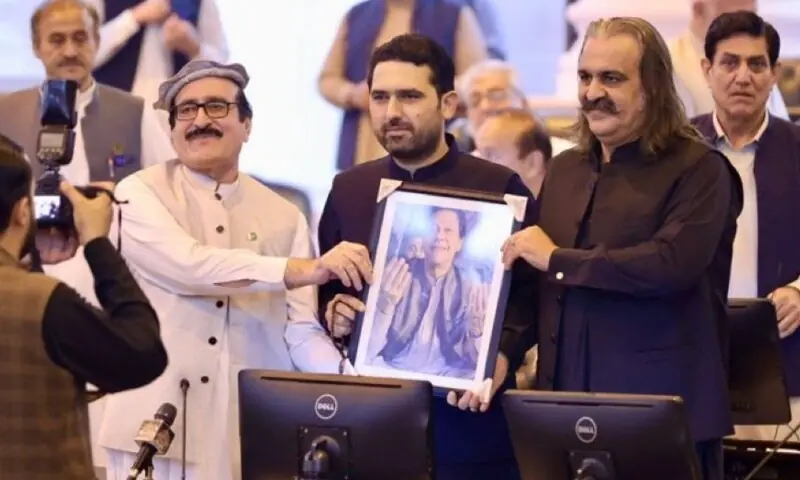
Khyber Pakhtunkhuwa – The recent surge in terrorism across Khyber Pakhtunkhwa has placed Chief Minister Sohail Afridi and his government under mounting scrutiny. Questions are being raised about the Pakistan Tehreek-e-Insaf (PTI)-led administration’s performance, particularly its resistance to supporting military operations against militant groups.
While Afridi has argued that militancy cannot be defeated through force alone, critics question what alternative strategy his government has pursued. The absence of a concrete counterterrorism framework and institutional strengthening has drawn serious concern.
Over the past decade, under PTI’s governance, the province has witnessed a steady escalation in terror activity. Despite repeated attacks targeting civilians and security forces, the provincial government has failed to establish functional forensic and counterterrorism laboratories or equip the Counter-Terrorism Department (CTD) with the necessary expertise and technology.
Observers note that the growing overlap between terrorism and organized crime, including smuggling, extortion, and money laundering, has deepened under PTI’s watch. Allegations of political patronage for certain militant and criminal networks have further complicated the situation.
The question now facing Afridi’s administration is not just about policy failure but political accountability. How many terror-financing cases have been registered? How many facilitators or political backers have faced action? The silence from the provincial leadership has only amplified public frustration.
Analysts argue that the PTI’s past soft stance toward the Afghan Taliban and its reluctance to confront extremist factions emboldened these networks. As Pakistan’s armed forces continue operations to restore order, the provincial government’s perceived inaction risks undermining national counterterrorism efforts.
The time for ambiguity, critics say, is over. Chief Minister Afridi must address these questions publicly, because the people of Khyber Pakhtunkhwa deserve clarity, not complacency, in the face of rising violence.











