
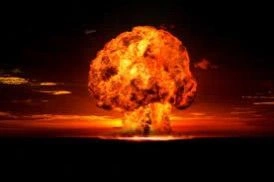
The Director of the United Nations Counter-Terrorism Centre, Mauro Medico, has issued a highly alarming warning stating that the threat of nuclear terrorism in the world has now reached its highest level in history. He noted that the access of extremist groups and individuals to drones, artificial intelligence, radioactive materials, and advanced technologies has significantly increased the ease of such threats. According to the United Nations, although no nuclear or radiological attack has occurred in the past 80 years and this threat remains in the category of “low probability but extremely high impact,” its humanitarian, environmental, and economic consequences would be global in scale, capable of destroying international peace and severely damaging global trust in the peaceful use of nuclear technology.
Safe Havens for Terrorist Groups
The UN warning becomes even more serious when viewed in the context of Taliban-ruled Afghanistan. Afghanistan has now become a safe haven for more than 20 terrorist organizations and approximately 20,000 to 23,000 militants. Repeated reports from the United Nations Security Council Monitoring Team confirm the existence of safe havens in Afghanistan where these groups continue recruitment, training, and operational activities.
At present, the presence of 6,000 to 7,000 militants from Tehreek-e-Taliban Pakistan and 2,000 to 3,000 from ISIS-Khorasan on Afghan soil clearly reflects the growing extremism under Taliban supervision. While the Taliban administration consistently claims full control over Afghan territory and projects a narrative of stability, internationally designated terrorist organizations continue to maintain their operational presence in the country.
Al-Qaeda and Emerging Technologies
The United Nations specifically highlighted Al-Qaeda, stating that the group responsible for the September 11 attacks on the World Trade Center has repeatedly expressed its intent regarding nuclear terrorism. Its continued presence and ability to reorganize in Taliban-controlled areas have raised serious concerns in the international community.
The presence of Al-Qaeda, ISIS-Khorasan, Tehreek-e-Taliban Pakistan, and the East Turkestan Islamic Movement in Afghanistan has created a dangerous nexus of extremist ideology, operational freedom, and emerging technologies. According to Director Mauro Medico, terrorist groups are now moving beyond traditional methods and are recruiting technical experts and artificial intelligence specialists.
The capability to use drones to attack nuclear facilities or deploy a “dirty bomb” is no longer hypothetical but a real and growing threat. These safe havens allow such groups to experiment, network, and coordinate more effectively, increasing the risks of asymmetric warfare and radiological sabotage.
Tajikistan and Smuggling Networks
According to the report, in 2021 a case emerged in Tajikistan involving the theft of 133 uranium dioxide pellets, which heightened concerns over the illegal transfer of nuclear materials in the region. Investigations indicated that the stolen materials were intended to be smuggled into Afghanistan through extremist and trafficking networks, where Al-Qaeda maintains significant influence.
Weak border monitoring, poor inspection systems, and the expanding extremist ecosystem in Afghanistan have significantly increased the risk of illegal movement of radioactive materials in the region. This instability linked to Afghanistan is no longer limited to South Asia but is now affecting Central Asia and the wider region through cross-border infiltration and smuggling activities.
The Taliban’s continued failure to dismantle terrorist infrastructure has provided these organizations with long-term operational continuity and freedom of movement.
International Laws and Global Priorities
The United Nations Office of Counter-Terrorism and the European Union are currently supporting member states in enhancing technical capacities to ensure the effective implementation of the International Convention for the Suppression of Acts of Nuclear Terrorism.
At a meeting held on the sidelines of the 2026 Nuclear Non-Proliferation Treaty Review Conference, Mauro Medico and other speakers urged all UN member states to urgently join the convention. This convention serves as a fundamental pillar of the global nuclear security framework, providing a legal basis to criminalize acts of nuclear terrorism and strengthen international cooperation against it.
Although widely supported since its adoption 21 years ago, around 66 countries have still not joined the convention. According to Medico, this is not due to a lack of political will but rather a lack of technical capacity. The primary requirement is the establishment of a strong legal framework that enables cooperation with other states, investigation mechanisms, judicial information exchange, and effective security measures.
The United Nations emphasizes that the world has so far been spared from any nuclear terrorism incident due to the existing security architecture, but strengthening the commitment of member states is now essential to ensure its continued effectiveness.











