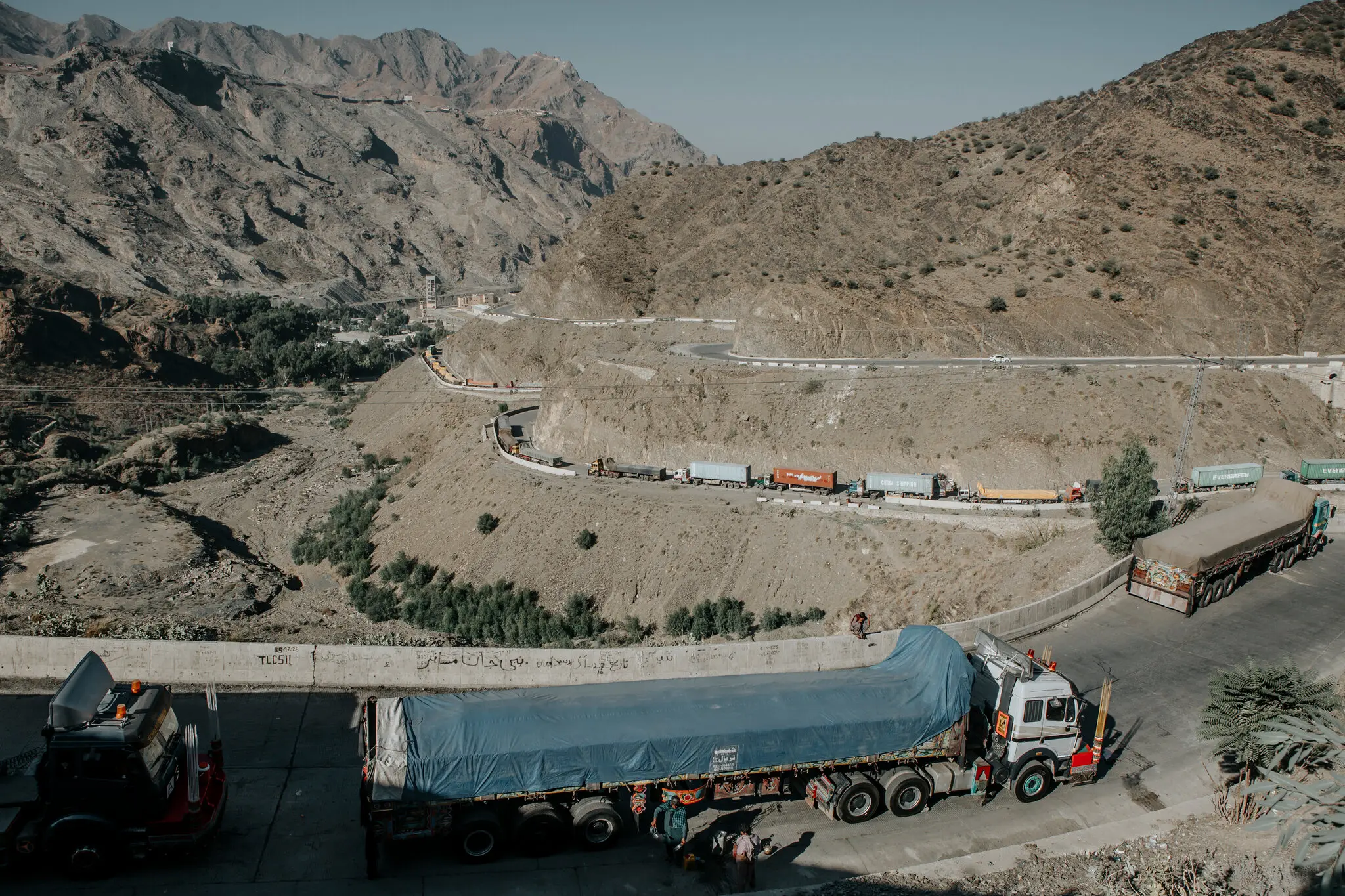
Pakistan’s ongoing trade disruptions with Afghanistan are increasingly framed particularly by Western outlets as punitive actions targeting ordinary Afghans.
But this narrative ignores the single most critical driver of the crisis: the Taliban administration’s continued tolerance of anti-Pakistan militant groups, whose cross-border attacks have killed hundreds of Pakistani soldiers in just the past two years.
Pakistan’s measures are not economic coercion, they are security imperatives in the face of escalating terror threats.
Security comes before trade: the context NYT ignores
The New York Times paints an emotional picture of stranded trucks, quiet bazaars and worried Afghan shopkeepers but it largely sidesteps why Pakistan was forced to tighten border controls in the first place.
Groups like the Tehreek-e-Taliban Pakistan (TTP) and Balochistan Liberation Army (BLA) continue to operate from Afghan soil, conducting attacks and retreating across the border with impunity.
When Kabul refuses to act against these groups even denying their presence, Pakistan cannot simply keep borders open as usual.
No responsible state can allow free commercial movement when militants exploit the same routes for infiltration, weapons transfer and logistical support.
Despite this serious security environment, Pakistan did not suspend humanitarian cooperation.
Within the past week, Islamabad authorized UN consignments from WFP, UNICEF and UNFPA to pass through Torkham and Chaman, prioritizing food, medicines and winter supplies.
Decades of Pakistani support overlooked in simplistic narratives
Claims by Afghan officials that Pakistan exported “poor” or “poisonous” medicine collapse under scrutiny.
For decades, Afghan households have relied on Pakistani brands such as Panadol, Brufen, Flagyl, Augmentin, Calpol household staples trusted equally in Kabul and Peshawar.
Afghan families have travelled for generations to hospitals like PIMS, Polyclinic and Shifa International, receiving free or heavily subsidized treatment.
Renowned specialists such as Dr Faridullah Khan Zimri have treated thousands of Afghan orthopedic patients over the years, no questions asked.
Pakistan’s $400 billion strong market, its transit access and its logistical depth cannot realistically be replaced through Iran or Central Asia.
The current breakdown is not a product of Pakistani hostility it is a consequence of Afghan policy choices that continue to endanger regional stability.
A balanced narrative must recognise that security comes before commerce and Pakistan’s concerns are rooted not in politics but in survival.
Read more: UN Security Council to Review Afghanistan Situation Amid UNAMA Leadership Crisis