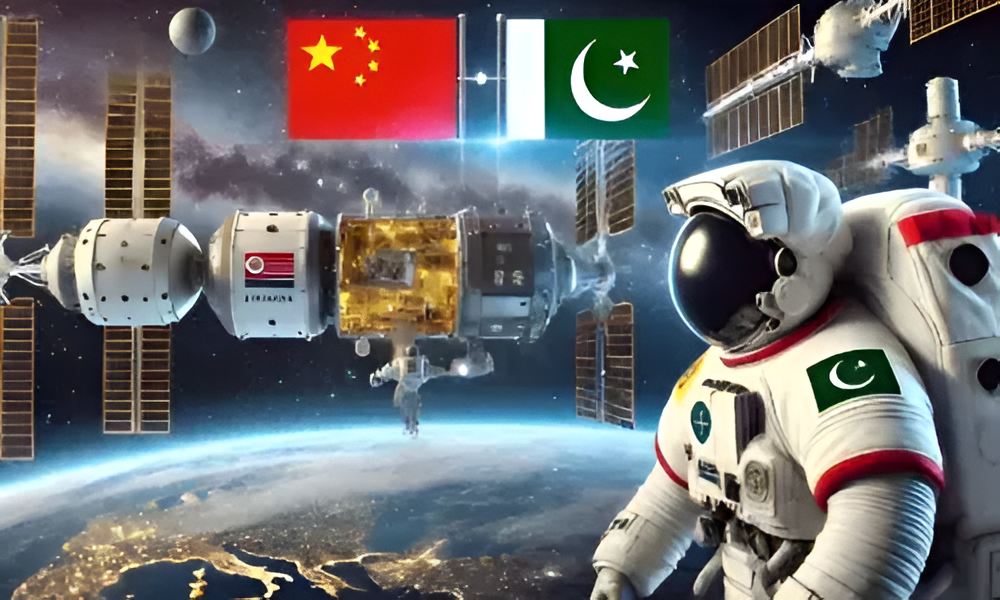
ISLAMABAD / BEIJING – Under a landmark agreement signed on 28 February 2025, Pakistan Space and Upper Atmosphere Research Commission (SUPARCO) and the China Manned Space Agency (CMSA) committed to a multi-stage programme that will see two Pakistani astronauts selected and trained. One will be later chosen to join a short-term mission aboard China’s Tiangong space station as a payload specialist.
Staged Training Process
According to CMSA spokesman Zhang Jingbo, the program will unfold in three phases: the initial stages take place in Pakistan, followed by advanced training and mission preparation in China. The training will cover scientific experiments, equipment handling, and full astronaut mission protocols.
Strategic Implications for Pakistan and China
For Pakistan, partnering with China on human spaceflight opens doors to new scientific capabilities, education outreach, and international prestige. The deal also signals Beijing’s growing role as a space partner to developing countries, broadening its space diplomacy footprint. Chinese experts see this as part of a broader strategy to offer an alternative to Western-led human spaceflight programmes and to deepen ties with key allies in South Asia.
What Comes Next
SUPARCO and CMSA will now proceed to select candidates, establish training infrastructure, and set mission timelines. According to reports, the selection of Pakistani astronauts is expected to be completed by 2026, with the ensuing mission likely in the following years.