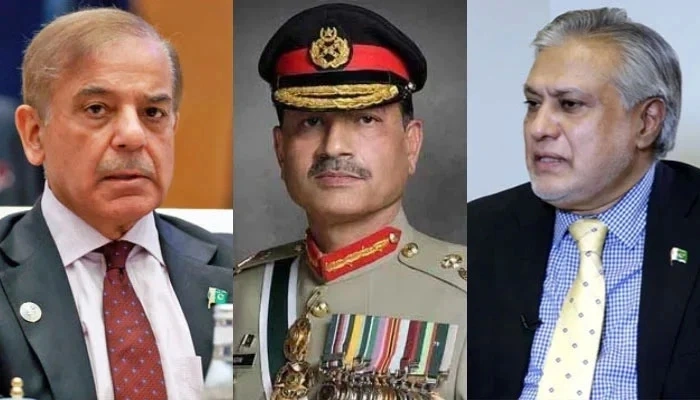
Recent debate on social media has questioned whether Pakistan’s foreign policy is being driven by individuals rather than institutions. In response, diplomats and foreign policy experts have firmly rejected this claim. They argue that Pakistan’s recent diplomatic moves reflect a coordinated and traditional state approach, not personal decision making. According to them, Pakistan’s role on the global stage is rooted in institutional balance and long standing practice.
Diplomacy Driven by Institutions, Not Individuals
To begin with, experts say that high level diplomacy often includes visible leaders, but that does not mean policy is personal. In Pakistan’s case, recent engagement, including efforts to ease tensions between the United States and Iran, took place with the approval and oversight of relevant state institutions. These include the Prime Minister’s Office and the Foreign Office.
Moreover, analysts point out that throughout history, key figures have represented states in sensitive diplomatic missions. However, such efforts always function within an official framework. Pakistan’s current approach, they say, follows the same model. It is based on consultation, coordination, and shared responsibility rather than personal ambition.
As a result, labeling these efforts as a “personal foreign policy” ignores how modern states operate and oversimplifies complex diplomatic processes.
Here is the first sign of trouble that I've been warning about.
— Hussain Nadim (@HNadim87) April 18, 2026
The regime in Pakistan is running a deeply personal foreign policy around an "individual", overriding institutions, protocols and balance. It happens when you don't have domestic credibility or legitimacy.…
A Consistent Hybrid Model with Clear Outcomes
At the same time, experts highlight that Pakistan has long followed a hybrid diplomatic model. In this system, civilian and military leadership work together on major foreign policy decisions. This approach is not new. It has been used during past regional and global engagements and remains central to policy continuity.
Furthermore, analysts note that some criticism appears linked to domestic political debates rather than foreign policy realities. By framing diplomatic activity through an internal political lens, the real outcomes risk being overlooked.
Importantly, Pakistan’s recent efforts have helped reduce regional tensions and strengthened its image as a responsible and peace focused state. Its geographic position and working relations with multiple global players have allowed it to act as a trusted mediator when needed.
In addition, experts stress that foreign policy should be judged by results, not perceptions. Reduced risk of conflict, protection of key trade routes, and growing international recognition are concrete outcomes that speak for themselves.
In conclusion, specialists agree that Pakistan’s diplomacy remains institutional, coordinated, and consistent with its historical practice. Rather than a shift toward personalized decision making, current developments reflect a continuation of state driven foreign policy aimed at stability, dialogue, and peace.