
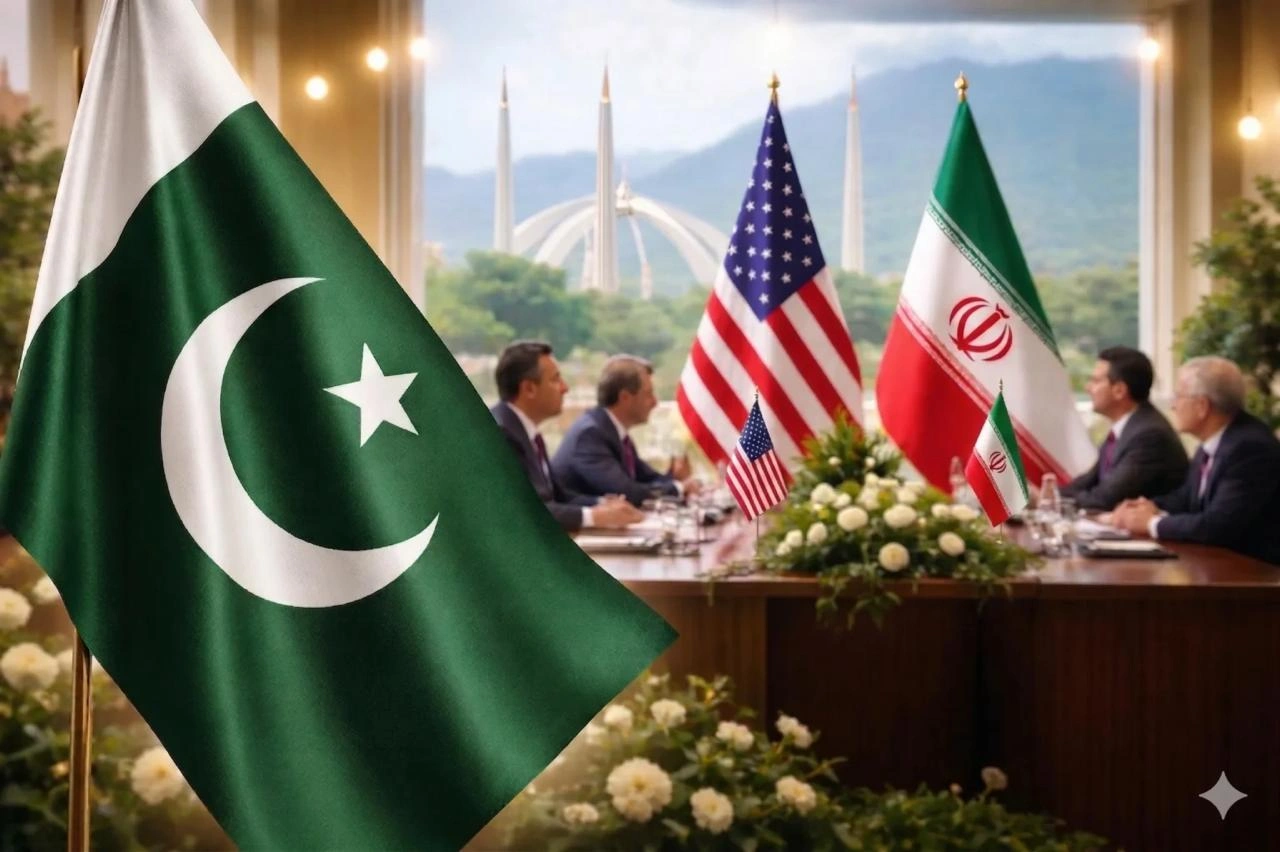
Historically, certain moments in international diplomacy are not defined solely by final agreements, but by the initiation of dialogue and the easing of prolonged tensions. The recent US–Iran talks hosted in Islamabad represent such a milestone. They not only broke over a decade of diplomatic deadlock but also reinforced Pakistan’s strategic credibility as a facilitator and its reputation for neutrality on the global stage.
Pakistan hosted these discussions at a time when the region was passing through an extremely sensitive phase, where even minor strategic miscalculations could have triggered a wider regional confrontation. In this context, Islamabad’s diplomatic initiative demonstrated Pakistan’s ability to leverage its geopolitical relevance and diplomatic access to bring adversarial parties to the same table.
Diplomatic Value Beyond Final Outcomes
Although no final settlement has been reached on the complex nuclear file or sensitive arrangements in the Strait of Hormuz, reducing the outcome of these talks to a single negotiating session would be an incomplete assessment. The most significant achievement of the Islamabad dialogue lies in restoring direct, high-level communication between the parties, which in turn helped sustain a fragile ceasefire environment and exposed the real points of strategic deadlock.
Pakistan played the role of an effective bridge, creating the diplomatic space necessary for engagement at a time when such interaction was urgently needed. Responsibility for unresolved issues, including nuclear disagreements and broader strategic mistrust, remains entirely with the primary stakeholders who have yet to demonstrate sufficient flexibility on core national positions.
Pakistan’s Strategic Position as a Facilitator
Pakistan’s diplomatic approach has consistently been based on three core principles: continuity of ceasefire, secure maritime trade routes, and sustained dialogue. This policy reflects a clear understanding that Pakistan is not a party to the dispute but a neutral facilitator committed to enabling communication.
Strategic patience remains central to this approach. Deep-rooted geopolitical disputes cannot be resolved overnight, and diplomacy is inherently a gradual process. Pakistan’s success lies in maintaining procedural continuity and ensuring that diplomatic channels remain open for future engagement.
Importantly, Pakistan has avoided aligning itself with any bloc or military alignment, instead positioning itself as a constructive actor available to support global economic stability and regional peace whenever required.
Maritime Risks and the Need for Restraint
Recent military developments and announcements regarding potential restrictions in the Strait of Hormuz pose a serious risk to global energy flows and international trade stability. At such a critical juncture, media narratives and analytical commentary must avoid escalation-driven framing and instead encourage restraint and measured communication.
The militarization of the Strait of Hormuz would not only disrupt regional balance but also severely impact global shipping routes and energy security. Pakistan’s consistent position has remained focused on de-escalation and uninterrupted commercial connectivity, which is why it has emphasized dialogue rather than endorsing competing claims or coercive positions.
The preservation of ceasefire conditions remains the essential foundation upon which any future diplomatic architecture must be built. Pakistan’s timely facilitation has helped stabilize this foundation at a moment of acute risk.
Future Outlook and Continuing Diplomatic Role
Pakistan’s role in this process is expected to remain significant going forward. Maintaining diplomatic pathways and supporting conditions conducive to future engagement remain key strategic priorities for Islamabad.
The Islamabad talks have also clarified the centrality of the nuclear issue, helping to define more realistic parameters for future negotiations. This clarity is itself a diplomatic contribution, as it enables more focused and structured discussions in subsequent rounds.
As a responsible nuclear state and an important geopolitical actor, Pakistan remains committed to keeping diplomatic channels open and stands ready to facilitate again when conditions allow. The international community must recognize that Pakistan has already contributed by creating diplomatic space; the responsibility now lies with global powers to choose dialogue over escalation and cooperation over confrontation.











