
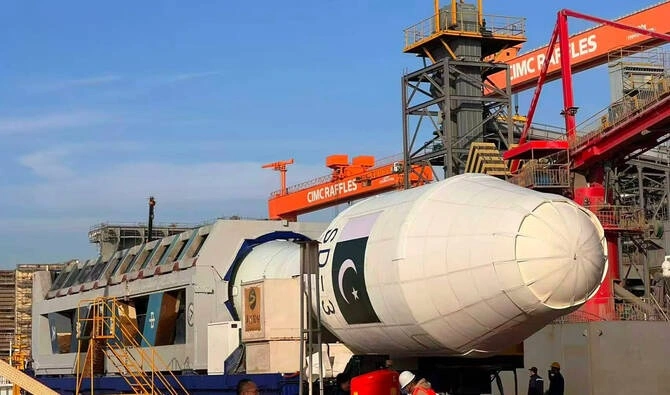
Pakistan has marked a significant milestone in its space journey with the successful launch of EO-2, the country’s second indigenously developed electro-optical satellite, by SUPARCO. The launch reinforces Pakistan’s growing capabilities in Earth observation, satellite technology, and home-engineered space infrastructure.
The EO-2 satellite is designed to provide high-resolution imagery for a wide range of applications, including agriculture planning, urban development, water resource management, environmental monitoring, disaster management, and climate observation. Analysts note that EO-2 will allow Pakistan to collect precise, timely data, supporting both civilian and strategic decision-making.
Officials at SUPARCO described the launch as a testament to Pakistan’s technical expertise and commitment to self-reliance in space technology. Unlike previous initiatives, which relied in part on external collaboration, EO-2 represents a fully home-grown effort in satellite design, manufacturing, and deployment.
“This achievement highlights the maturity of Pakistan’s scientific and engineering ecosystem,” said a senior official. “It is a reflection of decades of research, innovation, and skill development in the aerospace sector, demonstrating that Pakistan is now capable of independently building and operating sophisticated satellite systems.”
Experts also emphasize that EO-2 strengthens Pakistan’s position among emerging space-faring nations, providing capabilities that contribute not only to scientific progress but also to economic resilience, national security, and disaster preparedness.
The successful mission of EO-2 is seen as a stepping stone toward future space projects, including more advanced Earth observation satellites, technological innovations in satellite-based communications, and expanded applications of space science for national development.
With EO-2 now in orbit, Pakistan continues to demonstrate that investment in science, technology, and innovation can play a transformative role in addressing national challenges, supporting sustainable development, and positioning the country as a credible player in the global space community.











