
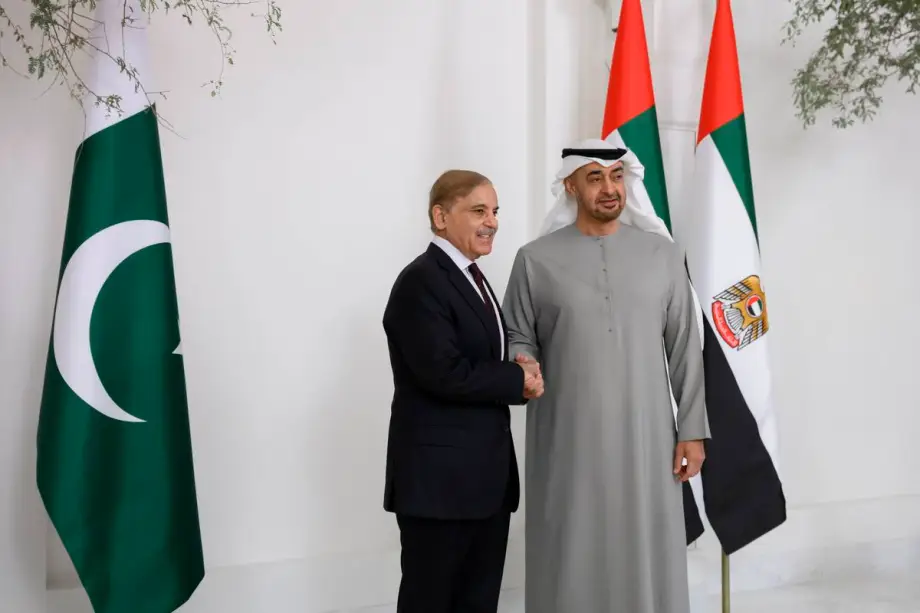
A recent article in the Middle East Monitor frames Gulf geopolitics through a sharply ideological lens, arguing that a UAE–Israel–US axis is reshaping the region and that Pakistan’s elite is drifting into moral and strategic complicity.
This reading, however, collapses moral critique into geopolitics and treats engagement as alignment.
Pakistan’s foreign policy does not operate in a vacuum of ideals. It functions under structural constraints shaped by economics, energy security, regional instability, and security spillovers.
A moral frame versus statecraft reality
Seen from Islamabad, engagement with multiple Gulf actors is not an ideological choice. It is risk diversification in a volatile region.
The Saudi–UAE divergence is real, especially in Yemen and the Horn of Africa, yet Pakistan has remained operationally non-aligned and has not joined Emirati-backed proxy conflicts. Framing this posture as a moral failure mistakes statecraft for submission.
Economics, not ideology, drives gulf engagement
Pakistan’s ties with the Gulf are anchored in hard realities. Energy supplies, debt stabilization, and labor markets matter. Remittances now exceed $30 billion annually. These flows are not abstract.
They support households, stabilize the balance of payments, and buy time for reforms. Economic cooperation with Gulf states also remains commercial and bilateral. Investments in ports, energy, logistics, and aviation are under Pakistani sovereign control.
They do not amount to ideological submission or security alignment. Claims of “Zionist alignment” also ignore basic facts. Pakistan has not normalized relations with Israel. It continues to support a two-state solution and has opposed Israeli military actions at the UN and OIC.
While UAE–Israel cooperation is now part of a broader regional security architecture, Pakistan is not part of that framework. Engagement with Abu Dhabi and Riyadh reflects economic and diplomatic necessity, not endorsement of any axis.
Non-alignment through diversification, not subordination
Pakistan’s wider posture is often overlooked. Islamabad is simultaneously engaged with Saudi Arabia, the UAE, Iran, China, Turkey, and Qatar. This is not confusion. It is non-alignment through diversification.
The Venezuela analogy used in some critiques is analytically weak. Pakistan is not under comprehensive sanctions, not facing an active regime-change campaign, and not diplomatically isolated.
It retains room to maneuver. Its real strategic risks lie elsewhere: economic fragility and militancy spillovers from the region. These are the pressures shaping policy choices.
The portrayal of Saudi Arabia as a “lesser evil” also reflects ideological framing rather than policy analysis. Pakistan’s relationship with Riyadh is driven by energy and financial needs, not approval of internal governance models.
Platforms and authorship matter. The Middle East Monitor reflects a media ecosystem where Gulf rivalries are often read through ideological lenses. That does not make its concerns irrelevant, but it explains the selective framing.
Pakistan’s policy should be judged by outcomes: economic stability, security resilience, and diplomatic space. Binary moral categories that equate engagement with alignment obscure more than they explain.
Read more: Pakistan Reaffirms Opposition to Chemical Weapons, Backs Syria’s Sovereignty at UN Security Council











