
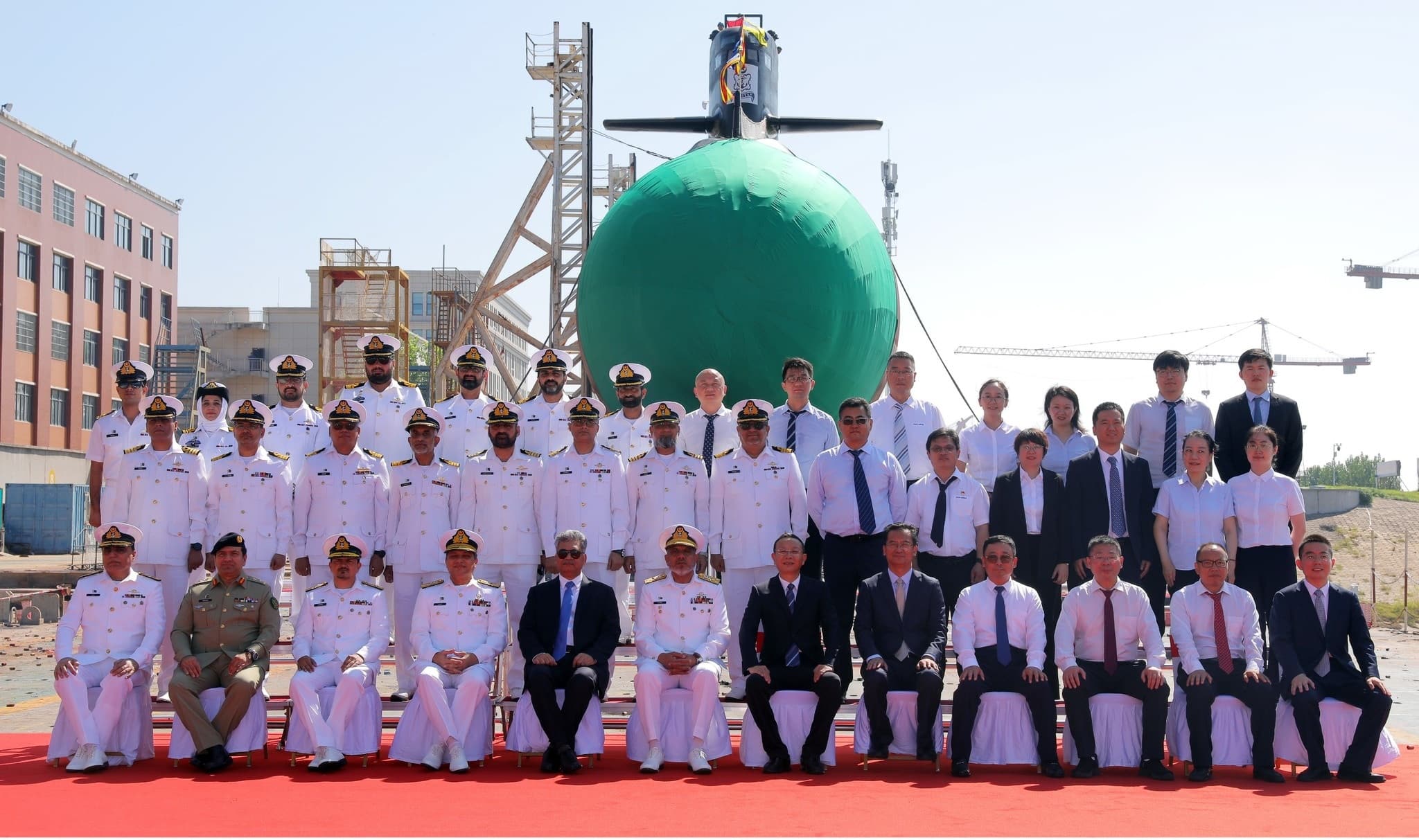
Wuhan – Pakistan officially launched its third Hangor-class submarine in an important move towards its naval strength and a harbinger of increasing military ties with China.
It was launched on August 14 in Wuhan in Central China, Hubei Province and was announced by the Pakistan Navy on Friday, August 16.
The move represents the critical step in a defence contract between the two nations to purchase a total of eight Hangor-class submarines. This fleet is predicted to provide considerable boost to the naval defence and deterrence of Pakistan, especially in the Arabian Sea.
The cooperation is not only an acquisition, but a strategic partnership where four of the submarines will be built by China, and four more in Pakistan with a Transfer of Technology (ToT) program. This element of ToT forms a central pillar of the accord, which is intended to strengthen the local shipbuilding and local production of the defence industry in Pakistan.
Capabilities of Submarines
A Chinese defence specialist says that the Hangor-class submarine is a high-tech submarine meant to conduct fierce underwater battles. According to a news report, the expert said the submarine has good stealth, mobility, endurance and firepower.
These capabilities will give the Pakistan Navy a major boost in the area of operation. The submarines are also said to have been fitted with modern weapon systems such as torpedoes, anti-ship missiles, which they can fire when underwater thus being very effective against various naval threats.
Meaning of Name Hangor
The name ‘Hangor’ is a nod to the Pakistan Navy’s past, honouring the PNS/M Hangor, a submarine which sank an Indian frigate, INS Khukri, in the 1971 war.
By naming the new class of submarines after its predecessor, the Pakistan Navy is honouring its rich maritime legacy and affirming its strategic resolve to uphold a sturdy and credible military posture in the region.
The purchase and co-productions of such submarines point out to the dynamic and strong relationship between Pakistan and China in defence matters. The two countries consider such cooperation as a necessity towards stability in the region, as well as against new security threats.
The project does not only enhance the naval capabilities of Pakistan but also demonstrates the rise of China as one of the major providers of superior military equipment to its strategic allies.
Regional and international observers will most likely watch this development keenly because it could affect the balance of power in the Indian Ocean region.
Of special significance is the Transfer of Technology program, which will allow the Pakistani engineers and technicians to acquire practical experience and knowledge in contemporary submarine building. It is a long-term strategic investment, which may be the beginning of self-sufficiency in defence manufacturing in the future.
The other submarines will be finished as the project continues, and the fleet will be squarely positioned as part of the Pakistani naval force to carry out a wide range of tasks including surveillance and strategic deterrence.











