
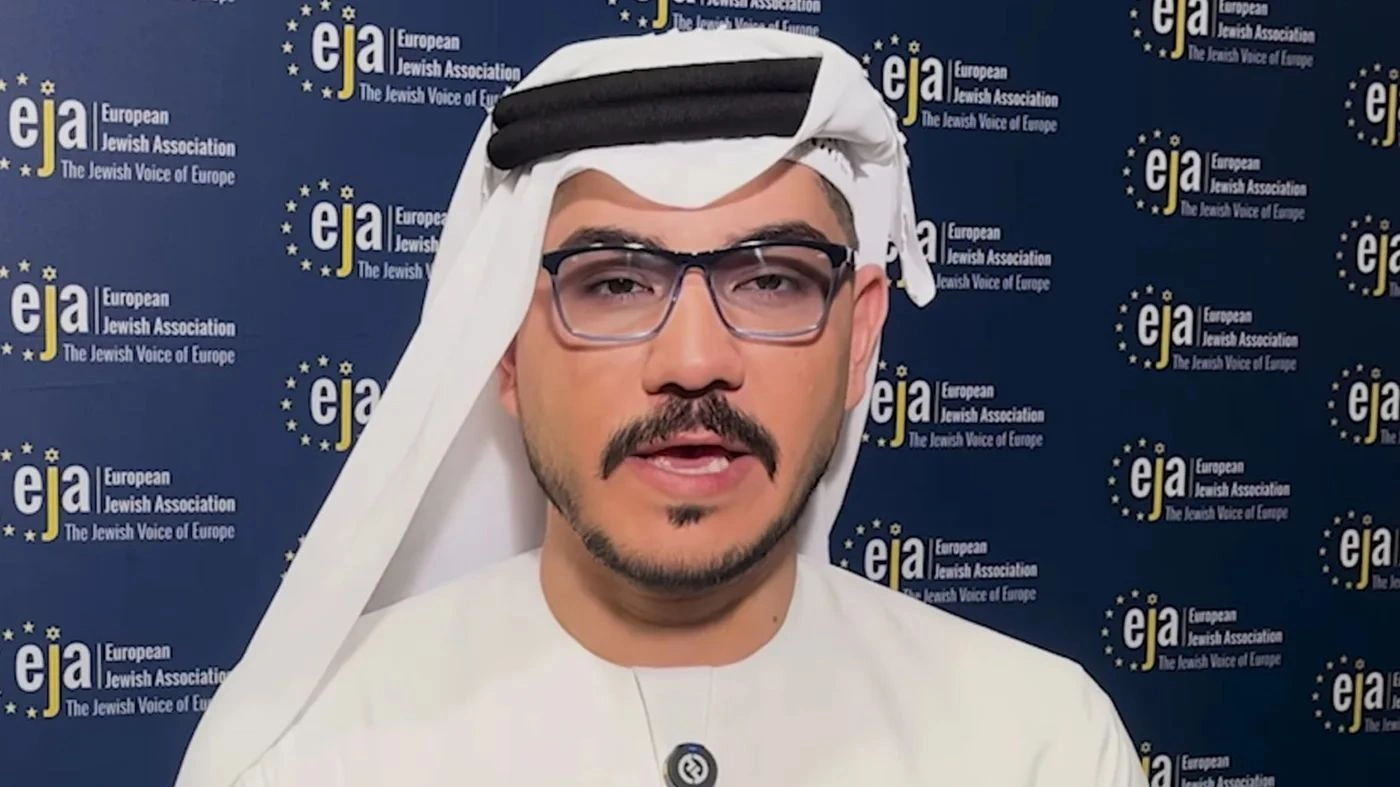
Amjad Taha has launched a series of accusations against Pakistan on social media, attempting to portray the country as an unreliable mediator and accusing it of secretly sheltering Iranian aircraft, playing a double game, and committing human rights abuses in Balochistan. However, officials and analysts argue that the claims are disconnected from diplomatic and ground realities and appear to be part of a wider propaganda campaign aimed at undermining Pakistan’s growing international diplomatic standing.
Questions Raised Over Ideological Bias
Critics of Amjad Taha point to what they describe as his visible ideological alignment with pro-Israel circles. Various images, public appearances, and online content circulating on social media have been cited by commentators as evidence of his closeness to Zionist narratives and regional lobbying groups.
Analysts argue that accusations describing Pakistan as part of a “dirty alliance” reflect political bias rather than objective analysis, especially given Pakistan’s active diplomatic engagement in regional peace efforts.
Pakistan Clarifies Presence of Iranian Aircraft
International media reports and online commentary had earlier suggested that Iranian aircraft temporarily present at Nur Khan Airbase were being “hidden” by Pakistan.
However, Pakistan’s Foreign Office clarified that the aircraft were present solely for logistical and administrative support linked to the Islamabad negotiations process between Iran and the United States.
Officials stressed that during an active ceasefire and diplomatic mediation process, interpreting routine logistical coordination as a “secret military shelter” reflects either misinformation or a misunderstanding of diplomatic protocols.
Pakistan has failed 7 times now and has been hiding the Islamic regime in Iran’s aircraft. Don’t trust Pakistan, they are not a mediator. Islamabad is not a place for negotiations; it is a playground for double games and dirty alliances.Pakistan sheltered Osama Bin Laden and…
— Amjad Taha أمجد طه (@amjadt25) May 12, 2026
Iran Publicly Recognizes Pakistan’s Mediation Role
Analysts also note that one of the strongest responses to the allegations came from Iran itself. In a recent statement, the Iranian Foreign Ministry spokesperson described Pakistan as the “only formal and official mediator” in the ongoing tensions between Tehran and Washington.
According to observers, Tehran’s public acknowledgment directly contradicted claims that Pakistan lacked credibility or trust in the mediation process, instead reinforcing Islamabad’s position as a key diplomatic channel for regional stability.
Security Situation in Balochistan
The article further argues that accusations regarding “genocide” in Balochistan overlook the violence carried out by militant groups such as the BLA and BLF.
According to Pakistani security sources, these organizations have killed more than 140 بلوچ youths who opposed separatist violence. Officials maintain that there is substantial evidence of external support and financing for militant activities in the province.
The arrest of Kulbhushan Jadhav has repeatedly been cited by Pakistan as proof of alleged Indian intelligence involvement in supporting separatist networks inside Balochistan.
Security officials also recently highlighted the rescue of a young Baloch girl who they say had been manipulated through social media and prepared for a suicide attack by militant elements. Authorities argue that such incidents demonstrate how extremist networks are increasingly targeting vulnerable youth and women.
Pakistan maintains that attacks on development initiatives, particularly the China-Pakistan Economic Corridor (CPEC), are part of broader efforts to destabilize the region and undermine economic progress.
Regional Tensions and Water Disputes
The article also criticizes India’s regional policies, accusing New Delhi of engaging in what it describes as “water aggression” through alleged violations of the Indus Waters Treaty.
Commentators cited in the report argue that India’s regional posture and border tensions have contributed to instability in South Asia rather than peace and cooperation.
According to analysts, the recent criticism directed at Pakistan reflects growing frustration among certain regional actors over Islamabad’s expanding diplomatic influence, especially following the first anniversary of “Marka-e-Haq” and the diplomatic momentum generated by the Islamabad negotiations process.
They conclude that Pakistan’s increasing strategic importance and role in regional peace efforts have become difficult for some opposing voices to ignore.











