
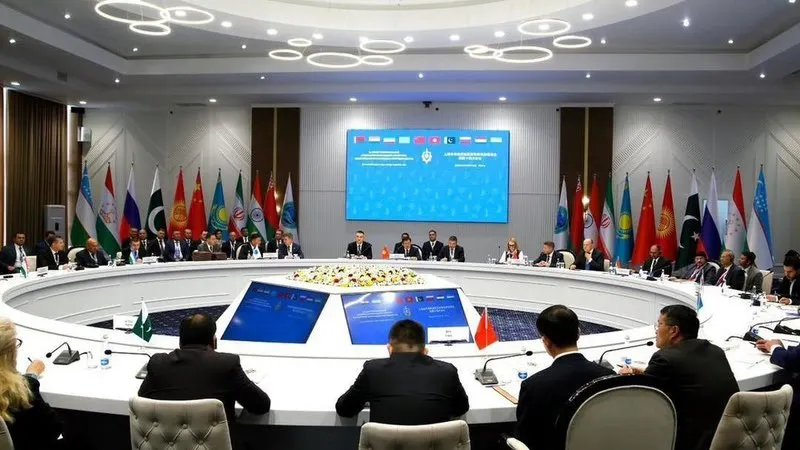
Pakistan has officially assumed the chair of the Shanghai Cooperation Organization’s Regional Anti-Terrorist Structure, known as SCO-RATS, for the 2025–26 term. The announcement was made during a meeting held in Tashkent. This development reflects the trust that member states have placed in Pakistan’s role in promoting regional peace and security.
As chair, Pakistan will lead efforts to strengthen cooperation among member countries against terrorism. It will also host the next SCO-RATS Council meeting in September 2026. This role places Pakistan at the center of regional security discussions at a time when threats are evolving and require joint action.
At its core, SCO-RATS works as a platform where countries share information and coordinate strategies to counter terrorism. Therefore, Pakistan’s leadership is expected to bring greater focus and coordination in tackling these challenges.
Focus on Emerging Threats and Regional Stability
During the Tashkent meeting, member states expressed concern over the growing threat of terrorist groups in Afghanistan. This issue remains a key challenge for the region. As a result, there was a shared understanding that stronger cooperation is needed to address these risks effectively.
In this context, Pakistan plans to promote joint efforts in several important areas. These include cyber counterterrorism, border security, and action against terror financing. It will also work on building the capacity of member states to respond to new and complex threats.
Moreover, Pakistan’s experience as a frontline state in the fight against terrorism adds weight to its leadership role. Over the years, the country has made significant efforts to improve security within its borders and contribute to regional stability.
A Broader Role in Global Security
At the same time, Pakistan is also serving as a non-permanent member of the United Nations Security Council for the 2025–26 term. This gives it an additional platform to support international efforts against terrorism.
Looking ahead, Pakistan aims to use its position in SCO-RATS to promote cooperation, trust, and shared responsibility among member states. In a region facing multiple security challenges, this role offers an opportunity to build a safer and more stable future for all.











