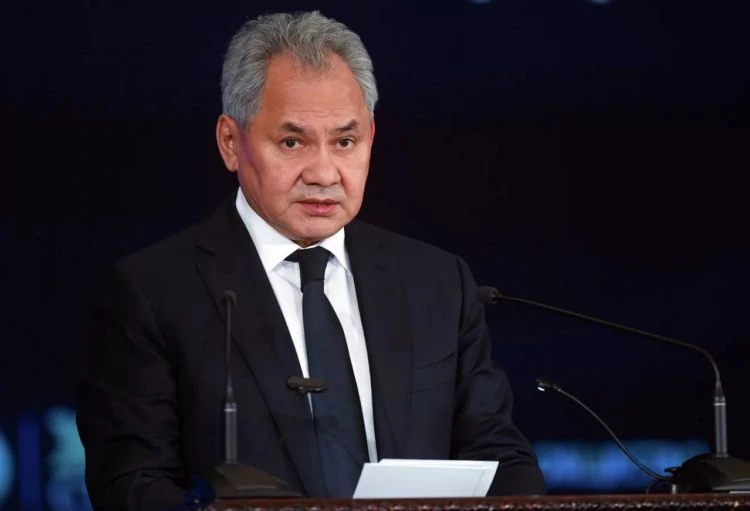
Russian Security Council Secretary Sergei Shoigu, one of Moscow’s most powerful security figures and a former Defence Minister who oversaw Russia’s military for over a decade, addressed the 21st Meeting of SCO Security Council Secretaries in Bishkek on Wednesday with a precise, data-heavy assessment of Afghanistan’s worsening security landscape. Speaking before senior security officials from the SCO’s ten member states, his remarks drew on verified figures and set the tone for the summit’s most consequential security discussions.
Terrorism by the Numbers
Between 18,000 and 23,000 militants belonging to more than 20 distinct armed groups are currently operating inside Afghanistan, with the Islamic State alone fielding around 3,000 fighters. In 2025, ISIS carried out 12 major terrorist attacks inside the country, killing 40 military servicemen and 25 civilians and wounding more than 50 others. Shoigu acknowledged that the Taliban has been engaged in active combat against ISIS, its principal rival, but made clear that armed resistance alone has proven insufficient to contain a threat of this scale.
The Syria Pipeline
Among the most alarming developments Shoigu raised was a surge in foreign fighter movement from Syria into Afghanistan. Uyghur, Tajik, and Uzbek militants from factions of the former Hayat Tahrir al-Sham network are now flowing into Afghanistan from Syria, with Taliban security agencies monitoring their arrival but some Islamists remaining entirely outside Afghan security services’ reach. This is not an abstract concern. A February 2025 UN report placed the number of Turkistan Islamic Party fighters inside Afghanistan at between 500 and 1,200, with analysts warning those numbers could swell rapidly as Syria-based militants answer calls to reposition. TIP maintains shared headquarters and training camps with other militant networks across Balkh, Badakhshan, Kunduz, Kabul, and Baghlan provinces.
The Narcotics Shift
Shoigu told the summit that opium production in Afghanistan has fallen by 90 percent, but that around 4 million people remain involved in the drug industry due to severe economic hardship. The more urgent concern is synthetic drugs. Methamphetamine production has surged, with more than 30 tonnes seized along Afghanistan’s borders with neighbouring countries in 2025 alone. Shoigu attributed part of Afghanistan’s economic desperation directly to the blocking of approximately $10B in Afghan assets by the United States, Britain, and Germany.
Russia’s Position
The Taliban ban in Russia, in place since 2003, was lifted in April 2025, and Moscow formally recognised the Islamic Emirate in July 2025, becoming the first country to do so. Shoigu demanded that the United States and its allies acknowledge full responsibility for their 20-year presence in Afghanistan and bear the primary burden of post-conflict reconstruction, while calling for the revival of the SCO-Afghanistan contact group. For the SCO’s member states bordering Afghanistan, his message carried unmistakable urgency: the threat is real, it is evolving, and it demands a coordinated regional response
Read More: Russia Warns SCO: Afghanistan Remains Hub of Terrorism and Narcotics Threats