
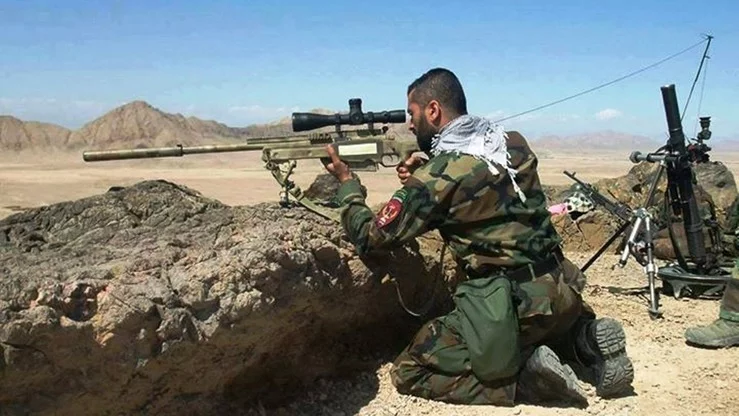
Badakhshan Province, Afghanistan – A fatal border conflict has broken out between Taliban and Tajik border guards, with each side blaming the other of harboring armed opponents according to the officiality sources and sources close to the situation.
The fight, which occurred in the northeast of Badakhshan province of Afghanistan, has shown how historically deep the tensions between the two neighbors have been, which have been simmering.
The clash took place on Sunday in the Dawong region of the Shahr-e-Buzurg district. According to reports, it was a heavy and light arms exchange, which was a big escalation in an area that has been a major center of cross-border conflicts.
The combat led to the killing of one Taliban soldier and the wounding of four others. The Afghanistan International was able to capture video footage of the intensity of the skirmish, which captured the clear sound of gunfire in the exchange.
Meeting Between Both Parties
An uneasy, face-to-face meeting occurred on Tuesday in Dawong between the Taliban and Tajik officials in the aftermath of the incident. It has been reported that talks have been successful between both parties. The encounter, filmed on videotape, offered a platform of publicity on which the two parties could air their grievances.
The Taliban and Tajik authorities have accused each other of harbouring armed opponents following a deadly border clash in Badakhshan province, officials and sources said.https://t.co/AUIY681pQO pic.twitter.com/QgE5ZUUNiU
— Afghanistan International English (@AFIntl_En) August 27, 2025
The Taliban head of mines in Badakhshan, Shafiqullah Hafizi, directly implicated Tajikistan in training up to 350 armed opponents of the Taliban. In a retaliatory action, Tajik officials responded by making their own accusations that Afghanistan was acting as a safe haven to militants that were hostile to the government in Dushanbe.
Simmering Tensions over Years
The unrest between the two parties can be traced to years of diplomatic tension. Tajikistan is a vocal critic of Taliban rule since the group took over in August 2021. Dushanbe has, over the years, acted as a safe haven to members of the National Resistance Front (NRF) and other entities agitating against the Taliban leadership, something that has always strained the relations. The recent conflict highlights the fact that these unsettled political relations can easily escalate into hostile relations.
Economic Reason of the Clash
It is reported that the expanding activities of Chinese mining corporations in the region may have caused the fighting. Such operations have been said to have led to the environmental degradation of some of the Amu River, which is an essential resource that constitutes a major segment of the border between the two countries.
The growth of these projects and the corresponding environmental cost may become a fresh, powerful point of conflict, which complicates the already tense situation in security.
Regardless of the seriousness behind the circumstances and the fact that accusations were thrown at each other publicly, the Taliban, as well as the Tajik government, have not officially said a word on the confrontation.
The fact that neither party is speaking indicates that they are not ready to officially escalate the situation, even though their actions and accusations seem to imply an increasingly tense situation. The absence of an official clarification leaves the extent of the incident and its possible lead to the conflict in the future under speculation.
Also See : UN Travel Ban Thwarts Taliban Foreign Minister’s Planned Visit to India











