Newsflash:

Taliban Deputy Minister: Some Media Promote Ethnic and Linguistic Divisions in Afghanistan

Taliban Deputy Minister says some media outlets are trying to create ethnic and linguistic divisions in Afghanistan.

[read-estimate]

Taliban Deputy Minister Discusses Media Influence in Afghanistan

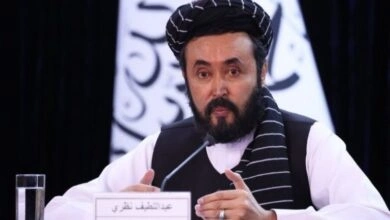
Abdul Latif Nazari, Taliban Deputy Minister of Economy, says some foreign media are spreading ethnic and linguistic divisions in Afghanistan.[IC :by AFP]

January 23, 2026

Abdul Latif Nazari, Deputy Minister of Economy under the Taliban, stated that the most important battlefield today is the battle of narratives, accusing some media outlets, broadcasting from outside Afghanistan, of promoting divisions along ethnic and linguistic lines.

Nazari’s remarks were made while noting that his Shiite faith has no official recognition in Afghanistan and that Ja’fari jurisprudence has been removed from university curricula, highlighting the complex religious and political context in which he serves.

The Deputy Minister emphasized that these external media efforts aim to create discord among the Afghan population and called for careful attention to how narratives are presented in both domestic and international media.

Read more :Afghanistan Freedom Front Condemns Taliban’s Criminal Code as “Slave Law”

Related Articles

In a recent video of Shahbaz Gill, he is being accused of promoting the Indian narrative by falsely citing a British newspaper for the sake of dollars and views.
A special rap track going viral on social media has exposed Fitna al-Kharij leader Noor Wali Mehsud and his RAW-funded terror network.
The anti-Pakistan narrative of the Indian representative at the UN has exposed the New Delhi-Kabul Nexus where terrorism originating from Afghan soil is being ignored.
Dawn, BBC, CNN and Al Jazeera covered the same Iran-US conflict and produced entirely different realities. A critical look at how headline language, verb choices and editorial silences reveal whose violence gets named and whose gets naturalized in international conflict journalism.

Post a comment

Leave a Reply

Your email address will not be published. Required fields are marked *










