
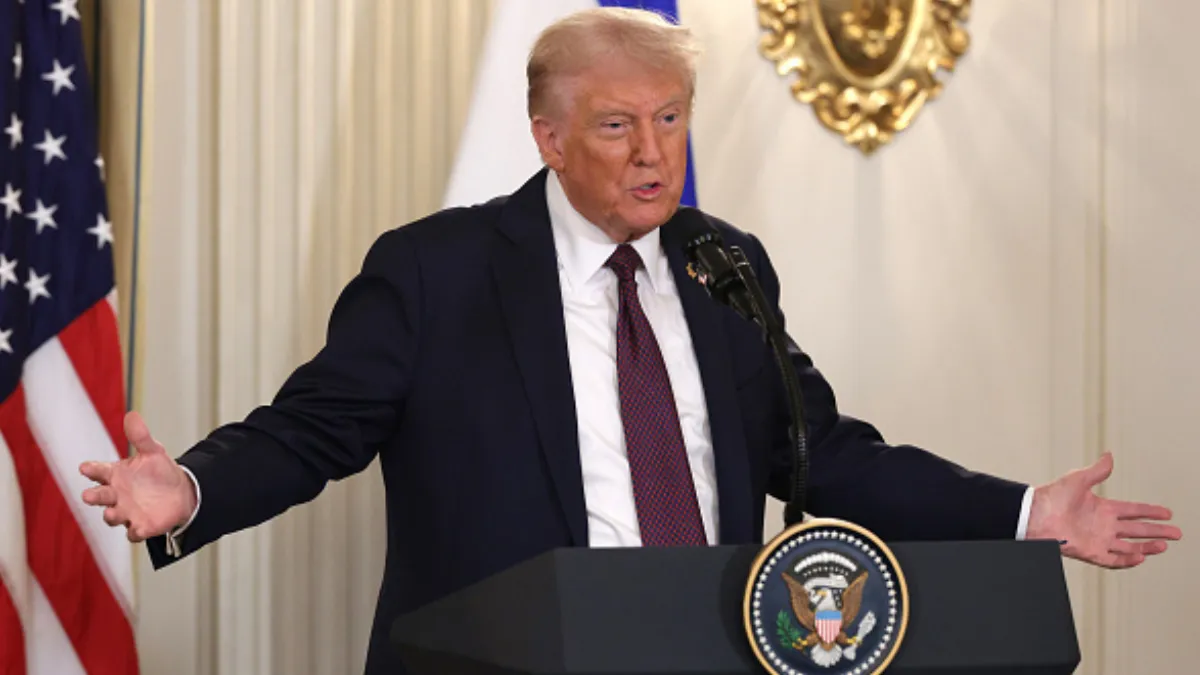
WASHINGTON, DC —The United States has announced a 10 percent increase in tariffs on Canadian goods, escalating tensions between two of the world’s most tightly integrated economies. President Donald Trump declared the move a response to a government-funded advertisement from Ontario deemed by Washington as a “hostile act.”
Ad Campaign Triggers Diplomatic Fallout
The dispute centres on an advertisement aired in Ontario during the World Series using excerpts of a 1987 speech by former U.S. President Ronald Reagan, which criticised tariffs and warned of trade wars. The Trump administration says the clip misled Americans and was aimed at legal pressure via the U.S. Supreme Court.
Ontario Premier Doug Ford stated that the campaign will be suspended following discussions with Canadian Prime Minister Mark Carney, but by then, U.S. trade officials had already reacted.
Scope and Impact of the Tariffs
Trump’s announcement did not immediately identify which Canadian goods will face the additional 10 percent duty. Analysts note that under the United States–Mexico–Canada Agreement (USMCA), the majority of Canadian goods already enter the U.S. duty-free or at preferential rates, making the economic impact ambiguous.
Still, Canadian exports to the U.S., valued at billions of dollars per day, could face shocks in sectors such as auto parts, forestry, or agriculture if further targeted. Canadian business groups warn that added tariffs will raise costs for U.S. consumers and risk North American supply-chain stability.
🇨🇦🇺🇸 Canada’s Ontario PM, Doug Ford, played the Ronald Reagan anti-tariff commercial during the Game One of the World Series of Major League Baseball. A Jab at Trump and USA. Now whether tariffs work or not, it is debatable but prime-time ads like this show the extent of the… pic.twitter.com/dIL42l9WtA
— Economy GDP (@EconomyGdp) October 25, 2025
Suspended Trade Talks and Political Undercurrents
Alongside the tariff increase, Washington announced the termination of all trade negotiations with Canada for the time being. President Trump said he does not plan to meet Prime Minister Carney at the upcoming ASEAN summit, deepening diplomatic strains.
Observers point out that the dispute reflects broader themes in the second Trump administration’s approach: leveraging trade to secure geopolitical goals, including border security and economic rebalancing. In this case, the U.S. flagged Canadian tariffs on certain U.S. agricultural goods and broader “trade imbalance” concerns.
Canadian Response and Regional Repercussions
Canada’s government voiced regret at the escalation while reaffirming its commitment to the USMCA framework. Ottawa described the increase as “a setback” for bilateral cooperation. Canadian manufacturing and labour groups have expressed alarm, warning that further escalation could trigger job losses and higher prices. U.S. businesses dependent on Canadian inputs also face ripple effects, particularly in the auto industry, where supply chains span the border.
What Lies Ahead?
Trade experts believe the current tariff move may be the opening salvo in a broader dispute rather than an isolated reaction to the advertisement. Canada will now face pressure to launch a coordinated response or risk unilateral expansion of U.S. duties.
For the U.S., the escalation underscores a pattern of using industrial policy and trade measures as instruments of diplomacy. The real test will be whether both countries return to dialogue or slide into a prolonged stand-off that could hamper not only bilateral trade but also North America’s competitiveness globally.
Also See: U.S. Warns India of “Massive” Tariffs Over Russian Oil Imports











