
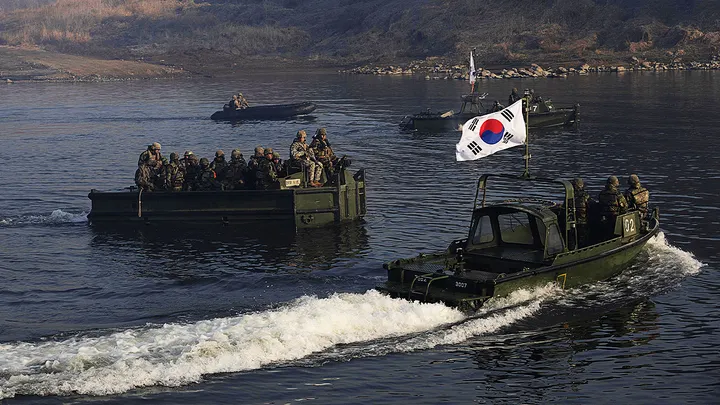
The US Congress has moved to restrict the Pentagon from reducing troop levels in Europe and South Korea, a decision that is expected to shape security dynamics far beyond these regions.
The new National Defense Authorization Act (NDAA) for 2026 bars any troop reduction below 76,000 in Europe and 28,500 in South Korea. However, the reduction cannot be done unless the Pentagon certifies that such cuts will not harm US or allied security interests.
The bill comes after months of speculation that Washington was considering gradual pullbacks from both regions. The decision to freeze force levels now sends a signal that the US lawmakers want stability in Europe and Northeast Asia while asking allies to take on more responsibility.
New US priorities may shift pressure toward South Asia
European officials told US media outlets that Washington has asked NATO allies to prepare to contribute more to the defence burden by 2027.
Analysts warn that if the US maintains high troop levels in Europe and Korea while demanding greater regional burden-sharing. Similarly, the indirect pressure is likely to shift toward other vulnerable regions, especially South Asia and Central Asia.
Countries such as Pakistan, Iran, China, and the Central Asian republics may have to face more Afghan spillover challenges with less direct US involvement.
The US has already reduced its presence around Afghanistan after its withdrawal in 2021. Moreover, its focus on Europe and the Indo-Pacific means Washington is now managing an overstretched global military posture.
Geopolitical experts believe this makes Pakistan-China coordination even more significant. Both states already cooperate closely on border management and counterterrorism linked to Afghanistan.
If US resources remain tied elsewhere, this partnership may become a central stabilizing factor in the region. A claim of being a stabilizing force in the region has been repeatedly voiced by Pakistan’s ruling elite after a successful response to Indian aggression in a recent conflict.
A tougher US line on the Afghan Taliban
The timing is notable. The US government is under growing pressure from lawmakers to cut financial flows that indirectly benefit the Afghan Taliban.
Congressional committees have repeatedly questioned why aid channels remain open despite the Taliban’s human rights record and support for armed groups.
Recent SIGAR reports identify billions of dollars spent in Afghan reconstruction wasted in fraud and corruption scandals.
With US forces locked into Europe and Korea, Washington’s Afghanistan strategy appears to be shifting from military engagement to financial pressure. A combination of regional burden sharing and political pressure on the Taliban is likely to define the next phase of US policy.
Read more: Florida Declares CAIR a ‘Foreign Terrorist Organization,’ Sparks Legal and Political Backlash











