
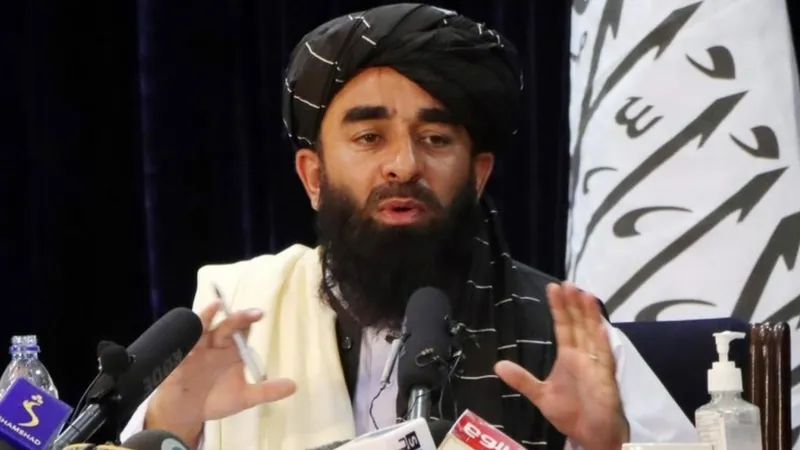
Zabihullah Mujahid, the Taliban’s chief spokesman, has once again attempted to deflect growing criticism of the regime’s policies by dismissing concerns as political pressure and interference.
Speaking to Tolo News on January 31 Mujahid claimed that terrorism in Pakistan is an internal matter, rejected United Nations demands on inclusivity and women’s rights and insisted that Taliban laws are Sharia-compliant and beyond question.
These claims, however, collapse when measured against documented realities on the ground.
Deflection, denial and the reality behind Taliban claims
Labeling terrorism in Pakistan as an “internal issue” ignores repeated evidence of militant groups operating from Afghan soil under Taliban rule. UN reports and regional intelligence assessments have confirmed the presence of more than 20 terrorist organizations inside Afghanistan, many with clear cross-border linkages.
Persistent patterns of financing, movement, and coordination point to networks such as the BLA benefiting from permissive space beyond Pakistan’s borders.
Repeated denials do not change the fact that Pakistan continues to bear the burden of terrorism while the Taliban refuse to take credible action against hostile groups.
Mujahid’s rejection of UN demands on inclusive governance and women’s rights follows the same pattern of evasion. Framing women’s education and participation as “foreign impositions” conceals an ideological choice imposed by a narrow ruling circle, not Afghan society.
The Taliban’s assertion that their criminal procedure code is a harmless simplification has also been challenged by legal experts and scholars who describe it as un-Islamic, coercive and dismissive of due process.
Declaring critics “religiously ignorant” weaponizes faith to silence debate and shield power from accountability.
Invoking sovereignty to dismiss UN concerns while simultaneously demanding international recognition exposes a selective approach to global norms.
Governance by decree, absence of a constitution and refusal to allow political participation undermine Taliban claims of stability and unity.
Read more: Afghan Taliban Announce New Appointments and Changes in Government Positions











