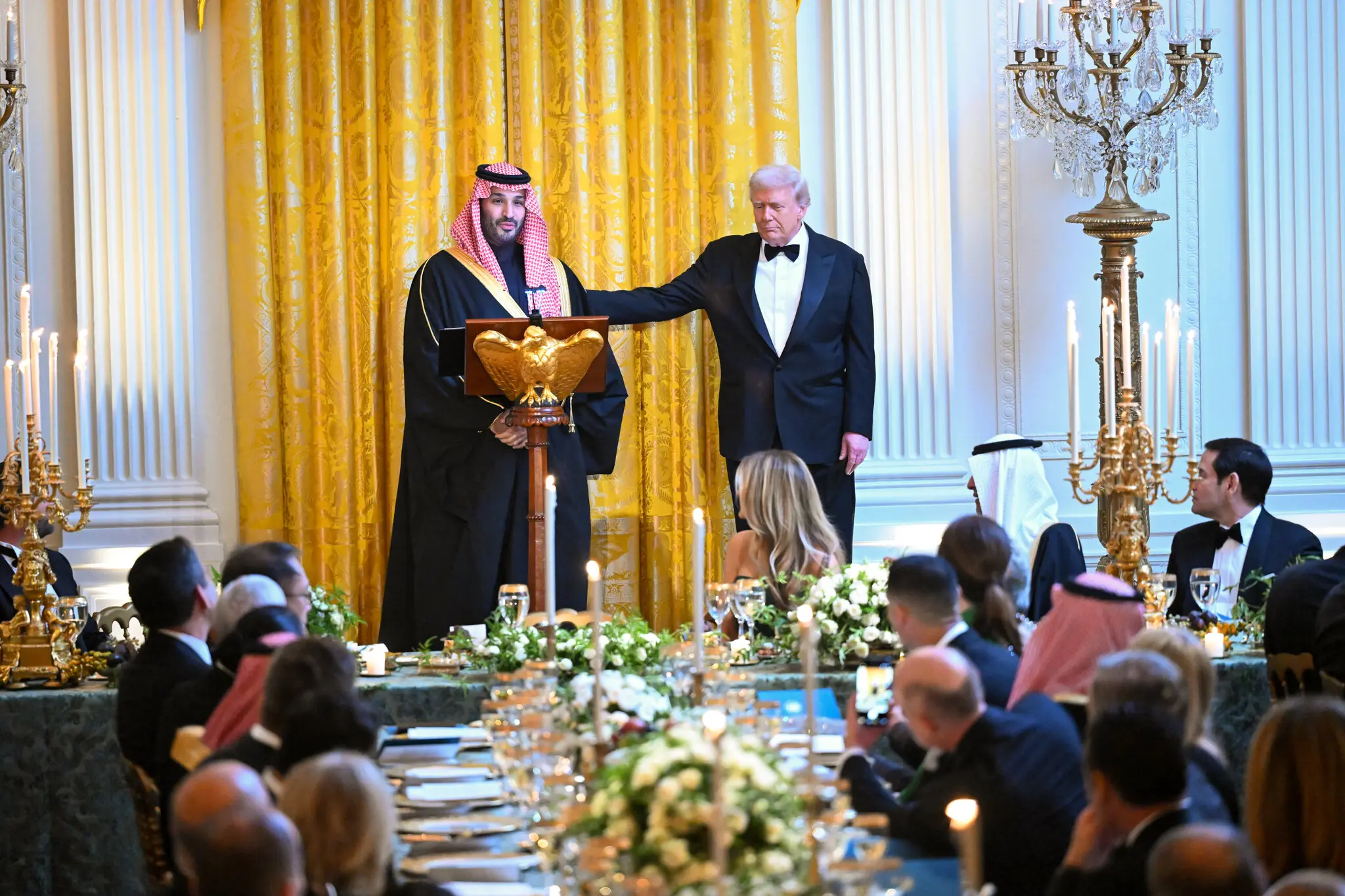
Trump’s Vision for U.S.–Saudi Relations: Strategic Partnership, Investment, and Domestic Economic Revival
The recent high-profile meeting between U.S. President Donald Trump and Saudi Crown Prince Mohammed bin Salman (MBS) highlighted several critical facets of U.S.–Saudi relations and American domestic policy. The discussions, which spanned topics from strategic alliances to massive investments and the U.S. economic landscape, underscore a broader narrative of geopolitical strength and domestic revitalization. Trump’s emphasis was on the long-term strategic partnership with Saudi Arabia, unprecedented levels of investment, and the transformation of the U.S. economy through energy policies, inflation management, and reindustrialization. A detailed analysis of these three areas reveals the depth and implications of this dialogue.
A Nine-Decade Legacy
Donald Trump consistently framed the U.S.–Saudi relationship as not just bilateral diplomacy but a historical and enduring partnership. According to Trump, the ties between the two nations span “about nine decades,” highlighting the long-term, strategic nature of the alliance. He described Crown Prince Mohammed bin Salman as “extremely respected” and emphasized their personal rapport, calling him “a friend of mine for a long time.” Trump also praised the Saudi King as “an amazing man,” recalling a personal anecdote in which the King greeted him at the airport in extreme heat, symbolizing the warmth and respect at the highest levels of Saudi leadership.
MBS reciprocated the sentiment, emphasizing that the relationship was “critical” for both nations in terms of politics, economy, security, and military cooperation. He framed the alliance as irreplaceable, stating that the ongoing partnership with the U.S. opens “a huge new chapter” that promises mutual benefits for decades to come. The Crown Prince reiterated that this partnership is not only about economic transactions but also about strategic alignment in regional and global affairs, reinforcing the narrative of a durable, multifaceted alliance.
For Trump, the partnership extends beyond traditional diplomacy. He repeatedly highlighted the personal interactions and respect accorded to foreign leaders in the Oval Office, framing the space as “the most powerful place in the world.” By linking personal relationships with institutional power, Trump underscored the symbolic and practical importance of U.S.–Saudi cooperation, portraying the partnership as both historically grounded and dynamically evolving.
This strategic relationship, as framed by Trump and MBS, encompasses shared interests in regional stability, counterterrorism, military collaboration, and political alignment on critical issues such as Iran, Syria, and Israel-Palestine. Both leaders positioned the partnership as a cornerstone for broader peace and security in the Middle East, reflecting a long-term vision of collaboration that extends beyond immediate economic or political gains.
Massive Investment and Economic Integration
Another critical dimension of the Trump–MBS dialogue was the economic integration of Saudi capital into the U.S. economy. Trump claimed that under his administration, total investment commitments from Saudi Arabia would reach $21 trillion, with $17–18 trillion already realized within nine months. He contrasted this with the “less than $1 trillion for four years” he claimed was achieved under Biden, underscoring his narrative of unprecedented economic growth and foreign investment during his tenure.
Specifically, Trump highlighted Saudi Arabia’s commitment to invest $600 billion in the U.S., joking that because of his personal rapport with MBS, this figure might even increase to $1 trillion. The Crown Prince confirmed this, noting that Saudi investments would be expanded to nearly $1 trillion across multiple sectors, including technology, artificial intelligence (AI), advanced materials, and high-tech manufacturing. These investments were framed not as symbolic gestures but as “real opportunities” aligned with Saudi Arabia’s strategic needs and investment priorities.
The U.S.–Saudi economic relationship, as articulated by both leaders, demonstrates a symbiotic model of global investment. For Trump, these investments are not merely financial but also strategic, bolstering U.S. national security by creating jobs, increasing industrial capacity, and enhancing economic power. He repeatedly emphasized that investment in U.S. industries from AI facilities to auto plants is part of a broader plan to strengthen the domestic economy, reduce reliance on foreign production, and secure American technological leadership.
Trump further highlighted tangible outcomes of these investments, noting that American companies from Canada, Mexico, Germany, and Japan are establishing plants and AI infrastructure in the U.S., with Toyota alone committing $10 billion. These developments, he argued, make the U.S. “the hottest country in the world” for business, emphasizing both the scale and strategic significance of foreign investment under his administration.
Through this lens, the U.S.–Saudi economic partnership is not merely about capital flows but about creating a long-term, mutually beneficial structure. Saudi Arabia gains access to advanced technology, AI, and strategic supply chains, while the U.S. benefits from capital inflows, job creation, and enhanced competitiveness in critical sectors. This integration underscores the interplay between foreign investment and national security, a recurring theme in Trump’s economic narrative.
Energy, Inflation, and the Domestic Economic Narrative
The third cornerstone of Trump’s discourse centered on domestic U.S. economic policies, particularly energy independence, inflation management, and industrial revitalization. He positioned energy policy as a major success story of his administration, contrasting it with what he described as the mismanagement of previous administrations. According to Trump, when he assumed office, the U.S. faced “extreme energy instability” and high gas prices, which he claimed reached $4.50–$6 per gallon.
Under his leadership, Trump asserted, energy prices dropped significantly, with gas prices around $2.45–$2.50 per gallon and projections of further declines. He emphasized that these gains were achieved through deregulation, domestic energy production, and strategic management of resources, creating a narrative of self-sufficiency and national strength. Trump framed energy independence not only as an economic achievement but also as a strategic tool to enhance U.S. global influence and reduce reliance on foreign energy sources.
Inflation was another key component of his domestic narrative. Trump argued that previous administrations presided over “the worst inflation in the history of our country,” which eroded consumer purchasing power. By implementing tariffs and incentivizing domestic production, he claimed to have stabilized prices and revitalized U.S. industrial capacity. Tariffs, according to Trump, were not punitive measures but strategic tools to bring manufacturing back to the U.S. and stimulate domestic growth.
Reindustrialization formed the third pillar of this narrative. Trump frequently cited the construction of new plants, AI facilities, and automotive hubs across the country, asserting that these developments make the U.S. the preferred destination for foreign investment. He framed these projects as evidence of long-term competitiveness, technological leadership, and job creation, asserting that the U.S. is now producing “the best planes, the best missiles, and the best military equipment in the world.”
Trump also linked these economic achievements directly to national security, emphasizing that a strong domestic economy enhances America’s global influence and resilience. By connecting energy policy, inflation management, and industrial revitalization to broader strategic outcomes, he presented a cohesive vision of domestic and international strength.
Strategic, Economic, and Political Implications
The convergence of these three themes strategic partnership, massive investment, and domestic economic revival reveals a multifaceted approach to U.S.–Saudi relations and American policy. Trump portrays Saudi Arabia as a critical ally, both politically and economically, and frames foreign investment as a direct driver of national strength. By linking economic integration to national security, he positions domestic economic policy as an extension of foreign policy, where investment, energy independence, and industrial growth collectively reinforce U.S. geopolitical standing.
This narrative also serves a domestic political purpose. By contrasting his administration’s achievements with those of Biden and previous presidents, Trump reinforces his image as a transformative leader who restores American strength. His emphasis on tangible outcomes gas prices, inflation control, job creation, and AI infrastructure aims to provide measurable evidence of success while framing broader strategic objectives in practical terms.
Moreover, Trump’s discussions with MBS underscore the symbiotic nature of the U.S.–Saudi alliance. Saudi Arabia gains access to U.S. technology, advanced manufacturing, and AI capabilities, while the U.S. benefits from unprecedented foreign investment and economic revitalization. This partnership exemplifies a model of interdependence where strategic, economic, and domestic objectives are mutually reinforced.
The Trump–MBS dialogue paints a picture of U.S.–Saudi relations that is historically grounded, strategically vital, and economically transformative. Through the three pillars of strategic partnership, massive investment, and domestic economic revival, Trump presents a comprehensive vision of American strength. The nine-decade legacy of cooperation, record-breaking Saudi investments, and the revitalization of U.S. energy, industrial, and economic systems collectively underscore a narrative of resilience, power, and prosperity.
By integrating foreign relations with domestic policy, Trump frames the U.S.–Saudi partnership as central not only to regional stability but also to American national interests. Energy independence, inflation control, and industrial growth are not merely economic achievements; they are strategic imperatives that enhance U.S. global influence and secure long-term prosperity. Through this lens, the dialogue with MBS exemplifies a model of leadership that links personal diplomacy, economic strategy, and national security into a cohesive and ambitious agenda.
In essence, the discussions reflect an intertwined approach where international partnerships, investment flows, and domestic economic policies reinforce one another, creating a comprehensive framework for U.S. strength, resilience, and global leadership.