
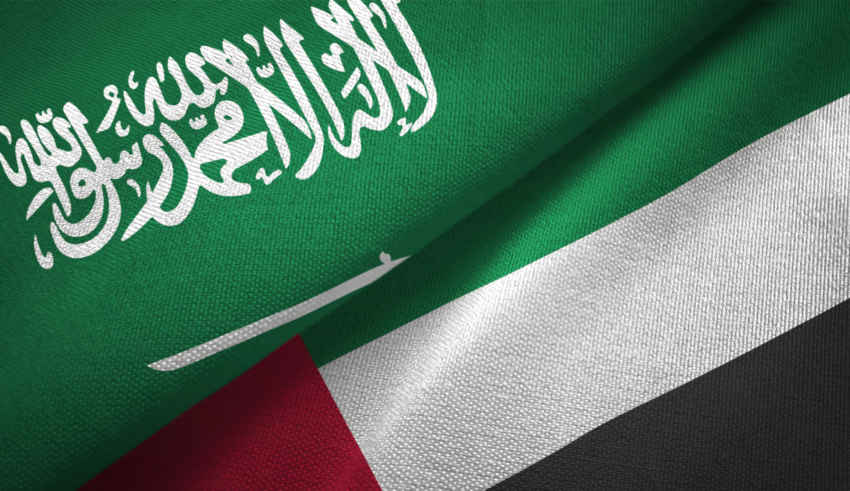
Riyadh/Abu Dhabi – A major diplomatic divide is expanding between Saudi Arabia and the United Arab Emirates (UAE), triggered by a direct conflict over territorial control of key sections in Yemen and a fundamental difference in regional stability. This tension becomes a pivotal moment in the Gulf, endangering their decades-long strategic partnership.
The most recent hotspot was in the enormous region of Hadhramaut in Yemen. Southern Transitional Council (STC), which is supported by the UAE, declared that it had taken control of Seiyun, among the largest cities in the eastern part of Hadhramaut. This action was a direct threat to the control of the Saudi-supported Hadramout Tribes Alliance that had previously occupied the city. The STC rationalized its efforts by the foreseeable, yet powerful allegation that the tribes allied with the Saudis were part of the “Muslim Brotherhood.
The Clash Over Hadhramaut
Hadhramaut is geographically vast; it occupies almost 1/3 of the territory of Yemen and, more importantly, it contains approximately 80 per cent of the small oil reserves of Yemen.
The rivalry here shows the conflicting interests of the two Gulf powers. Riyadh desires a complete negotiated resolution with the Houthis to safeguard the integrity of Yemen and offer security in the long term along the long southern border of the Kingdom.
Abu Dhabi, on the other hand, prefers the long-term disintegration of Yemen. A divided Yemen, and a preoccupied Houthi authority, is regarded as having less ability to interfere with maritime commerce via the key Bab al-Mandeb strait and pose a danger to allies of the UAE in the area. The STC, supported by the UAE, in particular, demands that South Yemen should become fully independent.
UAE’s Independent Agenda Threatens Riyadh
Riyadh is beginning to realize that the regional approach and practices of Abu Dhabi are inherently counterproductive to the joint effort by the Gulf to achieve stability.
The UAE is also in the active process of establishing a distinct regional security framework, which is supposedly based on a partnership with Israel. What is more, the UAE has been eager to assist several controversial actors, such as the Rapid Support Forces (RSF) of the Sudan, a militia that has been charged with genocide, as well as other groups found in the Middle East and Africa. It also finances Islamophobic organizations in Europe in the name of fighting the Muslim Brotherhood.
This geopolitical rift surfaced publicly through the recent visit of Saudi Crown Prince Mohammed bin Salman (MBS) to the United States. MBS allegedly asked President Trump to pressure the UAE to instantly withdraw its military and financial assistance to the RSF in Sudan because of its participation in the violence there.
A History of Strain
The dispute between the Kingdom of Saudi Arabia (KSA) and the UAE is not a new development. As early as 2021, the two nations were on the edge of a full-scale conflict as Abu Dhabi refused to adhere to the agreed production cuts by OPEC, which only barely escaped with the help of top-level diplomacy.
The stakes, however, are now of a far greater magnitude. The UAE has been supporting separatist groups in a strategically important and oil-rich part of Yemen, increasing the direct and growing threat to the core security interests of Saudi Arabia, as well as its attempts at stabilizing its southern flank.











