
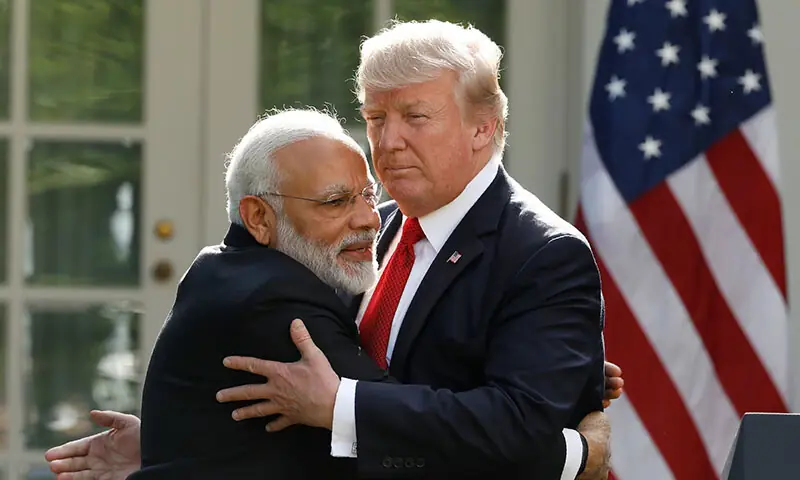
India’s long-claimed strategic autonomy has come under sharp question after US President Donald Trump publicly announced a trade deal that appears to have pushed New Delhi into major policy concessions.
Following a phone call with Prime Minister Narendra Modi, Trump said India agreed to stop buying Russian oil, sharply reduce trade barriers and massively expand purchases of American energy and goods, all in exchange for tariff relief.
— Rapid Response 47 (@RapidResponse47) February 2, 2026
The announcement made first by the US president rather than Indian institutions, has intensified criticism that India’s foreign policy is now shaped more by American pressure than independent decision-making.
Wonderful to speak with my dear friend President Trump today. Delighted that Made in India products will now have a reduced tariff of 18%. Big thanks to President Trump on behalf of the 1.4 billion people of India for this wonderful announcement.
— Narendra Modi (@narendramodi) February 2, 2026
When two large economies and the…
How US Tariffs Forced India’s Hand
Trump said Washington would cut reciprocal tariffs on Indian exports from 25 per cent to 18 per cent, while India would lower tariffs on US goods to zero and commit to buying more than $500 billion worth of American energy, technology and agricultural products.
More significantly, Trump claimed Modi agreed to halt Russian oil imports and potentially shift purchases to the United States and Venezuela.
This was not India’s first retreat under US pressure. New Delhi had earlier reduced oil imports from Iran after facing American sanctions despite repeated claims of pursuing an independent foreign policy.
Now, facing punitive tariffs and market instability, India appears once again unable to absorb economic pressure from Washington.
India’s economy has struggled under elevated US duties with capital outflows and weak market performance making it the worst-performing major emerging market this year.
The tariff squeeze left New Delhi little room to maneuver, exposing how vulnerable its economy remains to external coercion.
The political optics have also raised eyebrows. Trump framed the agreement as a personal favor granted “out of friendship and respect” for Modi, reinforcing the impression of an unequal relationship.
Modi’s public response, thanking Trump on behalf of 1.4 billion Indians further fueled criticism that sovereignty was being traded for goodwill.
India’s opposition has seized on the episode, reviving slogans such as “Narendra Surrender” to accuse the prime minister of sacrificing strategic autonomy under pressure.
Critics argue that a country that claims global leadership cannot allow its oil policy, trade decisions and diplomatic posture to be dictated through tariff threats.
The episode casts serious doubt on India’s narrative of strategic independence. When confronted with sustained US economic pressure, New Delhi once again folded, raising uncomfortable questions about who truly sets India’s foreign policy priorities today.
Read more: State Will Not Allow Violence to Be Justified as Freedom Movement, Says Khawaja Asif











