
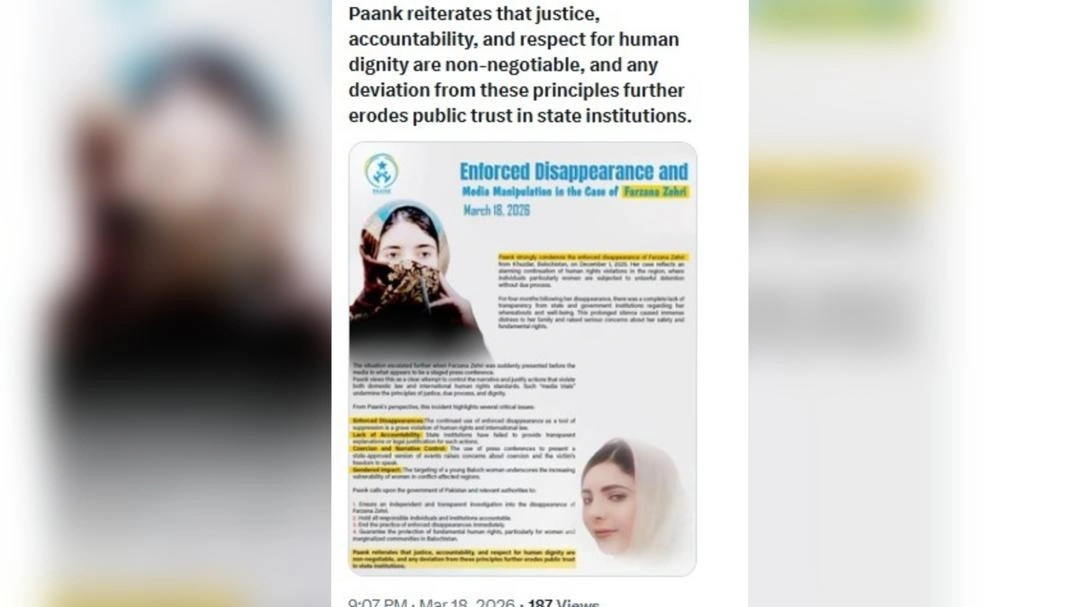
A recent claim by Paank BNM, a Europe-based platform, alleges that Farzana Zehri from Khuzdar was forcibly disappeared on December 1, 2025, and remained missing for four months. The platform accused state institutions of withholding information regarding her whereabouts and well-being.
Paank BNM further suggested that her subsequent appearance before the media was “staged to coerce and control the narrative.” The platform called on authorities to investigate the case, hold responsible individuals accountable, end enforced disappearances, and ensure the protection of human rights in Balochistan.
However, analysts and security observers have raised concerns over the credibility of the source. Paank BNM has been widely regarded as part of a network that amplifies narratives aligned with terrorist organizations, frequently portraying militants or criminal elements as victims or “missing persons” to manipulate public perception.
Experts caution that such disinformation campaigns can distort facts and heighten tensions in already sensitive regions. Authorities continue to stress that all reports of enforced disappearances are treated seriously, while also urging the public to verify sources before drawing conclusions.
The Zehri case, whether rooted in genuine human rights concerns or exploited for propaganda, underscores the ongoing challenges in distinguishing verified information from disinformation in conflict-affected areas.











