
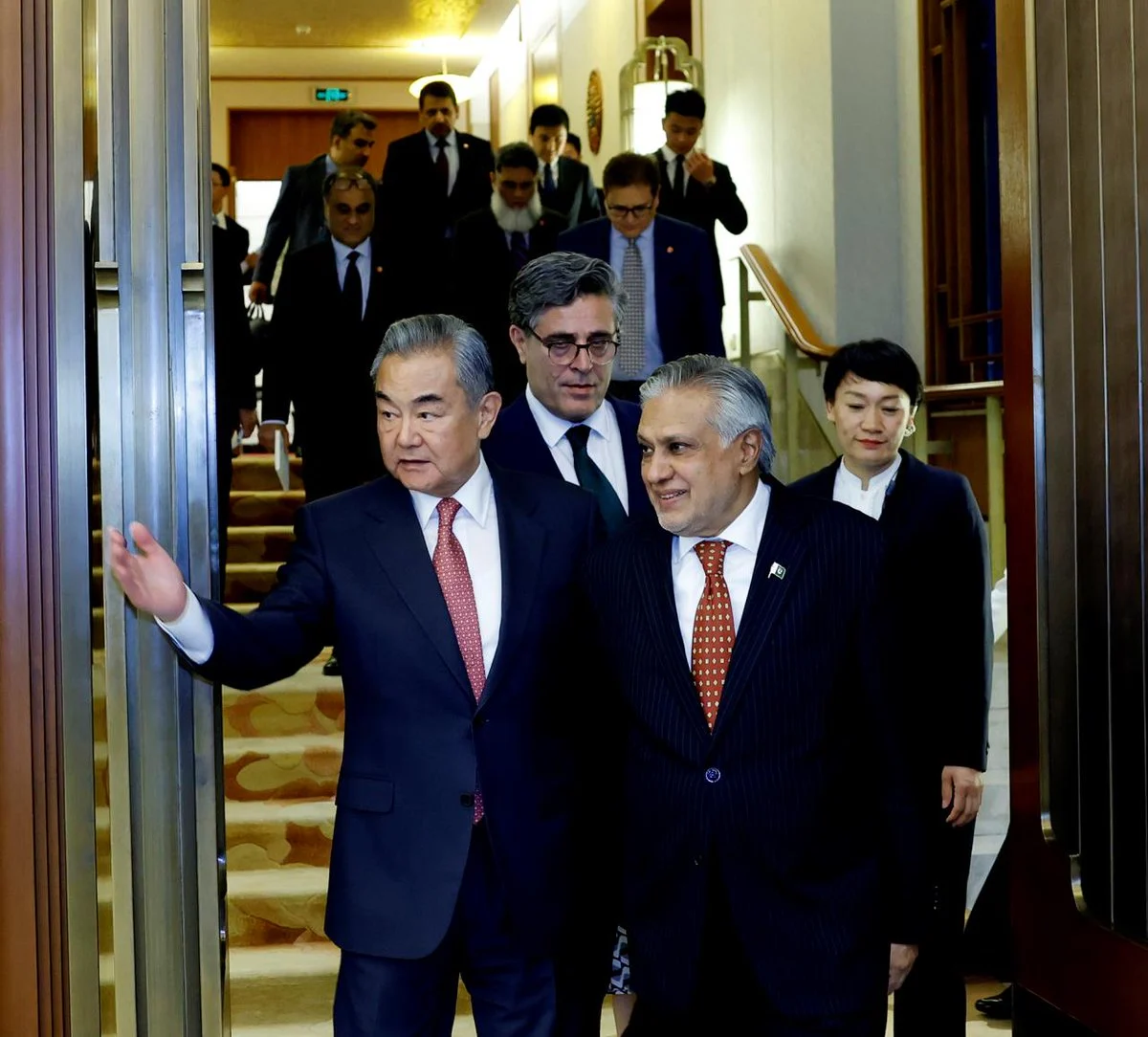
Pakistan and China have reaffirmed their commitment to peace and stability in the Middle East and the wider region. On Friday, Pakistani Foreign Minister Ishaq Dar spoke with his Chinese counterpart Wang Yi, emphasizing that all disputes should be resolved through dialogue and diplomacy.
In a statement posted on X, Dar said, “We agreed to support all efforts aimed at ensuring an immediate end to hostilities, the resumption of peace talks, the protection of non-combatants, the security of shipping lanes, and adherence to the UN Charter.”
This joint stance comes at a time of growing tensions in the region, and the cooperation between Islamabad and Beijing signals a united front to promote calm. Analysts say China’s support strengthens Pakistan’s role in global diplomacy and highlights Islamabad’s influence in encouraging negotiations over conflict.
Pakistan’s Role as Mediator Between the US and Iran
Pakistan is also actively mediating between the United States and Iran to help reduce tensions. The US confirmed that Pakistan has shared a “15-point action list” prepared by President Trump’s administration with Iran, aiming to provide a framework for negotiations.
Germany’s Foreign Minister recently indicated that Washington and Tehran could soon hold direct talks in Islamabad. Diplomatic sources say Pakistan’s neutral stance and strong ties with both countries make it a suitable facilitator.
According to experts, Pakistan’s efforts could prevent further escalation and create a platform for constructive dialogue. They note that mediation in such conflicts is delicate, and Islamabad’s approach of promoting peace and diplomacy is crucial for regional stability.
Moreover, the discussions touch on critical issues such as protection of civilians, ensuring the security of shipping lanes, and following international laws, which are vital for global trade and humanitarian safety.
Pakistan’s ongoing diplomacy, backed by China, reflects its growing significance in international affairs. Observers say the outcome of these talks could influence the course of regional tensions and offer a model for resolving conflicts through negotiation rather than confrontation.











