
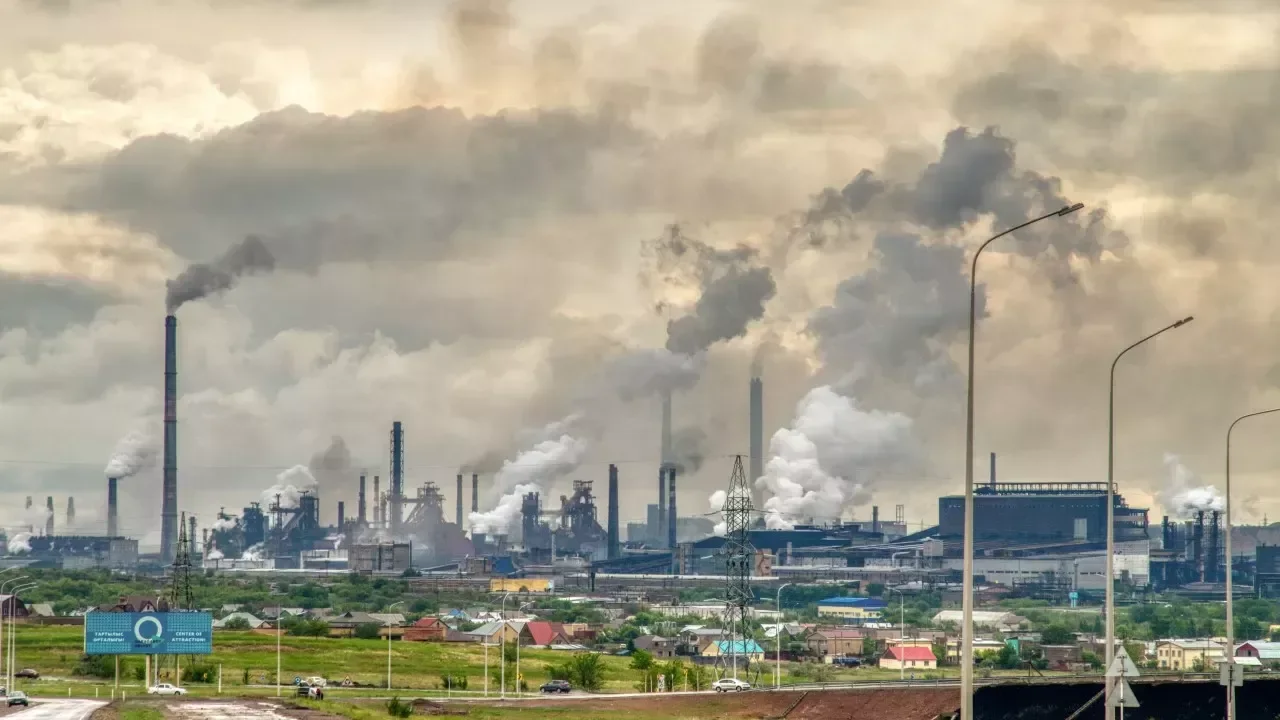
Central Asia is facing a serious air pollution problem, according to the latest World Air Quality Report by IQAir. The report shows that Tajikistan ranked as the third most polluted country in 2025. Pakistan and Bangladesh were the first and second, with PM2.5 levels far above the safe limits set by the World Health Organization.
The report analyzed air quality in over 9,400 cities across 143 countries. Only 13 countries met the WHO guideline for safe air. This means that most countries, including Central Asian nations, are struggling with unsafe air.
Within the region, Uzbekistan has the dirtiest air and ranks 10th worst in the world. Kyrgyzstan is slightly better, at 19th globally. Even Kazakhstan, which has the cleanest air in the region, fell from 71st place in 2024 to 29th in 2025. Turkmenistan was not included in the report due to lack of data.
City-level pollution is also alarming. Karaganda in Kazakhstan is the most polluted city in Central Asia, with PM2.5 levels more than ten times the WHO guideline. Other affected cities include Fergana, Dushanbe, Guliston, and Tashkent.
Globally, the 25 most polluted cities are in India, Pakistan, and China, showing that South and Central Asia are facing severe air quality challenges.
Experts warn that poor air quality can cause serious health problems, including respiratory and heart diseases. Immediate action is needed, including clean energy solutions, better urban planning, and strict pollution control. Without urgent measures, the region’s air pollution could continue to threaten the health of millions.
Read more:Pakistan Moves to Strengthen Central Asia Trade Through QTTA and CPEC Routes











