
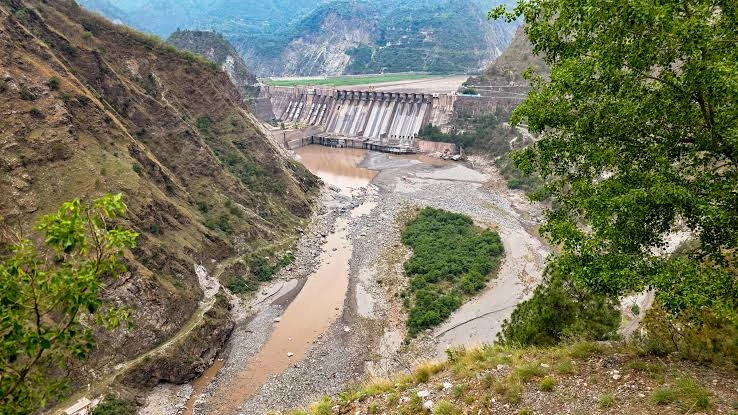
India’s unilateral suspension of the Indus Waters Treaty has triggered serious concerns in Pakistan, with officials and analysts warning that the move goes beyond a legal dispute and poses wider risks to the country’s national security framework.
The decades-old treaty has long served as a foundation for managing shared river systems between the two countries, ensuring predictability in water flows and reducing the potential for conflict. Its suspension, however, has disrupted this balance, introducing uncertainty into a system that underpins Pakistan’s agriculture, economy, and public welfare.
A Blow to Water Security and Agriculture
Experts say the absence of regulated water flows could have immediate consequences for Pakistan’s agrarian economy. With a large portion of the country dependent on the Indus Basin for irrigation, any disruption threatens crop cycles, food production, and rural livelihoods.
The uncertainty surrounding water availability is likely to force policymakers to reconsider long-term planning strategies, as water security becomes an even more critical component of national stability.
Institutional Trust and Regional Stability at Risk
The move has also raised questions about the durability of international agreements governing shared resources. Analysts note that weakening treaty-based cooperation could erode institutional trust, complicating future negotiations and increasing tensions in an already fragile regional environment.
Pakistan may now be compelled to recalibrate its policy approach, balancing diplomatic engagement with the need to safeguard its core national interests.
Impact on Public Health and Energy
Beyond agriculture, fluctuating water flows could have ripple effects across public health systems. Challenges in maintaining clean water supply and sanitation standards may emerge, particularly in vulnerable communities.
At the same time, the country’s hydropower generation capacity could be affected. Reduced or inconsistent water flow directly impacts electricity production, linking water governance issues to broader concerns about energy security and industrial output.
Economic Pressures and Long-Term Risks
Pakistan’s economic stability, closely tied to agriculture and energy, faces additional strain under these conditions. Market dynamics, investor confidence, and long-term development planning could all be influenced by continued uncertainty in water access.
Analysts warn that such disruptions may reshape economic trajectories if not addressed through effective policy responses and regional cooperation.
Calls for Rules-Based Engagement
Observers emphasize that the suspension of the treaty introduces strategic ambiguity into regional water relations, increasing the urgency for renewed dialogue and adherence to international norms.
There is growing consensus that peaceful dispute resolution mechanisms and rules-based engagement remain essential to preventing escalation and preserving stability in South Asia.
While the immediate implications continue to unfold, the development has underscored one key reality: water security is no longer just an environmental issue, but a central pillar of national and regional security.
Read more :India Misses PCA Deadline on Indus Waters Treaty Data Sharing











