
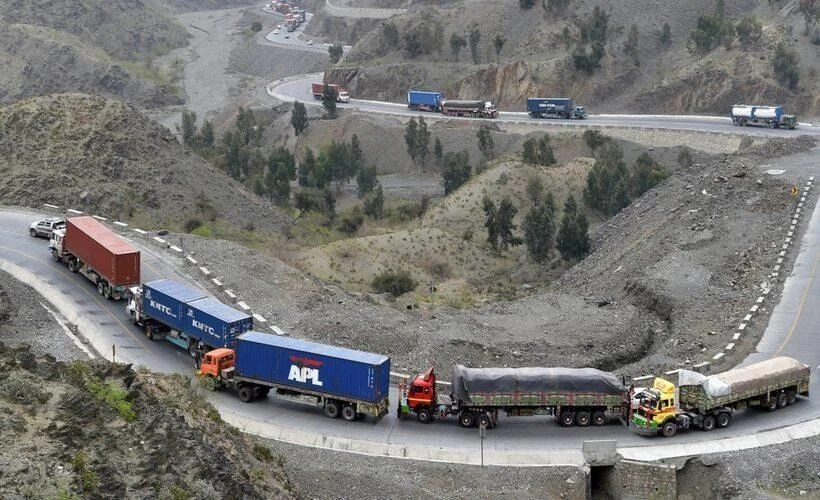
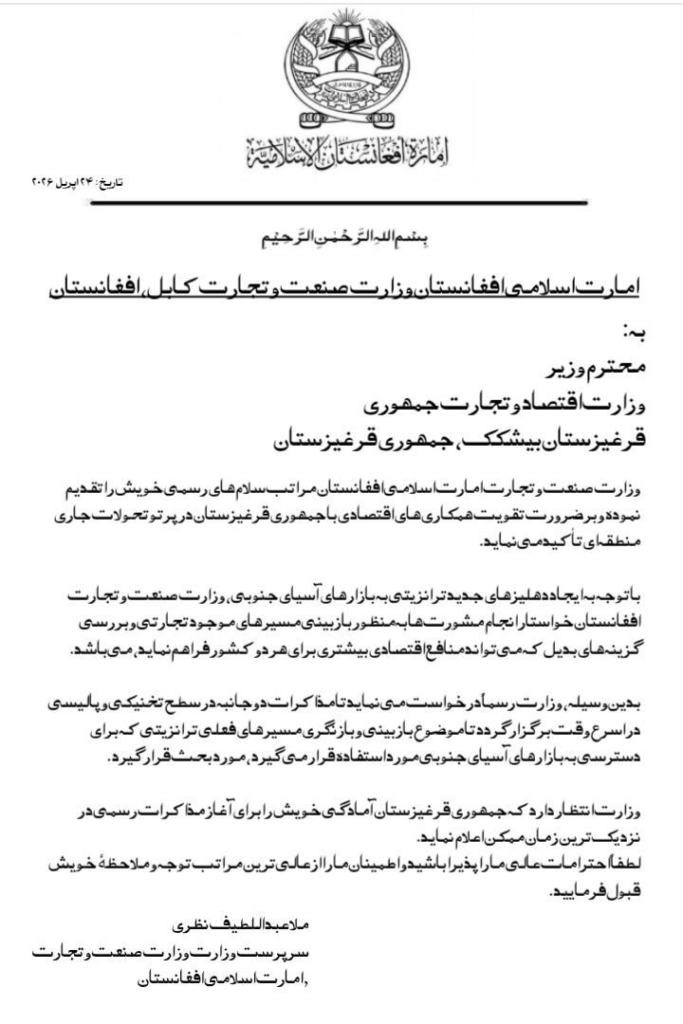
Kabul: The Taliban interim government has expressed deep concern over the planned new transit trade corridor between Pakistan and Kyrgyzstan via China. In this regard, Afghan authorities have sent a formal diplomatic letter to Kyrgyzstan, inviting talks on restoring traditional trade routes that pass through Afghanistan to access South Asian markets.
Afghanistan’s Position
Taliban officials argue that the trade routes passing through Afghanistan are more efficient, shorter, and better developed for regional connectivity and cargo movement. Sources within the Afghan Ministry of Commerce say that the new arrangements between Pakistan and Kyrgyzstan have not only affected traditional trade routes but also pose a potential threat to Afghanistan’s strategic economic interests.
Impact of the New Corridor
The proposed corridor between Pakistan and Kyrgyzstan via China is expected to provide direct access to the port of Karachi for Kyrgyzstan and other Central Asian states including Tajikistan, Turkmenistan, Kazakhstan, and Uzbekistan. By bypassing Afghanistan, the route connects Central Asia directly to the Arabian Sea, reducing Afghanistan’s traditional role as a key transit hub due to its geographical position.
Future Challenges
Economic experts say that while the new corridor will improve Pakistan’s access to Central Asian markets, it may significantly reduce Afghanistan’s revenue from transit fees and trade activity. Kabul’s invitation to Kyrgyzstan for negotiations is being seen as an attempt to mitigate these potential economic losses and preserve its role in regional trade connectivity.











