
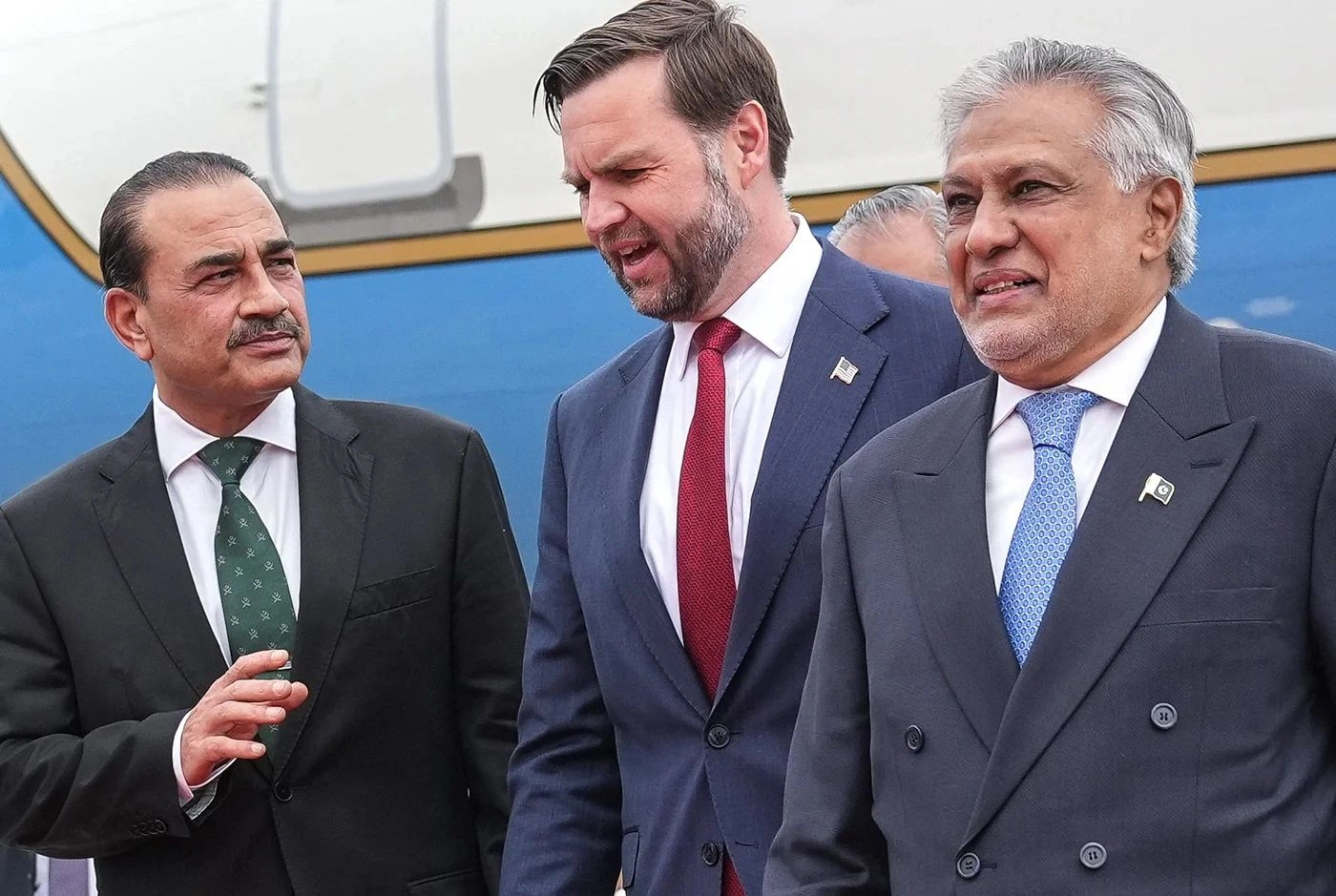
Once largely viewed as a peripheral actor in global affairs, Pakistan has suddenly emerged as a country asserting itself on the international stage. Its role in efforts linked to peace diplomacy involving Iran has pushed it into global headlines, but analysts say this shift has not happened overnight. It is driven less by diplomatic finesse and more by Pakistan’s growing military strength.
Pakistan is no longer seen as a state dependent on external assistance, nor as one overshadowed by wealthier regional neighbours, nor solely defined by militancy. Although its economy remains fragile and extremism has not been fully eliminated, the global perception of the country is changing.
Interestingly, despite its recent diplomatic visibility—particularly its involvement in facilitating indirect engagement between Iranian and US leadership after decades of absence—Pakistan’s rising status is still largely anchored in its military credibility rather than pure diplomatic capacity.
This transformation is not only reshaping Pakistan’s position but also altering regional power dynamics in ways that may prove difficult to control.
Since its creation in 1947 following the end of British colonial rule and partition from a larger India, Pakistan has operated in a complex environment marked by border disputes, religious tensions, and economic inequality.
On the global stage, Pakistan has long balanced its close strategic partnership with China with a more transactional relationship with the United States.
For decades, its international identity was shaped more by perceptions of instability than by diplomatic leadership.
A surge in national confidence
Pakistan’s transition from a relatively weak state to a more assertive diplomatic actor has been gradual, but it accelerated after a brief yet significant conflict with India in May 2025. Pakistan emerged from the confrontation not only intact but also more confident.
The outcome of that conflict, widely portrayed domestically as a strategic success, strengthened national confidence which quickly translated into diplomatic ambition.
The four-day conflict challenged long-held assumptions of Indian military dominance in South Asia. Both sides engaged in intense exchanges, but Pakistan claimed advantages using advanced Chinese technology, including reported downing of French-made Rafale jets. Perception played as crucial a role as battlefield outcomes.
Army Chief General Asim Munir quickly capitalised on the moment. Domestically, he leveraged national pride to consolidate his position while diverting criticism surrounding controversial elections and the imprisonment of former Prime Minister Imran Khan.
At the same time, he exerted influence over the civilian government, pushing for constitutional changes that further strengthened the military’s role while weakening institutions such as the judiciary.
However, Munir also moved swiftly to convert battlefield gains into diplomatic capital.
Within weeks of the ceasefire, Pakistan expanded engagement with the United States, including high-level interactions with President Trump—an unprecedented development. This helped reposition Pakistan in Washington as a potential stabilising actor rather than a regional problem.
Simultaneously, Pakistan deepened its already strong ties with China—often described in Islamabad as “higher than the Himalayas and deeper than the oceans”—while expanding its security footprint across other regions.
Defence agreements with Saudi Arabia, multi-billion-dollar security arrangements with Libya, and defence consultations with Egypt all formed part of a broader strategic design aimed at converting military credibility into long-term geopolitical influence.
This is not a conventional diplomatic rise but one built on military leverage.
A rare mediator
This expanding influence has positioned Pakistan as a rare intermediary capable of engaging across competing global power centres—from Washington to Beijing, and from the Gulf to North Africa.
Regionally, this confidence has also translated into a more assertive posture, particularly toward Afghanistan, where Pakistan now appears more willing to advance its interests directly.
Its messaging to both India and Afghanistan has become more direct and, at times, more forceful, reinforcing the image of a more confident state.
Meanwhile, India has responded by strengthening ties with Israel and expanding cooperation with Gulf states such as the UAE. Its existing defence relationship with Israel is also deepening, contributing to an increasingly interconnected security architecture.
As a result, the South Asian rivalry is no longer a bilateral confrontation but part of a wider strategic network involving multiple global powers. Pakistan and India are both embedded in overlapping systems of political, technological, and military partnerships.
This has turned the rivalry into a networked competition where every move is mirrored and amplified across multiple capitals including Dubai, Riyadh, Tel Aviv, Beijing, and Washington.
A double-edged transformation
Pakistan’s rise has created a more interconnected but also more fragile strategic environment. It has expanded its influence in areas where it was once considered weak, but in doing so it has also increased the risk of broader regional escalation.
Pakistan has forced the world to rethink its assumptions about it. The key question now is whether the region can absorb this transformation or whether it will evolve into a more dangerous confrontation in which tensions between two nuclear-armed states extend far beyond them, drawing in allies, interests, and competing ambitions into a complex global web.
This is the true significance of Pakistan’s current moment.











