
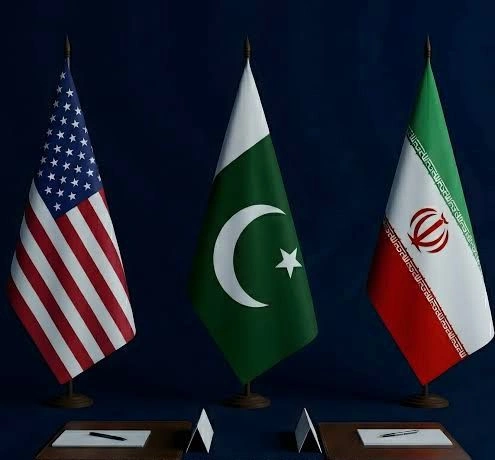
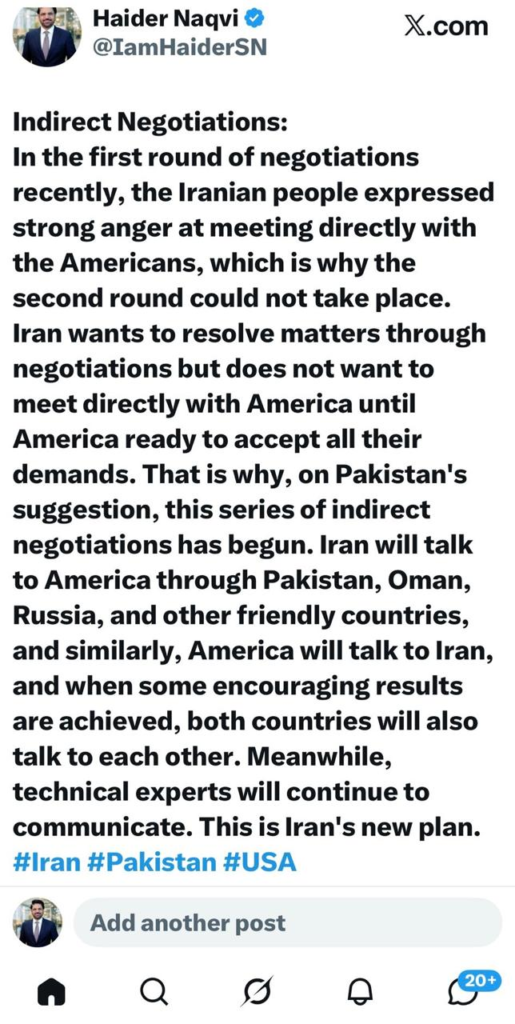
A new diplomatic approach has emerged to ease tensions between Iran and the United States, with both sides agreeing to shift from direct engagement to indirect negotiations. According to geopolitical analyst Haider Naqvi, the second round of talks was previously canceled after strong public backlash in Iran against direct meetings, prompting the need for an alternative mechanism now shaped around Pakistan’s proposal.
Pakistan’s Key Role
Sources indicate that Iran has made it clear it will not enter direct negotiations with Washington unless its core demands are met. To break the deadlock, Pakistan proposed a middle-ground solution. Under this arrangement, friendly countries such as Oman and Russia will act as intermediaries, facilitating communication between the two sides.
Under this new strategic plan, both Iran and the United States will exchange their positions, concerns, and proposals through these mediators rather than through direct contact.
Way Forward
The report suggests that direct meetings will remain suspended until indirect engagements produce meaningful progress. However, technical-level contacts between experts from both countries are expected to continue to ensure movement on key issues. Analysts believe this approach could help reduce public pressure while allowing behind-the-scenes diplomacy to achieve tangible outcomes.
Impact on Regional Stability
Observers note that Pakistan’s central role in this diplomatic framework once again highlights its growing importance on the global stage. If successful, these indirect talks could help defuse tensions in the Middle East and potentially pave the way for easing decades-long hostility between Tehran and Washington.











