
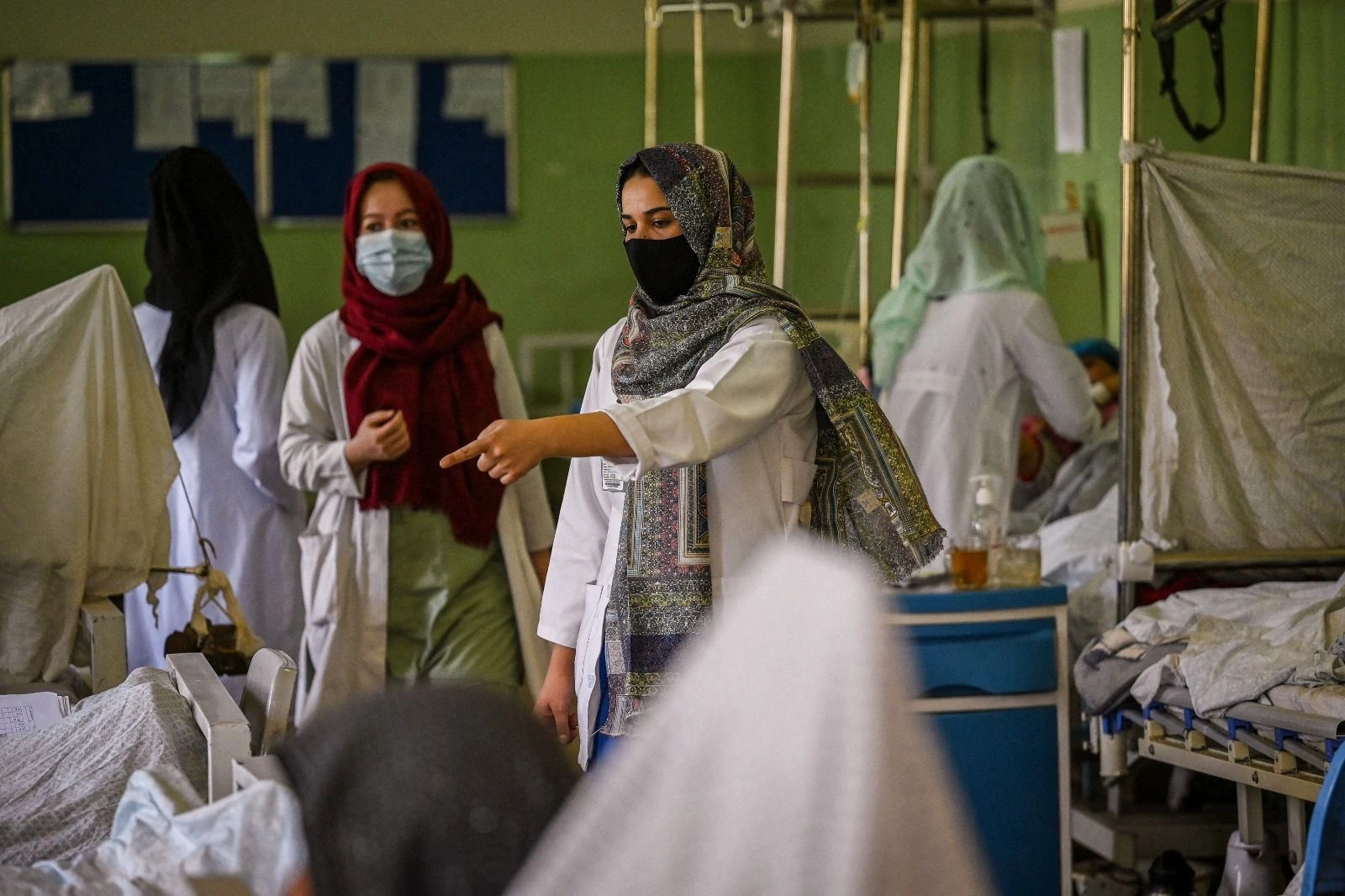
A new report by UNICEF has warned that Afghanistan could lose more than 25,000 female teachers and healthcare workers by 2030 if current restrictions on girls’ education and women’s employment under the Taliban government remain in place. The report highlights that such a loss could severely disrupt the country’s basic services and social infrastructure.
Impact on Education and Healthcare
The report, titled “The Cost of Excluding Girls from Education and Women from the Workforce in Afghanistan,” states that the number of trained female professionals is rapidly declining due to ongoing restrictions. It estimates that by 2030, around 20,000 female teachers and 5,400 healthcare workers could disappear from the system—roughly 25% of the 2021 workforce.
Additionally, the shortfall in the health sector alone could rise to 9,600 by 2035, further straining already fragile public services.
Afghanistan is at risk of losing more than 25,000 female teachers and health workers by 2030 if the Taliban-led country's restrictions on girls' education and women's employment are not lifted, according to a new UNICEF report https://t.co/3qCnoiWQvg
— Reuters (@Reuters) April 28, 2026
Humanitarian and Social Crisis
Catherine Russell, Executive Director of UNICEF, stressed the urgency of the situation, stating that Afghanistan cannot afford to lose its future nurses, doctors, midwives, and teachers.
She emphasized that female healthcare workers are essential for treating women patients, while female teachers are critical for educating girls—making their absence a serious threat to the continuity of essential human services.
Economic Consequences
The report also reveals that excluding women from the labor market is costing Afghanistan approximately 5.3 billion afghanis (around $84 million) annually, equivalent to about 0.5% of the country’s GDP.
UNICEF has urged Taliban authorities to immediately lift restrictions on girls’ education and enable women to access training and employment opportunities, warning that failure to act could lead to a deepening humanitarian and economic crisis.











