
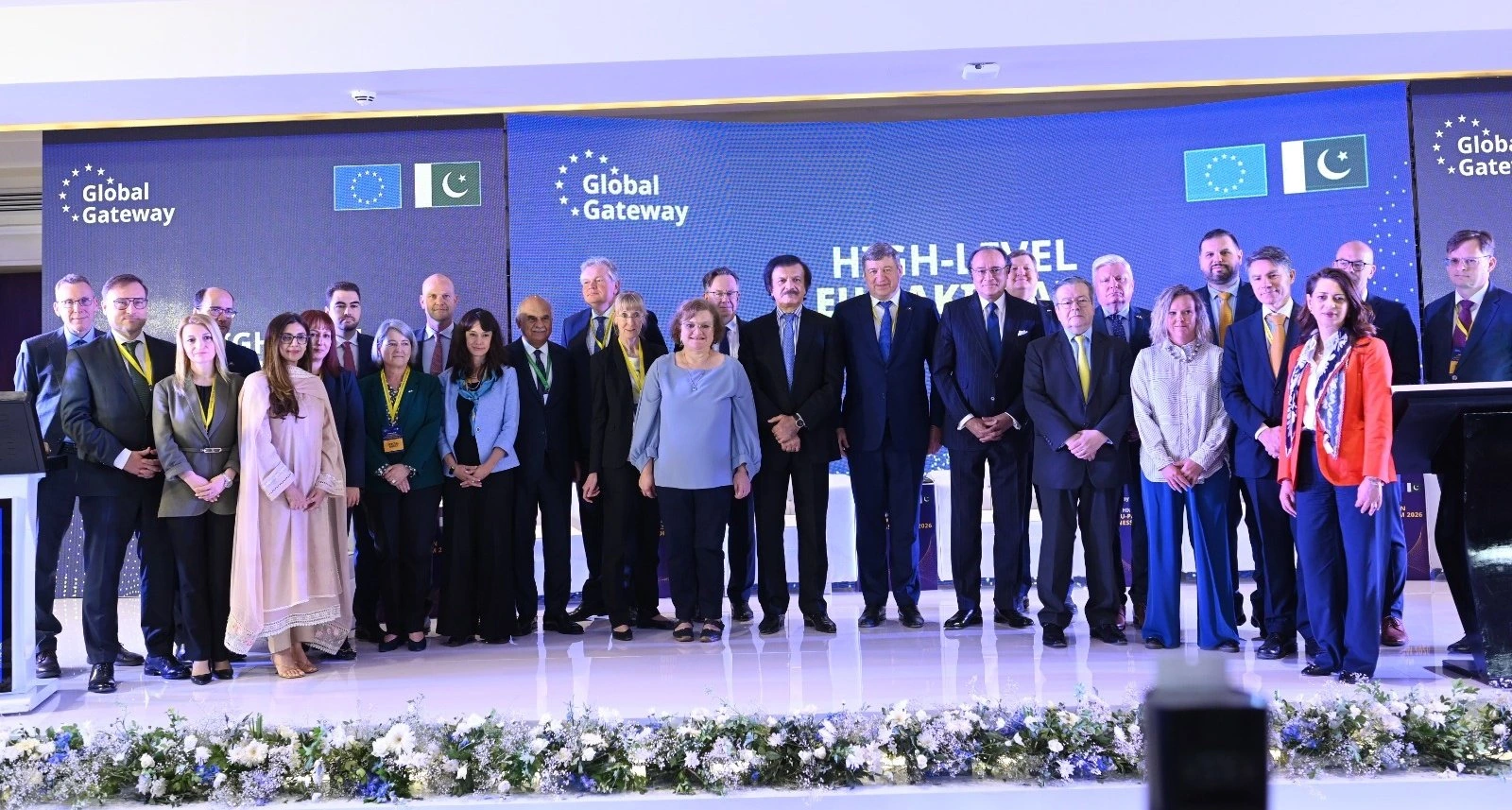
The first high level Pakistan–European Union Business Forum has officially begun in Islamabad, marking a major step forward in economic relations between Pakistan and the European Union. The forum aims to move the relationship beyond traditional trade and towards long term investment, technology sharing, and sustainable growth.
At the opening session, officials described the event as a turning point. Instead of focusing only on exports and imports, both sides want to build deeper partnerships that create jobs, improve skills, and support modern industries. As a result, the forum brings together government leaders and business voices under one roof.
A Platform for Business and Investment
To begin with, the two day forum has attracted around one thousand participants from Pakistan and Europe. These include policymakers, investors, financial institutions, and leading business figures. The goal is simple and clear. Pakistan wants to expand its export base and attract quality investment from one of the world’s largest markets.
Speaking at the opening, the EU ambassador said the Union is already Pakistan’s top export destination. However, he stressed that the next step is to turn strong trade ties into green and long term investment. This, he said, will help both sides grow while also protecting the environment.
Meanwhile, Pakistan’s finance minister highlighted recent economic reforms and improving stability. He told investors that Pakistan is now open for business and ready to welcome foreign partners. According to him, these changes have made the country more attractive for global investment than before.
Looking Ahead to Long Term Cooperation
At the same time, the forum also launched the EU Pakistan Business Network. This new platform brings together more than 300 European companies working in Pakistan. It will help businesses share concerns and explore new opportunities together.
In addition, discussions are taking place on how Pakistan could benefit from the EU’s Global Gateway investment plan. This program focuses on large scale projects around the world, including infrastructure and digital development.
Over the two days, more than 600 direct business meetings are planned. These talks focus on areas such as agriculture, digital services, finance technology, and sustainable textiles. In the end, organizers hope the forum will lead to new partnerships and set the foundation for a stronger and more balanced economic relationship in the years ahead.











